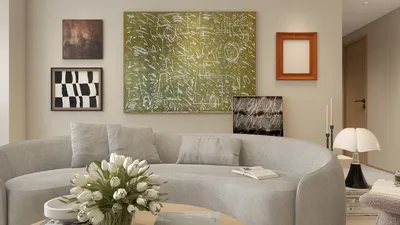


I've created and set up numerous gallery walls, ranging from narrow apartment hallways to expansive double-height living rooms. A remarkable picture wall prioritizes rhythm, proportion, and a strong curatorial narrative instead of mere symmetry. When executed effectively, it serves as a fundamental element in a room, directing attention and transforming mundane spaces into personal galleries with tools like Homestyler.
Scale and spacing are crucial factors where many DIY projects stumble. As a guideline, I typically position the midpoint of artwork at 57–60 inches from the ground, aligning with museum standards to ensure that viewers have a comfortable neck angle. The WELL v2 emphasizes the importance of visual comfort and glare management to enhance occupant wellbeing, which I have witnessed reflected in client feedback. Utilizing glare-free glass and maintaining a consistent mounting height also helps alleviate visual strain. Research from Steelcase indicates that spaces featuring clear visual hierarchies promote a sense of order and tranquility, translating effectively into residential walls that exude a composed aura rather than chaos. For additional design insights, you can explore the WELL standard at wellcertified.com and workplace research at steelcase.com/research.
The significance of spacing is quantifiable: I generally maintain 2–3 inches between frames in tightly arranged grids and 3–5 inches in more eclectic layouts. Human factors are pivotal here—if frames are too close, it can create visual noise, while too much space can disrupt the viewer's gaze. The color temperature of nearby lighting should ideally range from 2700–3000K to cultivate a warm residential atmosphere, and the Color Rendering Index (CRI) should be above 90 to do justice to the artwork. Following IES guidelines, accent lighting targeted at 150–300 lux on the pieces helps unveil details without flattening textures.
Establishing the Narrative
Before taking any measurements, it is crucial to define the theme. I design gallery walls around a central concept such as travel photography, family memories, a specific art style (like black-and-white portraits), or a unified color palette that connects the pieces. Color psychology is substantive—insights from Verywell Mind reveal that blue hues evoke calmness, while yellow energizes; I apply these principles by selecting cool-toned coastal images for bedrooms and warmer shades for social spaces. Consistent matting, in shades of white, off-white, or dark charcoal, harmonizes disparate pieces.
Selecting the Appropriate Frames and Mats
The choice of frame profiles and materials significantly impacts visual perception. Slim metal frames (in matte black or brass) offer a contemporary and light appearance, while robust wooden frames can anchor larger artworks but may overwhelm smaller pieces. I aim for a visual ratio of 1:1.618 between mat windows and the visible artwork for a balanced look. For instance, if an artwork measures 10x15 inches, a mat window approximating those dimensions will maintain the piece's confidence without crowding. Additionally, using sustainable materials like FSC-certified wood frames and cotton rag mats minimizes off-gassing and preserves the integrity of the artwork. Non-reflective glass or acrylic works well to minimize glare, ensuring readability under focused lighting.
Effective Layout Strategies
Layouts can be linear, grid-based, salon-style (eclectic), or defined by anchored asymmetry. For living areas, I often opt for anchored asymmetry: a large artwork or mirror establishes a focal point, with medium and smaller pieces arranged around it in decreasing scale. The primary objective is to create a stable baseline—aligning the tops, bottoms, or midlines of a subset of frames fosters a subtle structural rhythm. To design a complex arrangement, a room layout tool like Homestyler can be used to visualize different options without having to drill into the wall.
Measuring, Mocking Up, and Finalizing
Precision is vital for maintaining wall integrity and sanity. I cut kraft paper to size for each frame and attach them to the wall, marking midline heights of about 57–60 inches and checking the spacing at 2–3 or 3–5 inches. It's important to step back 8–10 feet to assess overall balance. For staircases, the midpoint should follow the incline rather than the tread line to keep the artwork aligned with the viewer's eye as they ascend.
Lighting for Artwork to Thrive
Lighting plays a crucial role in transforming flat artwork into vibrant displays. Warm lamps between 2700–3000K complement most residential interiors, while high-CRI LEDs accurately reveal pigments. Aim for layered lighting effects: a general ambient source (offering soft 150–300 lux) combined with narrow-beam accent lights that wash or graze the artwork provides depth. Maintain glare control by angling fixtures about 30° away from the wall, minimizing reflections in glass. Dimmer settings allow for seasonal adjustments—brighter in the low winter sun and softer during summer months.
Considerations for Acoustics and Materials
Large framed artworks on hard surfaces can create echo in minimalistic rooms. To counter this, I often incorporate textiles, such as runners, area rugs, or upholstered benches beneath the gallery wall. If the gallery wall faces a window, employing micro-textured paints or matte finishes can help diminish specular highlights. Ensure frames are hung with appropriate anchors—toggle bolts for plaster walls, self-drilling anchors for drywall, and sleeve anchors for masonry to guarantee safety and resilience.
Color, Contrast, and Visual Rhythm
When clustering multiple frames, I arrange them in tonal steps—dark, medium, and light—to create a gentle eye movement. High-contrast frames can stand out, but using too many can lead to visual chaos. In monochromatic galleries, introducing a subtle accent—be it a brass frame or a muted color mat—can prevent visual fatigue. If artwork varies significantly, using uniform mats can help standardize the presentation and allow the art to shine without overpowering each other.
Specifics for Stair Gallery and Hallways
In stair galleries, it’s beneficial to maintain a diagonal layout that aligns with the rise; ensure consistent vertical spacing is measured from the wall rather than the tread of the staircase. In narrow hallways, opt for slimmer frames and position them flush against the wall to maintain circulation space. It’s crucial to hold a minimum clear width of 36 inches; protruding elements should not exceed 4 inches in depth to ensure comfortable passage.
Installation: From Initial Nail to Final Review
Utilize a level and a tape measure; for larger pieces, incorporating a French cleat enhances stability. I mark hanging points on my kraft paper mock-ups, pre-measure wire droop (usually 1–2 inches depending on wire tension), and create pilot holes before securing the anchors. Following the installation, fine-tune minor adjustments visually—small rotations of 1–2 degrees can give frames a more intentional appearance. Completing the setup with felt bumpers protects painted surfaces and stabilizes frames against minor vibrations.
Curating Over Time
A gallery wall should be dynamic. Intentionally leave one or two spaces open so new pieces can fit in seamlessly. Rotate artwork seasonally to keep the arrangement feeling fresh. If the collection expands beyond the existing layout, consider extending with a new focal piece or developing a second cluster in another location to avoid an overcrowded appearance.
Frequently Asked Questions
Q1: What is the optimal height for hanging artwork on a gallery wall?
A1: Position the midpoint of the artwork between 57–60 inches from the ground. This aligns with standard museum practices and ensures comfortable viewing angles.
Q2: How much space should be allocated between frames?
A2: For tight grid patterns, maintain 2–3 inches, while for eclectic or asymmetrical arrangements, allow 3–5 inches. This spacing keeps visual harmony without overcrowding.
Q3: What lighting temperature is preferable for a gallery wall?
A3: Warm white LEDs in the range of 2700–3000K with a CRI exceeding 90 help preserve color fidelity and create an inviting residential atmosphere. Accent lighting should be set around 150–300 lux.
Q4: What measures can be taken to reduce glare on framed pieces behind glass?
A4: Direct light fixtures at about 30° towards the wall, use non-reflective glass or acrylic, and avoid placing strong light directly opposite the artwork to minimize reflections.
Q5: Should frames and mats be coordinated, or can I use a mix?
A5: You can mix thoughtfully. A consistent mat color (white or off-white) across different frames helps unify the collection, while a few accent frame finishes can add interest.
Q6: What is the best way to design a complex arrangement?
A6: Create kraft paper mock-ups to represent each frame and use them to tape onto the wall at the intended height and spacing. For digital iterations, consider employing a room design visualization tool like Homestyler to simulate layout and balance before drilling.
Q7: How can I safely hang heavy frames on various kinds of walls?
A7: Use toggle bolts for plaster, self-drilling anchors for drywall, and sleeve anchors for masonry walls. For exceptionally heavy artworks, a French cleat offers superior support.
Q8: What layout is best for a staircase?
A8: Align the artwork midpoint along the incline at 57–60 inches. Maintain consistent spacing perpendicular to the wall rather than the stair tread to promote natural visual navigation.
Q9: Can a gallery wall enhance room acoustics?
A9: A gallery wall might help slightly in breaking up large reflective surfaces. Pair it with textiles, such as rugs, curtains, or upholstered seating, to soften echoes in minimalist spaces.
Q10: How do I maintain a clean look when displaying several small frames?
A10: Establish a baseline alignment and use uniform mats. Group small pieces around a larger anchor artwork to create hierarchy and maintain a calming aesthetic.
Q11: What's a straightforward color guideline for mixing different artworks?
A11: Arrange by temperature (cool versus warm) or tonal values (light, medium, dark), and repeat these cues across the wall to establish visual rhythm.
Q12: How should I care for and refresh my gallery wall over time?
A12: Intentionally leave designated gaps for future pieces, rotate artworks seasonally, and check mounts annually. Promptly replace any yellowing mats or scratched glass to maintain visual appeal.
Homestyler is your go-to online home design platform, offering an intuitive design tool and stunning 3D renderings. With a wealth of design projects and helpful DIY video tutorials, it empowers you to transform your space effortlessly, no matter your experience level. Start creating today!
立即免费设计
































