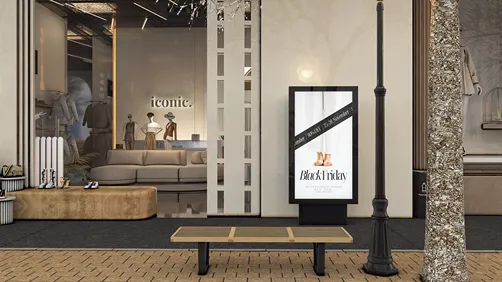
Black Friday Retail Store Design
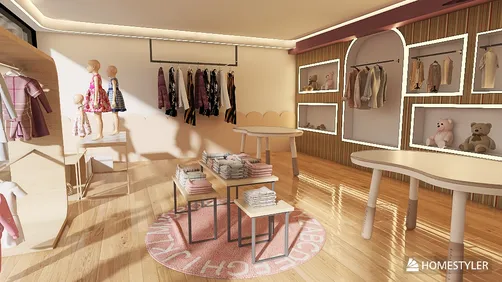
The 'Black Friday Retail Store Design' scenario refers to a high-energy, conversion-optimized commercial interior space purpose-built for seasonal promotional intensity. Unlike standard retail environments, this scene emphasizes dynamic spatial storytelling—where lighting, display rhythm, material contrast, and visual hierarchy converge to amplify urgency, delight, and brand resonance. It spans diverse typologies—from compact boutiques (e.g., women’s fashion or children’s apparel) to mid-size specialty stores (e.g., suit shops or H&M concept spaces)—and prioritizes customer journey flow, product discoverability, and emotional engagement over static aesthetics. Successful execution hinges on balancing festive excitement with sophisticated interior space planning, ensuring every square meter serves both functional commerce and experiential narrative.
Design Challenges & Common Pitfalls
Designers frequently underestimate how Black Friday’s time-sensitive nature impacts spatial decisions: overcrowded layouts hinder navigation; inconsistent lighting creates visual fatigue rather than allure; generic signage dilutes brand identity amid competitive clutter; and poor zoning fails to guide customers from entry → discovery → decision → checkout. Additionally, many overlook scalability—designs optimized for a single day often lack flexibility for post-holiday reuse or year-round adaptability—making long-term ROI difficult. These issues stem from treating the store as a ‘temporary stage’ rather than an integrated extension of brand strategy and interior space planning.
✅ Prioritize Customer Journey Flow
A seamless, intuitive path—from storefront entry to fitting rooms to checkout—reduces friction and increases dwell time. Use floor patterns, lighting gradients, and strategic product grouping to subtly direct movement. Avoid dead ends or bottlenecks near high-demand zones (e.g., discount racks or limited-edition displays). Homestyler AI design tools enable rapid iteration of circulation paths using real-time heatmaps and traffic-simulation overlays—critical for validating flow before build-out.

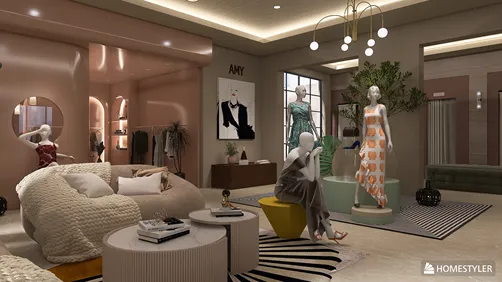
Amy ✨’s 'Project: Women's Fashion Store' demonstrates masterful customer journey flow in a compact retail setting. She uses a central aisle flanked by staggered display islands—each angled slightly to encourage forward motion—and integrates soft ambient lighting above walkways while spotlighting key merchandise zones. Leveraging Homestyler AI design tools, she tested over 12 layout variants in under 20 minutes, selecting the one with optimal sightlines and shortest average path to checkout—proving how AI accelerates evidence-based interior space planning.
Start Free Design Now✨ Optimize Lighting for Emotional Impact
Lighting must serve dual roles: functional visibility and emotional signaling. Warm accent lights (2700K–3000K) on featured products evoke premium quality; cool white task lighting (4000K) in fitting areas ensures true color rendering; and dynamic ceiling washes create rhythm and energy. Avoid uniform brightness—strategic shadows and contrast elevate perceived value and guide attention. Homestyler’s HDR simulation engine allows designers to preview real-world light behavior across times of day and weather conditions—essential for Black Friday’s extended operational hours.

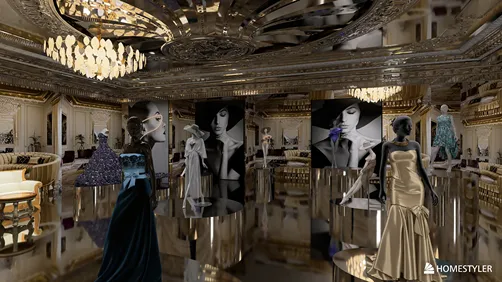
Amanda Bond’s 'Charming Boutique Design' exemplifies emotionally intelligent lighting strategy. Her use of layered illumination—soft recessed cove lighting along curved walls, focused LED spots on mannequins, and diffused pendants over seating nooks—creates zones of calm and excitement without visual conflict. Using Homestyler AI design tools, she adjusted HDR parameters and sunlight angles to simulate morning vs. evening Black Friday foot traffic, refining fixture placement to maximize both safety and serenity—a hallmark of advanced interior space planning.
Design Your Space Free🎨 Integrate Brand Identity Through Material & Form
Materials and geometry are silent brand ambassadors. Sculptural shelving, custom millwork, and tactile finishes (e.g., textured wood, brushed metal, or biophilic elements) reinforce authenticity and memorability. Avoid disposable décor; instead, choose modular, reconfigurable systems that retain brand equity beyond November. Color palettes should align with seasonal messaging (e.g., deep burgundy + gold for luxury, or matte black + neon accents for edgy appeal), while maintaining continuity with core brand guidelines. Homestyler’s style-matching AI helps auto-generate coordinated palettes and textures based on uploaded brand assets.

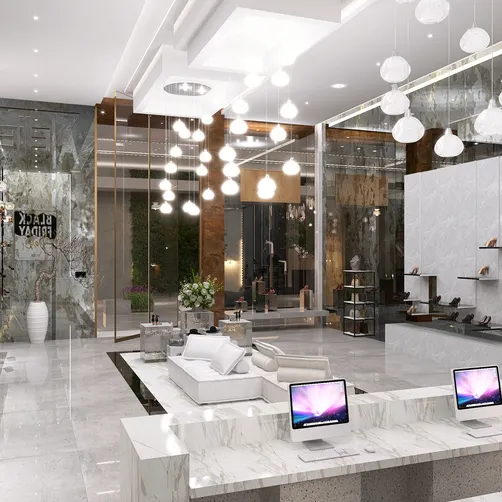
Encarni Fernandez Calero’s 'Tienda H&M' merges contemporary elegance with natural warmth through sculptural organic forms and sustainable materials—curved timber displays, woven textile partitions, and terrazzo flooring—all unified under H&M’s global aesthetic language. She used Homestyler AI design tools to test over 30 material combinations against daylight simulations, ensuring color fidelity and texture legibility at scale. This approach transforms generic retail space into a branded environment rooted in interior space planning rigor—not decoration.
Begin Free Store DesignFAQ
Q: Do I need professional design software experience to participate in the Black Friday Store Design Challenge?
Not at all. Homestyler AI design tools feature intuitive drag-and-drop interfaces, smart object recognition, and one-click style transfers—ideal for both beginners and seasoned professionals. The platform handles complex interior space planning calculations (e.g., lighting fall-off, sightline analysis, and ADA-compliant circulation) automatically.
Q: Can I submit designs for multiple store types (e.g., boutique + department store) in one entry?
No—each submission must represent a single, cohesive retail environment. However, you may explore variations (e.g., day vs. night mode, or pre-sale vs. flash-sale configuration) within one design using Homestyler’s multi-scene toggle feature.
Q: How does the judging criteria weigh creativity versus technical feasibility?
Judges evaluate both equally: originality in spatial storytelling and visual impact must be grounded in realistic construction logic, accessibility compliance, and scalable interior space planning. Winning entries like Amy ✨’s or Amanda Bond’s prove that innovation thrives within constraints—not despite them.
Q: Are video submissions required, or are static renders sufficient?
Static 4K renders are fully accepted and commonly awarded (e.g., Top 1–4). Video is optional but strongly encouraged for demonstrating dynamic elements like lighting transitions, crowd flow, or interactive displays—especially valuable when showcasing Homestyler AI design tools’ animation capabilities.

Homestyler is a fantastic online home design platform featuring easy-to-use design tools, stunning 3D renderings, inspiring projects, and helpful DIY video tutorials to bring your interior decorating ideas to life effortlessly. Perfect for all skill levels!
지금 무료로 디자인하세요