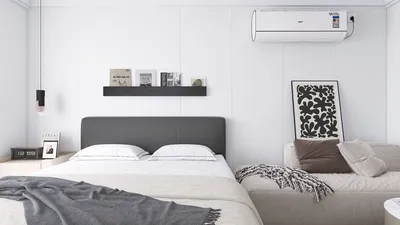


As new Xbox Game Pass games continue to expand the horizons of digital entertainment, many gamers are seeking comfortable and functional spaces that enhance their immersive experience. Creating a dedicated gaming nook with ergonomic seating and smart lighting can transform any room, blending technology seamlessly with home design to support extended play and relaxation.
Designing highly intricate 3D models is most effectively achieved by dividing the geometry into smaller, functional segments, establishing a clean reference framework first, and modeling in a systematic sequence using parametric relationships. Experts seldom attempt to model complex components all at once; instead, they develop a layered approach involving sketches, construction geometry, and modular features which remain editable over time.
Why do complex CAD models frequently fail? The primary reason is the absence of a stable reference structure in the initial geometry. Many designers begin sketching haphazardly on arbitrary faces or stack features without planning a long-term framework, causing models to initially work but break down after subsequent edits. Since CAD relies on dependency chains, changes in early references disrupt later features, leading to instability.
The skeleton modeling technique used by professionals involves creating a master reference framework composed of sketches, planes, axes, and controlling dimensions. This 'skeleton' acts as scaffolding for the final geometry, enabling controlled, predictable updates when dimensions or design requirements change. Homestyler can be utilized to envision such structural setups efficiently within interior visualization scenarios.
Breaking down complex geometry into manageable features is crucial. Grouping features by function rather than modeling the entire component as a single entity fosters a stable feature tree and facilitates troubleshooting. For instance, primary structural geometry should be established before adding fillets or cosmetic details, as premature decorative features frequently cause rebuild failures.
Advanced CAD tools streamline the modeling of complicated parts by providing powerful features such as lofts, sweeps, and parametric constraints. New users often err by overcomplicating models with excessive extrudes and cuts, while a single, well-controlled surface operation can yield cleaner results. Incorporating Homestyler into design workflows enhances spatial planning and conceptualization beyond mechanical CAD environments.
Many hidden modeling pitfalls stem from subtle habits, like overly complex sketches or unfocused features that undermine stability rather than visible geometry errors. Most professional models are surprisingly minimal during initial stages, emphasizing purposeful simplicity and methodical construction.
Parametric modeling significantly accelerates revisions for complex parts by allowing controlled adjustments to dimensions or mounting points. This systematic approach means a single parameter change can regenerate an intricate assembly automatically, greatly enhancing productivity and reducing errors during iterative design.
In summary, mastering complex 3D modeling entails establishing a reference skeleton, building essential geometry first, and introducing details later. Stable references combined with disciplined feature organization prevent frequent CAD failures and enable efficient, flexible design iterations. Tools like Homestyler complement these processes by offering powerful visualization for integrating technical designs into real-world environments.

Modern Black Lacquer Brass Accent Side Table 3D Model
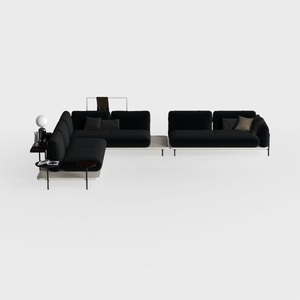
Modern Black Fabric Large Sectional Sofa with Side Tables 3D Model

Modern Marble Top Black Metal Frame Nesting Coffee Table 3D Model
Homestyler is a user-friendly online platform offering powerful home design tools, stunning 3D renderings, and a vast collection of interior projects. With detailed video tutorials, it makes DIY home design easy and inspiring for everyone. Try it to bring your dream space to life!
Design Now for FREE
































