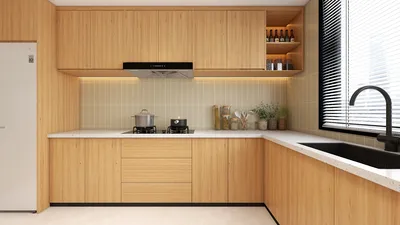


Generating a clay render is a pivotal aspect of the design workflow, particularly for interior designers who aim to assess their models proficiently. A clay render allows you to concentrate on the fundamental forms, shapes, and structural outlines of your design while eliminating the distractions of colors and textures. In this discussion, we will delve into effective strategies for producing a clay render that enhances your model evaluation process, making tools like Homestyler a valuable asset.
Recognizing the Significance of Clay Renders
Clay renders facilitate the analysis of your design by removing the intricacies of materials and colors. This enables you to:
Utilizing clay renders ensures that your final design aligns with your vision and meets the functional requirements of the given space.
Procedure for Crafting a Clay Render
Before embarking on the rendering journey, make certain that your 3D model is tidy and devoid of extraneous elements. This will streamline the rendering process and enhance your evaluation efficiency.
Numerous software options exist for creating clay renders, including Homestyler, Blender, and SketchUp. Opt for a tool that you find user-friendly and relevant to your project objectives.
Within your selected software, apply a foundational clay material to your model. This material should exhibit a matte surface and a neutral hue, commonly gray or off-white, to emulate the look of actual clay.
Lighting is a vital factor in the rendering phase. Implement soft and diffuse lighting to avoid severe shadows. This technique will accentuate the shapes and contours of your design.
Once your setup is complete, commence the rendering process. The duration may vary based on your software and model complexity, so ensure you optimize the settings for the render to capture all necessary details.
After the rendering is finished, examine the output meticulously. Identify any areas that may need adjustments concerning shape or proportion. Use the feedback to refine your model further.
Optimal Approaches for Clay Rendering
To fully capitalize on your clay renders, keep in mind the following tips:
In Conclusion
Creating a clay render is an invaluable competency for any designer wishing to enhance their modeling process. By centering your attention on the fundamental aspects of your design, you can ensure a more refined final product. Always remember that the goal is to craft a design that not only captivates visually but also operates efficiently within its environment.
Frequent Questions
Q: What advantages do clay renders offer? A: Clay renders emphasize the form and shape of a design, allowing for enhanced evaluation of proportions and spatial relationships by mitigating the distractions of color and texture.
Q: Is it possible to create clay renders in any 3D modeling software? A: Absolutely! Most 3D design programs enable the creation of clay renders. The crucial factor is to use a matte, neutral material while configuring appropriate lighting.
Q: How can I enhance the results of my clay renders? A: Experiment with lighting setups, utilize high-polygon models, and analyze various angles to view your design from multiple perspectives.
Welcome to the Leading Home Design Software
Дизайн сейчас бесплатно
































