

As we look ahead, my clients continue to grapple with narrow hallways, noisy areas, and a lack of storage. I perceive an AutoCAD floor plan tutorial for beginners as a gateway to designing future living environments. Research from NAHB highlights that over 50% of homeowners prioritize functional flow over mere square footage, underscoring the idea that design translates into lifestyle. I interpret the floor plan as a code, ready to transform into daily habits, and the gridlines offer hints of what comes next: a toolkit for spatial reasoning, which can also be explored through Homestyler.
Linear Studio Strip
Design Logic: A single loaded wall efficiently integrates the kitchen, storage, and utility zones, establishing a clear activity strip; emerging small-footprint living demands that light and movement harmonize.
Flow: Entry → preparation area → lounge → sleep nook, resembling a streamlined instruction sequence that minimizes unnecessary transitions.
Sightlines: A long view extending from the door to the window, layered with user interface considerations: messy functions concealed behind a service wall, while a clean panorama lies ahead.
Storage: Elevated pantry units, overhead cabinets, and toe-kick drawers strategically locate essentials close to their related tasks, thus minimizing time wasted fetching items.
Furniture Fit: Modules with a depth of 18–24 inches, a 72-inch sofa, and a queen-sized platform bed complemented by 60 inches of clearance work like APIs ensuring smooth movement through the area.
Verdict: This design functions as a lightweight framework ideal for remote work, micro-hosting, and easy transformations over the next five years.
save pin
Courtyard Loop One-Bed
Design Logic: Rooms are arranged around a light well; this plan prioritizes comfort and adapts to post-noise environments by replacing traditional hallways with connected nodes.
Flow: Entry → kitchen node → living loop → bedroom → bathroom—this cyclical routine creates a fluid lifestyle without any dead ends, enhancing daily efficiency.
Sightlines: Diagonal layers direct attention to the void, where daylight serves as primary information and privacy becomes secondary.
Storage: Built-in units along the perimeter act as efficient storage—coats near the entry, pantry beside the prep area, and linens stored by the bath to prevent overflow.
Furniture Fit: 30-inch circulation spaces surrounding a 36-inch table; a 9-foot sectional aligns with windows, with the bed centered along a tranquil axis.
Verdict: This architectural loop is equipped to adapt to future technology and hybrid work routines, maintaining low attention fatigue and keeping care activities within reach.
save pin
Split-Core Two-Bed Hybrid
Design Logic: A central service core separates social spaces from sleep areas; future family designs need to enable parallel activity without interference.
Flow: Entry → core (storage, laundry) → left social area → right bedroom section—these paths run concurrently but converge at the dining space.
Sightlines: Cross-views are anchored to the windows, while the core serves as a subtle background, allowing the user interface to focus on human engagement.
Storage: Shared double-sided closets function as efficient caches; laundry towers and utility areas streamline overhead.
Furniture Fit: 42 inches of dining clearance, 24-inch counter depths, and 36-inch door swings; children's rooms can incorporate bunk beds or twins with a 30-inch play zone.
Verdict: Designed for changing schedules, it accommodates remote learning, quiet concentration, and evening relaxation without compromising functionality.
save pin
Final Takeaway
An AutoCAD floor plan tutorial for beginners transcends mere drafting; it educates us on constructing a home that operates in sequences. While creating these designs, consider using language variations—layout strategies, circulation methodologies, and storage frameworks—to define a lifestyle that extends beyond the now. Incorporating long-tail strategies, such as beginner drafting concepts and scalable block libraries, equips you for the future. In my opinion, the most intelligent homes ahead will not necessarily be larger but will instead focus on intentionality, and utilizing platforms like Homestyler can enhance this process.

Modway EEI-6401-IVO Oasis Upholstered Fabric Sofa,

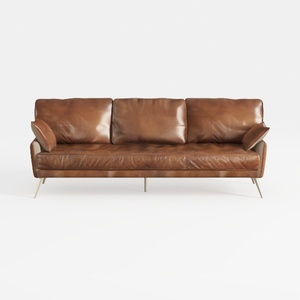
Modern Vintage Leather 3 Seater Sofa With Metal Legs 3D Model
Discover your dream space with Homestyler! This user-friendly platform offers an intuitive online design tool, stunning 3D renderings, and a plethora of inspirational design projects. Plus, with easy-to-follow video tutorials, transforming your home has never been more enjoyable. Unleash your creativity today!
立即免费设计
































