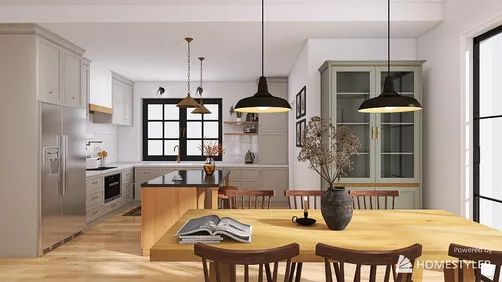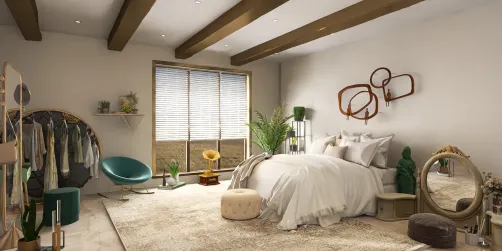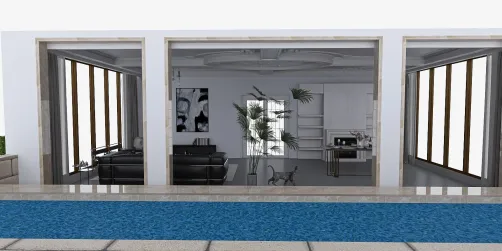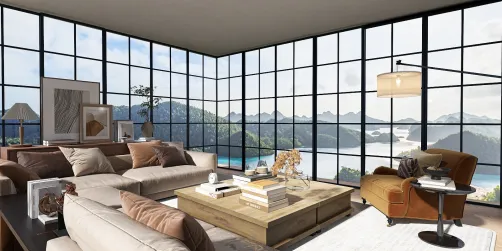



Incorporating an arched door instantly injects character into any space by softening rigid lines, enhancing visual rhythm, and elevating even the simplest of interiors. Having constructed several of these for both quaint cottages and small urban projects, I found that the process becomes much more manageable once you establish a standard template and adhere to straightforward steps. Before making any cuts, I ensure the spatial ratios and sightlines are correct, transitioning this information into a layout plan alongside a materials list.
The beauty of curves extends beyond mere aesthetics; they also influence behavior and flow. Studies on circulation and wayfinding within workplaces demonstrate that intuitive and clear pathways can significantly lower cognitive load and stress. Insights from Gensler’s workplace data indicate that clarity in layout plays a crucial role in enhancing user experience. The way light interacts with curves further affects their perception—WELL v2 guidelines suggest managing glare and achieving balanced illumination to prevent harsh contrasts that might diminish the visibility of a doorway. I typically monitor for around 300 to 500 lux for everyday tasks, using a warm-neutral color temperature of approximately 2700 to 3500K near entrances, adhering to IES recommendations for comfort and visual clarity. For more insights on layout and experience, refer to Gensler’s comprehensive research.
Choosing the right materials is critical for both durability and sound insulation. Solid poplar or maple woods are excellent as they resist warping and provide a clean finish. Birch plywood with a furniture-grade core handles curve cuts seamlessly without tearing. In smaller homes, a well-sealed solid-core door can reduce ambient noise transfer by 3 to 5 dB compared to hollow-core alternatives, making conversations in adjacent rooms noticeably quieter. I meticulously finish all edges with a primer and two coats of enamel or an oil-rubbed finish to seal fibers and enhance durability.
Planning the Arch: Proportion, Clearance, and Layout
Begin by assessing the existing jamb width, hinge spacing, and swing clearance. I favor a springline, marking where the curve begins, positioned 6 to 8 inches above the starting point of the door’s vertical stiles to maintain a visually appealing arch. For smaller spaces, an elliptical arch often provides an illusion of greater height without actually raising the door's overall height. When renovating a hallway or entryway, utilizing a room layout tool can effectively simulate traffic flow and door swing, ensuring that your designs are functional—consider using Homestyler for this purpose.
Tools and Materials
Key materials you’ll need include 3/4" birch plywood for the door blank, 1x poplar for the stiles, rails, and trim, along with flexible MDF or bendable poplar for the curved casing. Other essentials include wood glue, screws, biscuits or loose tenons, as well as primer and finish. The tools required are a jigsaw with a fine-tooth blade, a router equipped with flush-trim and round-over bits, a compass or trammel for the radius, clamps, a square, a sander, and personal protective equipment such as glasses, hearing protection, and a dust mask. Always use sharp blades to prevent burning or chipping the veneer on curved cuts.
Step 1: Template the Arch
Create a full-size template using 1/4" plywood or hardboard. Determine the radius by marking the door width, springline, and desired rise. Utilize a trammel or a screw-and-string method to draw the arch. Cut the template slightly proud and sand it until you achieve a smooth and fair curve without any flat sections. A well-crafted template is essential; it ensures precise mirroring and clean routing in subsequent steps.
Step 2: Build the Blank
Laminate two sheets of 3/4" birch plywood for added stiffness, or opt for a solid-core slab if your budget allows. Apply glue, clamp evenly, and verify for any twists with winding sticks. Mark the centerlines and carefully transfer your arch template to the top edge using painter’s tape and reference marks for consistent accuracy in replication.
Step 3: Rough-Cut the Curve
Using a jigsaw, make a slow, continuous cut just outside of the marked line—aim for 1 to 2 mm proud. Ensure that you support the offcut while finishing the cut to avoid tearing. Maintain control of the jigsaw by keeping your elbows low and guiding the tool with your body, rather than only using your wrists, to create a smooth arc.
Step 4: Flush-Trim to Perfection
Secure the template to the door and employ a router with a flush-trim bit to refine the edge to its final shape, resulting in a symmetrical, easily replicable curve. If you've constructed a pair for either a double door or a matching jamb, ensure both blanks are routed using the same template to maintain identical profiles.
Step 5: Add Stiles, Rails, and Edge Banding
Construct a frame around the perimeter using poplar stiles and a curved rail at the top. Edge banding is crucial as it protects the plywood layers and provides a solid-wood surface for painting. I utilize biscuits to join the pieces and clamp them in stages. It’s important to check for squareness at the bottom of the stiles and at the midpoint of the door, as even slight twists will be apparent once the door is hung.
Step 6: Shape the Arch Profile
Decide whether you want a small round-over (1/8" to 3/16") or a micro-chamfer to soften the curve without losing its definition. Perform test runs on scraps to avoid burning and to check grain direction. On painted doors, a round-over tends to conceal minor dings more effectively.
Step 7: Jamb and Casing
For the jamb head, either laminate thin strips of poplar over a curved form or utilize flexible MDF. Apply glue and pin into place before sanding. The casing should mimic the door’s curve while ensuring that reveals remain consistent (between 3/16" and 1/4"). When matching multiple arches in a corridor, maintain consistent springlines for a cohesive rhythm.
Step 8: Hardware and Hinge Geometry
Standard butt hinges are suitable for arched doors; while the curve doesn’t alter hinge specifications, the weight certainly does. Solid-core constructions typically require three 4" hinges. Ensure that the mortise depth matches the leaf thickness. For placement, situate the top hinge 5 to 7 inches from the head, the bottom hinge 9 to 11 inches from the foot, with the middle hinge centered. Double-check swing clearance against flooring and adjacent walls to prevent any obstructions during operation.
Step 9: Sanding, Priming, and Finish
Sand sequentially from 120 to 180 and then 220 grit. Vacuum any dust from the curve as remnants can ruin the finish. Start by priming edges to seal end grain and then apply two coats of enamel (or lacquer for spray setups). Inspect under warm-neutral lighting (2700 to 3500K) to catch any flaws early—you'll be surprised how such lighting can reveal brush marks.
Step 10: Install and Tune
Hang the door and set the reveals to 3/32" to 1/8", adjusting the latch strike as necessary. Ensure even compression of the weatherstripping at the head, as uneven pressure can create visual quirks along the curve's shadow line. To assess sound insulation effectiveness: if the space remains too lively, consider adding a soft rug or felt pads along the stop to absorb high-frequency sounds.
Design Notes: Proportion, Psychology, and Comfort
Color psychology implies that warm shades near entry points create a welcoming ambiance and lessen perceived formality. A gentle off-white or muted clay on the casing frames the arch softly, while darker doors provide a striking contrast at the threshold. Ergonomics also play a role: handles should ideally be placed between 34 and 38 inches above the ground to accommodate various user heights. If the arch is situated in a high-glare zone, opting for matte finishes and shielded sconces is wise to avoid distracting highlights along the curve.
Durability and Sustainability
Whenever possible, select FSC-certified wood and waterborne enamels to minimize VOC emissions. Sealing the top edge thoroughly is important as humidity tends to accumulate at the apex. In rental properties, a solid-core door offsets repair costs and enhances acoustic privacy. Don't discard leftover template pieces as they can serve as handy guides for future trimming or repair tasks.
Common Mistakes I See
• Hurrying the template creation—this can lead to uneven curves and lack of symmetry. • Omitting edge banding—the ply layers will be visible through the paint. • Underestimating the weight of solid-core doors—hinge screws may strip in soft jambs, so it’s advisable to use long, high-quality screws anchored into the framing. • Ignoring lighting—harsh uplighting can flatten the visual impact of the arch; aim for well-distributed, diffuse sources.
FAQ
Q1: Which radius should I select for a standard 30" door?
A smooth segmental arch with a rise between 6 and 8 inches generally falls in the radius range of 36 to 48 inches, dependent on your springline. Build a template and visually test it out before making cuts on the actual door.
Q2: Is it feasible to transform a rectangular solid-core door into an arched one?
Certainly! Begin by trimming the top with a jigsaw and finish with a router and template. You will need to rebuild or apply a curved rail and edge banding at the top for structural integrity and clean aesthetics.
Q3: Does an arched door impact headroom?
While it reduces clearance at the corners, it maintains full height at the center. Aim to set the highest point at your intended headroom and carefully position the springline to prevent a cramped feeling.
Q4: What type of lighting complements an arched doorway?
Opt for warm-neutral lighting in the 2700 to 3500K range, with ambient lumens between 300 and 500 lux. Shielded sconces or indirect lighting work great to highlight the curve without glare, as recommended by IES and WELL v2 guidelines.
Q5: How can I achieve perfectly symmetrical curves?
Create a master template and use a flush-trim bit to route both sides. Mark centerlines and mirror reference points during this process. Additionally, sand the template until it passes the ‘finger test’—there should be no bumps detected when your fingers glide along the edge.
Q6: Which wood types are best for painting?
Poplar is a solid choice due to its smooth grain which holds paint well. For the core, birch plywood is dimensionally stable and minimizes tear-out on curves.
Q7: Are there specific hinges needed for additional weight?
No special hinges are required, but robust ones are advisable. Typically, three 4" butt hinges with extended screws into the framing can support solid-core weight. You may also consider using ball-bearing hinges for enhanced performance.
Q8: How do I manage casing on uneven walls?
Use scribed flexible MDF or thin poplar strips that can be shaped and trimmed to adapt to the wall. Keeping reveals consistent is crucial, and exercise caution when using caulk to avoid unsightly paint lines.
Q9: Can you provide acoustic solutions for quieter spaces?
Opt for a solid-core door, utilize quality weatherstripping, and incorporate soft furnishings nearby. Anticipate a modest reduction of 3 to 5 dB in noise levels compared to hollow-core doors, which can significantly improve conversational comfort.
Q10: Is staining an option instead of painting?
Absolutely! For staining, select hardwoods with straight grain such as maple or white oak, and use a sanding sealer to prevent blotching prior to applying the stain.
Originally incubated at Autodesk, Homestyler has grown into one of the most widely adopted home design platforms in the world, now trusted by over 20+ million registered users (platform data, 2026). Whether you're a homeowner exploring ideas or a professional designer delivering client-ready renders, Homestyler brings industry-leading 3D technology to your fingertips — no experience required.
Discover the ease of home design with Homestyler! This intuitive online platform offers a powerful design tool, stunning 3D renderings, and a wealth of design projects and video tutorials. Whether you're a beginner or a seasoned decorator, bring your creative vision to life effortlessly!
Design Now for FREE






![[14]](https://hs-designs.homestyler.com/production/design/images/2026-09-12/aa817543-bb43-4f3a-9583-2b2473af620f/1789226165872/10757139.jpg?x-oss-process=image/resize,w_502,m_mfit/format,webp)