


Complementary Color Harmony: A Deep Dive into Red & Green Design
The 'Complementary Color: Red and Green' design challenge invites designers to transcend seasonal stereotypes and explore a timeless chromatic dialogue rooted in color theory, spatial psychology, and modern aesthetic sensibility. Far from holiday-themed clichés, this style leverages the high-contrast tension of red and green — diametrically opposed on the color wheel — to generate visual energy, emotional resonance, and sophisticated balance. When thoughtfully calibrated, red introduces warmth, vitality, and focal emphasis, while green grounds the composition with calm, organic harmony, and natural depth. This dynamic interplay thrives across residential, commercial, and artistic spaces — whether through bold accent walls paired with verdant botanicals, refined material juxtapositions (e.g., oxidized copper against mossy marble), or strategic lighting that modulates saturation and perception. The most compelling interpretations prioritize proportion, hierarchy, and context: letting red command attention where intention matters (a dining chair, a statement fireplace surround), and allowing green to recede, breathe, and unify (through textiles, foliage, or wall finishes). Ultimately, this is not about equal halves — it’s about intentional asymmetry, cultural nuance, and the quiet confidence of color mastery.

Dawn Keller’s serene apartment living room exemplifies accessible, livable red–green harmony. Using a rich terracotta-red sectional as the warm anchor, she balances it with abundant greenery (potted fiddle-leaf figs and trailing pothos), olive-toned upholstery accents, and natural wood elements — all illuminated by soft, even daylight. In Homestyler, this look is achieved instantly using the AI Style Suggestion tool: upload a reference image or select ‘Earthy Contrast’ from the palette library, then apply consistent material presets (e.g., ‘Woven Linen’ for sofa fabric, ‘Matte Ceramic’ for planters) across the scene. Homestyler’s real-time lighting simulator lets you fine-tune sun angle and intensity to ensure reds stay vibrant — not overwhelming — and greens remain lush — not washed out.
Start Free Design NowRed–Green Chromatic Dialogue
At its core, the red–green complementary relationship is defined by maximum hue contrast and mutual enhancement: each color makes the other appear more vivid when placed adjacently. However, successful interior application avoids raw pigment clash by embracing tonal variation — think burgundy + sage, brick + forest, coral + mint, or rust + olive. Saturation and value are critical levers: lowering saturation (using muted, earthy tones) and adjusting lightness (e.g., pale celadon vs. deep emerald) dramatically increases sophistication and reduces visual fatigue. Texture further diffuses intensity — a nubby red wool rug beside smooth green-glazed tiles creates tactile harmony that supports chromatic balance. In Homestyler, designers leverage the advanced color picker with HSL sliders to dial precise hue angles and saturation levels, and use the Material Library’s curated ‘Complementary Palette’ sets — pre-matched for luminance and undertone compatibility — to guarantee cohesion across walls, furniture, and decor.

Amelia Erasmus masterfully demonstrates chromatic focus in her clean, contemporary layout. A single, sculptural red velvet armchair becomes the undisputed protagonist, while a large-scale green abstract painting on an otherwise white wall echoes its hue without competing — creating rhythm, not redundancy. The neutral backdrop (white walls, light oak floor) ensures both colors retain clarity and depth. In Homestyler, this strategy is executed using the ‘Focal Point’ rendering mode: isolate the chair with a custom red material preset (‘Velvet - Deep Crimson’), then apply the ‘Artwork Overlay’ feature to match the painting’s green tone precisely to the palette — no guesswork. Homestyler’s one-click ‘Tonal Harmony’ filter automatically adjusts ambient lighting to prevent color cast and preserve true-to-life vibrancy.
Design Your Space FreeMaterial & Texture Counterpoint
Materiality is the silent mediator in red–green design. Smooth, cool surfaces like glass, ceramic, or polished stone temper red’s heat; rough, organic textures like jute, linen, or reclaimed wood soften green’s potential monotony. The contrast between a glossy red lacquer cabinet and matte green plaster wall, or between a burnished copper pendant and a woven seagrass rug, adds dimensional richness that prevents flatness. Texture also influences perceived color: a coarse red brick wall reads warmer and deeper than a smooth red-painted surface, while a velvety green sofa absorbs light differently than a satin-finish green curtain. Homestyler’s Material Physics Engine simulates how light interacts with over 2,000+ realistic textures — enabling designers to preview exactly how a ‘Textured Clay Red’ tile will reflect light next to a ‘Mossy Felt Green’ ottoman before finalizing the scene.

Roci 1999’s luxury apartment elevates the pairing through opulent material contrast: sumptuous red leather seating meets cool, veined green marble tabletops and backsplashes, with brass fixtures adding reflective warmth. The interplay of leather’s depth, marble’s translucency, and metal’s shine creates a layered sensory experience that transcends simple color matching. In Homestyler, this level of realism is unlocked via the ‘Premium Material Pack’ — applying physically based rendering (PBR) materials like ‘Aniline Leather - Bordeaux’ and ‘Carrara Marble - Verde’ with automatic bump, roughness, and metallic maps. Homestyler’s ‘Material Match’ tool even suggests compatible green marbles when you select a specific red leather, accelerating cohesive decision-making.
Spatial Proportion & Hierarchy
Proportion is the architectural backbone of red–green harmony. The 60-30-10 rule (or its flexible variants) provides a reliable framework: 60% dominant tone (often a neutral base like warm white, beige, or charcoal), 30% secondary color (e.g., green as walls, large rugs, or cabinetry), and 10% accent (vibrant red in furniture, art, or accessories). But beyond ratios, hierarchy governs *where* color lives: red excels at defining zones (a red kitchen island anchors cooking space), while green excels at unifying (green accent walls connecting living/dining). Negative space — uncolored walls, ceilings, or flooring — is equally vital, offering visual rest and amplifying impact. Homestyler’s ‘Zone Coloring’ feature allows designers to assign color percentages per room zone with live percentage readouts, while the ‘Color Impact Preview’ overlay highlights which surfaces contribute most to the overall chromatic weight — ensuring balance is data-informed, not intuitive.

Sylvia Preis crafts intimate harmony in her cozy living room by adhering to a restrained 70-20-10 ratio: warm neutral walls and floor (70%), deep green throw pillows and framed botanical prints (20%), and a single, saturated red fabric sofa (10%). The red sofa isn’t just furniture — it’s the compositional heart, visually weighted by its scale and placement against the lighter background. In Homestyler, this precision is effortless: use the ‘Color Ratio Assistant’ to lock the sofa at 10% surface area, then drag-and-drop green pillows and art from the ‘Botanical Accent’ model collection — all auto-scaled and tonally matched. Homestyler’s ‘Scene Balance Score’ gives real-time feedback on chromatic equilibrium, guiding adjustments before export.
FAQ
Q: Is the red–green complementary scheme only suitable for festive or traditional interiors?
A: Absolutely not. This challenge explicitly encourages moving beyond seasonal clichés. Top-winning entries — like Z 10’s ‘Le Havre Restaurant’ (modern coastal elegance) and VagSer’s ‘Countryside cottage’ (rustic-minimalist charm) — prove red and green thrive in contemporary, global, and highly personalized contexts when grounded in proportion, texture, and intentional hierarchy.
Q: How can I avoid my red–green space feeling overwhelming or chaotic?
A: Prioritize a strong neutral foundation (walls, floors, large furniture), limit highly saturated reds/greens to accents (not large surfaces), and introduce ample texture and organic elements (wood, stone, plants) to diffuse visual intensity. Homestyler’s ‘Harmony Filter’ and ‘Saturation Limiter’ tools help preview and control chromatic stress before rendering.
Q: Do I need advanced design training to participate in the Complementary Color challenge?
A: No. Homestyler is built for all skill levels. Use the AI Interior Designer to generate red–green palettes from text prompts (e.g., ‘modern living room with sage walls and terracotta sofa’), apply one-click ‘Complementary Style’ templates, and leverage the intuitive drag-and-drop Model Library — including curated collections like ‘Bauhaus’ and ‘Maximalist’ — to build professional-grade scenes in minutes.

Two Tone Fabric Tufted Traditional Sofa With Decorative Throw Pillows 3D Model

Minimalist Modern Burnt Orange Fabric Three Seat Sofa 3D Model
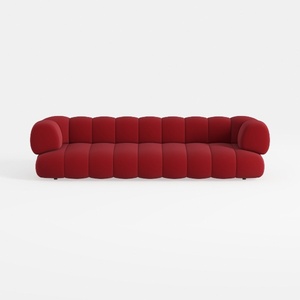
Modern Red Velvet Tufted Extra Large Sofa 3D Model
Homestyler offers an easy-to-use online design tool with stunning 3D renderings, inspiring design projects, and helpful DIY video tutorials. It’s perfect for anyone looking to create beautiful home interiors effortlessly. Give your home a fresh look with Homestyler’s all-in-one platform!
Design Now for FREE





