


Red-Green Complementary Color Living Room Design
The 'Red-Green Complementary Color Living Room Design' is a universal residential interior design scenario centered on the dynamic interplay of red and green — hues diametrically opposed on the color wheel. Far beyond holiday-themed clichés, this scene emphasizes intentional spatial storytelling: using red as an energizing focal anchor (e.g., accent wall, sofa, or artwork) and green as a grounding, harmonizing counterpoint (e.g., lush indoor plants, upholstered armchairs, or matte green cabinetry). It challenges designers to balance chromatic intensity with material texture, lighting warmth, and spatial proportion — transforming the living room into a psychologically resonant, visually cohesive environment where vibrancy coexists with calm. This scenario reflects real-world demands for bold yet livable interiors and aligns closely with global trends in biophilic and emotionally intelligent indoor space planning.
Design Challenges & Common Pitfalls
Achieving harmony with red and green is deceptively complex. Common issues include visual vibration (causing eye fatigue due to high-contrast saturation), imbalance (e.g., overwhelming red dominance without sufficient green modulation), and contextual mismatch (e.g., using neon red/green in a serene minimalist living room). Many designers also struggle with scaling — applying these colors effectively across varying room sizes, natural light conditions, and ceiling heights. Additionally, integrating red-green palettes while maintaining accessibility (e.g., for color-blind users) and ensuring long-term aesthetic resilience (avoiding trend-driven kitsch) remains a persistent challenge in professional interior space planning.
✅ Principle 1: Anchor with One Dominant Hue, Modulate with the Other
Never treat red and green as equal partners. Choose one as the primary tonal foundation (e.g., warm ivory walls + deep forest green sofa) and use the complementary hue sparingly but purposefully for emphasis (e.g., a single crimson throw pillow, a red ceramic vase, or framed red-toned artwork). This creates hierarchy, reduces visual noise, and leverages color psychology: green evokes stability and nature; red signals energy and focus. Homestyler Design Tips suggest using the AI's 'Color Replace' tool to test dominant base tones before committing — a key step in efficient indoor space planning.

Handan Bayülken’s unnamed living room design exemplifies this principle masterfully: she anchors the space in soft neutral tones (beige walls, light wood floor, cream sofa) and introduces red *only* through small-scale, high-impact elements — two vibrant red cushions and a bold red abstract painting above the sofa. Green appears organically via a large potted monstera and smaller leafy accents on shelves. Using Homestyler AI, she likely leveraged precise material swaps and lighting simulation to ensure the red elements pop without clashing — a textbook application of strategic hue hierarchy in modern interior space planning.
Start Free Design🎨 Principle 2: Prioritize Materiality & Texture Over Flat Color
Flat, saturated paint swatches rarely translate well into three-dimensional rooms. Instead, express red and green through diverse textures and materials: rich velvet or bouclé in burgundy, matte ceramic or terracotta in brick red; mossy wool rugs, linen upholstery in sage, or glossy lacquered cabinets in emerald. Texture diffuses chromatic intensity, adds depth, and enhances tactile comfort — critical for livability. Homestyler Design Tips recommend using the platform’s extensive material library (e.g., ‘Bauhaus Model Collections’ and ‘Maximalist Furniture Model Collection’) to preview how fabric weaves, wood grains, and surface finishes affect color perception under realistic lighting.

Shalima Mohammed Thomas’s ‘Vibrant Retreat’ bedroom applies this principle with sophistication. Rather than painting walls red or green, she uses deep red velvet on the headboard and textured green linen on throw pillows and bedding. The green plant adds living texture, while warm ambient lighting from the table lamp softens contrast. Leveraging Homestyler AI’s photorealistic rendering, she validated how material choices — not just hue — shape emotional response, demonstrating advanced Homestyler Design Tips for creating layered, sensorially rich interior space planning.
Begin Free Design🌿 Principle 3: Integrate Biophilic Green as a Structural Element, Not Just Decoration
Move beyond potted plants as afterthought accessories. Treat greenery as architectural punctuation: use tall floor plants (e.g., fiddle-leaf figs) to define zones or soften corners; install vertical gardens on feature walls; or frame windows with cascading vines. This reinforces green’s role as a stabilizing, life-affirming force — balancing red’s dynamism with organic rhythm and air-purifying function. In Homestyler, designers can place realistic 3D plant models at scale and simulate seasonal growth, supporting evidence-based biophilic interior space planning and enhancing wellness-oriented design outcomes.

Handan Bayülken’s second entry (bedroom with dressing table) integrates green structurally: a large, sculptural rubber plant stands beside the bed like a living column, while trailing pothos vines drape elegantly from a shelf near the window — framing daylight and adding vertical rhythm. Red appears subtly in the woven textile on the dressing stool and a single crimson wall hanging. Using Homestyler AI’s drag-and-drop plant library and sunlight simulation tools, she ensured the greenery enhanced spatial flow rather than cluttered it — a hallmark of intentional, human-centered interior space planning.
FAQ
Q: Can I use red and green in a small living room without making it feel cramped?
A: Yes — absolutely. Use light, airy neutrals (white, beige, soft gray) as your primary wall and ceiling palette. Introduce red as a single statement piece (e.g., a compact red accent chair) and green via vertical greenery (e.g., a tall snake plant in the corner). Homestyler Design Tips show that simulating ceiling height and furniture scale in the app helps avoid visual overcrowding during indoor space planning.
Q: Which red-green combinations are most accessible for color vision deficiency?
A: Avoid pure, saturated red (#FF0000) and green (#00FF00) together. Opt for desaturated, value-contrasted pairings — e.g., burnt sienna + olive green, or brick red + sage — and reinforce differentiation with texture, pattern, and placement. Homestyler’s accessibility preview mode supports inclusive interior space planning.
Q: How does the Homestyler AI tool specifically help with red-green color balancing?
A: Homestyler AI offers real-time color harmony scoring, one-click complementary palette generation, and instant material+lighting simulation. You can test dozens of red-green ratios and finishes in seconds — accelerating iterative refinement far beyond manual trial-and-error in physical interior space planning.
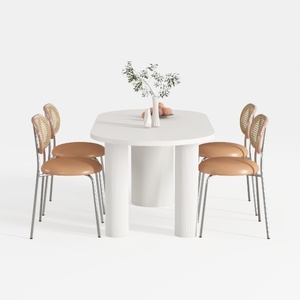
DUOMAY Modern Boucle Dining Chairs Set of 2,
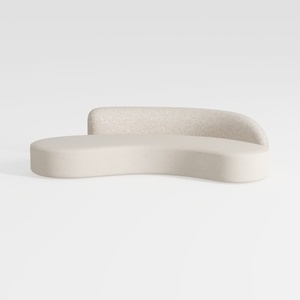
Minimalist Boucle Curved Sofa 3D Model
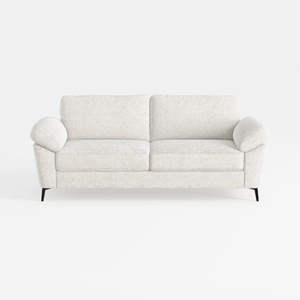
Minimalist Fabric Loveseat Sofa with Black Metal Legs 3D Model
Homestyler offers an easy-to-use online home design tool with stunning 3D renderings, inspiring design projects, and helpful DIY video tutorials. It’s perfect for anyone wanting to visualize and create beautiful interior spaces effortlessly.
Design Now for FREE





