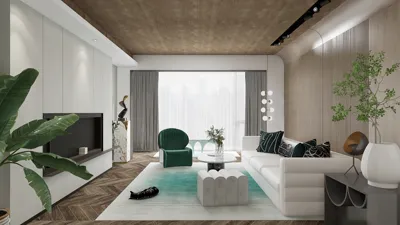


In my experience, I once persuaded a couple to adjust their king-sized bed by 90 degrees, and it almost cost me a client because of a wrongly placed lamp — it's a true story! This little incident made it clear to me that sketches can help, but visualizing the layout truly brings ideas to life. This is why I frequently share innovative room design examples with concerned homeowners whenever layout discussions arise. Small spaces can ignite significant creativity, and in this article, I will share five master bedroom layout concepts that I rely on after more than a decade of optimizing compact suites.
1. Symmetrical Serenity: Bed as the Centerpiece
I enjoy positioning the bed centrally on a singular focal wall with matching nightstands and harmonious lighting; this approach instantly conveys tranquility and organization. The advantage is a smooth flow and timeless appearance; however, it can limit flexibility if windows or doors are awkwardly situated — occasionally custom nightstands are required to fit everything neatly.
save pin
2. Corner Bed with Floating Nightstands
Positioning the bed in a corner at a 45-degree angle can enhance movement and establish a cozy reading corner by the window. This daring move not only opens up floor space but also conceals unsightly HVAC units or door swings. However, some clients may find this arrangement unbalanced and might need a tailored headboard or platform for a polished look.
save pin
3. Integrated Storage Wall
When space is limited, I often recommend built-in features along one wall: low drawers beneath a bench, vertical wardrobes, and open shelving for decorative items. Built-ins make the most of available storage and create a sleek look, although they come with a higher initial cost and can be less adaptable if you plan to rearrange later. For those on a strict budget, breaking the project into manageable phases helps keep expenses in check.
save pin
4. Versatile Seating and Defined Lighting
A compact loveseat or a pair of ottomans at the end of the bed provides a usable resting area without needing a full seating arrangement. By integrating layered lighting — bedside lamps, dimmable overhead lights, and reading fixtures — the space feels larger and more intentional. However, it's essential that every piece of furniture earn its position; misplaced accent chairs can introduce clutter.
save pin
5. Pocket Doors for Enhanced Flow
Replacing traditional swing doors with pocket doors or sliding panels can reclaim essential space and create a more open feel in the suite. Homeowners love this option for its dramatic flair and practicality, but be mindful of wall plumbing or wiring that may complicate the installation. For clients who find it hard to picture the transformation, I suggest using 3D visualizing tools like Homestyler to help them experience the layout change before proceeding.
save pin
Frequently Asked Questions
Q1: What bed size is optimal for a master bedroom?
I typically start by considering the intended use: if you’d like a sitting area, a queen might be more suitable than a king. Ensure enough clearance — aim for at least 60–75 cm (24–30 in) on the primary circulation side for convenient movement.
Q2: How can I increase storage without making the room feel cramped?
Think vertically: utilize tall wardrobes, shelves over the bed, and drawers under the bed. Incorporating built-ins along one wall maximizes storage capacity while maintaining a visually open floor plan.
Q3: Is it preferable for the bed to be against a window or a solid wall?
Positioning the bed against a solid wall typically offers a stronger focal point and more headboard choices. If you prefer window views, consider low-profile headboards or a bench to balance light and privacy.
Q4: What clearance is recommended around a bed?
Standard recommendations suggest 60–75 cm (24–30 in) for primary circulation and 45–60 cm (18–24 in) on less-utilized sides. These clearances enable comfortable movement and make cleaning easier.
Q5: Can I combine modern and traditional styles in a master bedroom?
Absolutely — I frequently mix a classic bed frame with contemporary lighting to achieve a blend of traditional warmth and modern sharpness. The key is to find a common element, like color or material, to cohesively tie the aesthetics together.
Q6: What type of lighting is best for creating a relaxing master bedroom?
Layered lighting is ideal: soft, dimmable overhead lights, task lamps by the bed, and accent lights for displaying artwork or shelves. Dimmers are essential for mood control, which is critical for relaxation.
Q7: How should I plan if the master bedroom has an ensuite bathroom?
Ensure that access to the ensuite is direct and unobstructed; avoid placing a dresser in a way that blocks the bathroom door. For reworking both areas, consider using a layout planning tool, such as Homestyler, to align plumbing and flows effectively.
Q8: What is the ideal temperature for sleep?
According to the National Sleep Foundation, the optimal bedroom temperature for most adults is between 60–67°F (15.6–19.4°C) for better sleep quality. I often recommend planning HVAC systems and window treatments with this temperature range in consideration.
save pin
Discover Homestyler, the ultimate online home design platform! With its user-friendly design tools, stunning 3D renderings, and a wealth of DIY video tutorials, you can effortlessly create your dream space. Whether you're a novice or an experienced designer, Homestyler inspires creativity and transforms your ideas into reality.
Concevez maintenant gratuitement
































