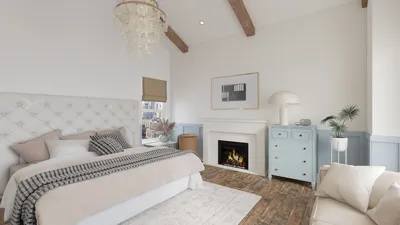


One client once asked me to paint their master bedroom the hue of a storm cloud, saying it felt dramatic at 3 a.m. While I chuckled at the request, this bold choice enlightened me about the importance of contrast and mood — demonstrating how an accent wall can dramatically change a room's ambiance without necessitating a complete repaint. If you enjoy playful experiments with design, begin by visualizing the space to avoid falling for a swatch that appears different on your wall. Additionally, utilizing tools like Homestyler can aid in visualizing these changes effectively.
1. Deep tone accent wall behind the bed
I frequently suggest using a deep navy, charcoal, or forest green on the wall behind the headboard to create a cocooning ambiance. The benefit of this choice is that it introduces instant drama and becomes a strong focal point; however, it might feel overwhelming in spaces lacking natural light. To counteract this, consider pairing it with lighter bedding and reflective bedside lamps, creating a nice balance.
save pin
2. Textured finishes for visual interest
Rather than opting for a flat color, consider a subtle Venetian plaster or textured paint finish for one wall, as they beautifully catch the light and convey a sense of luxury. Although this technique may require a skilled contractor and may be slightly more expensive, in compact rooms, the texture not only adds depth but also serves as a conversation starter while concealing minor imperfections.
save pin
3. Two-tone horizontal divide for an illusion of height
To create the perception of a taller room, paint the lower half in a rich hue and the upper half in a soft neutral, ensuring a thin molding strip to give it a polished, intentional look. This technique helps control proportions, making it particularly useful in rooms with lower ceilings. However, it necessitates precise measurements and clean lines to avoid an amateur appearance.
save pin
4. Soft pastel accents with contrasting trim
For a serene master suite, consider a muted blush, sage, or powder blue as an accent wall, complemented by a darker trim. This combination feels both modern and gentle, making it budget-friendly and accommodating. Just be mindful of the undertones of your lighting; a shade that appears warm under showroom lights might come off as cooler in your own home.
save pin
5. Murals or oversized wallpaper behind the bed
Utilizing wallpaper or a mural instantly defines the sleeping wall, granting a small room immense personality with minimal effort. Although installation and ensuring pattern alignment can present challenges, the availability of removable wallpaper options allows for experimentation without long-term commitment. Moreover, using design tools like Homestyler to sketch a layout in advance can help visualize how these patterns will interact with your furniture arrangement.
save pin
Quick tips from my real-life projects
I always recommend testing large paint swatches on the wall at various times throughout the day — seeing the shade in morning and evening light is invaluable. On a budget, painting is one of the highest-impact, low-cost updates you can make; typically, adding an accent wall costs significantly less than reupholstering or purchasing a new headboard.
For master suites adjacent to kitchens or open-plan bedrooms, consider how colors flow into adjacent spaces. Sometimes a subtle hint of the same accent can create cohesion throughout, particularly when planning the flow between the kitchen and bedroom.
save pin
Frequently Asked Questions
Q1: Which colors help make a master bedroom feel more spacious?
A1: Light, cool neutrals like pale gray, soft blue, or warm off-white reflect more light, visually expanding the room. Apply these on three walls and reserve an accent wall for added depth.
Q2: Which wall should I choose for an accent?
A2: The wall behind the bed is a classic option as it anchors the sleep area and frames the headboard nicely. Alternatively, a fireplace wall or the first wall visible upon entering can also work well.
Q3: Are dark accent walls a passing trend or a timeless choice?
A3: Deep hues are currently very fashionable yet can feel timeless when paired with classic materials like wood and brass. These darker tones do require adequate lighting, so plan for sconces or bedside lamps accordingly.
Q4: What paint finish is best for an accent wall in a bedroom?
A4: Eggshell or satin finishes offer a gentle sheen and are more forgiving on walls; while matte finishes hide imperfections, they can be challenging to clean in areas that see a lot of traffic, like behind the headboard.
Q5: How do I select the right undertone for paint?
A5: Compare swatches next to your bedding and flooring in natural light — a color that appears overly yellow has warm undertones; if it seems too blue, it possesses cool undertones. Testing is crucial.
Q6: Are low-VOC paints worth considering?
A6: Yes, they reduce indoor air pollutants and are healthier for sleep and overall well-being. The EPA provides resources on indoor air quality and paint selection: https://www.epa.gov/indoor-air-quality-iaq.
Q7: Can I handle an accent wall project on my own?
A7: Definitely — with proper preparation, including taping, priming, and using quality rollers, most homeowners can successfully execute a single accent wall. However, complex textures or murals are best left to professionals.
Q8: What is the estimated cost for creating a single accent wall?
A8: Costs will vary based on paint quality and wall size, but it generally involves a modest budget compared to full-room solutions — typically under a few hundred dollars for paint and supplies, and relatively more if hiring help or opting for specialty finishes.
save pin
Homestyler is your go-to online home design platform! With its user-friendly design tool, stunning 3D renderings, and a wealth of DIY video tutorials, you can effortlessly create and visualize your dream spaces. Dive into exciting design projects and transform your home today!
تصميم الآن مجانا
































