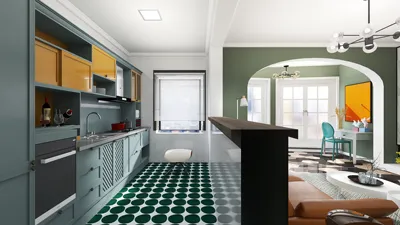


I once worked with a client who adamantly believed that their oversized television should dominate the living room, leading us to design the entire layout around a screen larger than the coffee table itself. This experience underscored the importance of prioritizing flow over mere aesthetics, teaching me to always consider how individuals will navigate a space. To visualize potential arrangements, I often utilize tools that allow me to see a layout in 3D before making significant purchases, such as those offered by Homestyler.
1. Create distinct zones using rugs and lighting
I utilize rugs and varied lighting as invisible dividers that establish seating areas, reading nooks, and walkways, all while maintaining the room's openness. The immediate benefit is greater clarity in photographs and walkthroughs; however, it’s crucial to balance rug dimensions and light tones so that different areas feel harmonious.
save pin
2. Simplify to emphasize focal points
Opting for a minimalist approach can dramatically enhance a space—select one standout piece (like a fireplace, a striking sofa, or a unique art piece) to serve as the focal point and eliminate any distracting clutter. This strategy not only creates cleaner photography but also directs potential buyers’ attention precisely where you want it. Although it may be difficult to pack away sentimental items, I recommend clients store them temporarily and note which ones they truly miss.
save pin
3. Prioritize scale and spacing: give furniture breathing room
Choosing smaller sofas, slender coffee tables, and narrow console tables can conserve space while contributing to an intentional appearance. I frequently draft quick layouts to ensure that furniture does not obstruct walkways; if you're inclined to experiment with proportions, consider using tools that facilitate accurate floor planning to make measuring a breeze.
save pin
4. Use a neutral backdrop with splashes of personality
Neutral walls and soft fabrics not only photograph beautifully but also enhance the visibility of accent pieces—such as a vibrant throw or well-curated books. This approach attracts a wider range of potential buyers; however, it may feel a bit sterile during viewings, so I recommend including a couple of meaningful accessories to imbue warmth and a sense of life.
save pin
5. Adopt flexible layouts for multi-functional living
In today's world of remote work, living rooms have transformed into TV lounges, home offices, and even dining areas at times. I recommend designing furniture layouts that can easily adjust—consider lightweight nesting tables or a sleek desk that fits snugly behind a sofa—allowing the area to adapt to various needs. If your design touches on kitchen aspects, it may be fruitful to borrow ideas from kitchen layout planning to enhance circulation in open-plan spaces.
save pin
FAQ
Q: What is the typical cost of staging a living room?
Staging costs vary widely depending on the market and the level of service, ranging from straightforward DIY styling using rented decor to comprehensive furniture staging. Prepare for a range of prices; consult local stagers for detailed quotes to help you compare offerings.
Q: Should I stage the room myself or hire a professional?
If you have a knack for space planning and a good eye for neutral styling, DIY staging can be a cost-effective solution. However, for quicker sales and more impactful, photo-ready setups, a professional can leverage their expertise, often justifying their fees through improved buyer interest.
Q: What are some quick tips for capturing great photos?
Declutter the space, maximize natural light, angle your shots to create depth, and remove any small personal items. Simple adjustments, such as straightening cushions and warming up the lighting, can significantly enhance the appeal of listing photos.
Q: How long should staged items remain in the living room during the marketing period?
Maintain staged arrangements throughout the active marketing period or until you begin receiving consistent showings. If the staged look consistently attracts interest, it’s worthwhile to keep it in place until an agreement is reached.
Q: Do buyers have a preference for neutral versus bold staging?
Most buyers envision their own style more easily against a neutral background, so I advise using neutral foundations accented with one or two tasteful pops of color. Bold themes can deter some buyers, so it's best to use them sparingly.
Q: What should I focus on when working with a tight budget?
Begin by decluttering thoroughly, applying a fresh coat of neutral paint, and ensuring good lighting; affordable textiles like throws and cushions can refresh the look without breaking the bank. These actions can enhance both in-person impressions and the quality of listing photos.
Q: Are there statistics that demonstrate the value of staging?
Indeed—research from the National Association of Realtors (NAR) indicates that staged homes typically sell faster and can command higher offers; refer to NAR’s studies for market-specific data. Relying on credible statistics can help substantiate your staging budget decisions.
Q: How can I stage a living room with an awkward layout?
Incorporate multifunctional pieces, like ottomans with storage capabilities, and establish clear pathways to ensure the space feels intentional. Sometimes repositioning a single significant item—such as angling the sofa—can unlock a layout that creates a more spacious ambiance.
save pin
Discover the magic of home design with Homestyler! This user-friendly platform offers a robust online design tool, stunning 3D renderings, and a wealth of DIY video tutorials. Transform your vision into reality and explore endless interior design possibilities effortlessly!
Progetta ora GRATIS
































