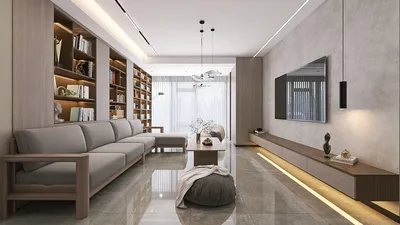


I once positioned three different pendant lights at varying heights because a client desired a special spotlight for their cat — it’s true! The cat enjoyed it immensely. This amusing incident imparted a valuable lesson to me: lighting is not only technical but also wonderfully personal. Particularly in small spaces, clever lighting solutions can make a significant difference; it compellingly urges careful consideration and often leads to memorable outcomes.
In this article, I will reveal what a lighting designer truly does and provide you with five actionable inspirations tailored for small homes. These suggestions are derived from my direct experience in various projects, along with genuine insights regarding their advantages and minor drawbacks.
1. Multi-layered lighting to create an airy feel in a compact living room
I always initiate my designs with three essential lighting layers: ambient, task, and accent. Ambient lighting serves as the overall illumination, task lighting is focused on activities such as reading, and accent lighting emphasizes textures or artwork. The key benefit of this approach is the added depth, allowing rooms to appear larger and more adaptable. However, coordinating these layers can be challenging; dimmers and zoning are essential to prevent competing lights. In one studio remodel, I incorporated recessed ambient lighting, a tall floor lamp for reading, and LED strips behind shelves, effectively transforming the area into two distinct zones without the need for additional walls.
save pin
2. Employ warm, adjustable LEDs for versatile spaces
Switchable color temperatures are invaluable when a room is utilized as both an office and a relaxation area. Warmer lights promote relaxation, while cooler tones enhance concentration. LEDs are energy-efficient, produce low heat, and come in compact forms ideal for small ceilings. Although tunable fixtures may have a higher initial cost, they offer savings in both replacement and electricity over time. A potential drawback is the variation in color rendering across different brands, which is why I always advocate testing samples beforehand.
save pin
3. Integrated lighting beneath cabinets and shelves in kitchens
In compact kitchens, I particularly favor integrated under-cabinet lighting and toe-kick lights, which improve task visibility while conserving counter space. This method conceals fixtures and highlights surfaces, contributing to a bright and custom feel in the kitchen. The trade-off involves meticulous planning for wiring and installation early in the renovation process, and some DIY lighting strips may produce uneven light; thus, I generally recommend professional-grade solutions or utilizing a kitchen layout planner like Homestyler to strategize circuits and zones.
save pin
4. Vertical lighting techniques to create an illusion of height
Uplights, wall washers, and elongated linear fixtures can direct the eye upward, enhancing the perception of height in a room. In spaces with low ceilings, strategically placed uplights or LED coves can deliver drama without the bulkiness of large fixtures. The secret is to minimize glare — using indirect sources yields the best effects. I once implemented wall washers in a narrow corridor with a low ceiling, which transformed the area to feel remarkably spacious, akin to a cathedral, though we had to cleverly conceal the control drivers in a shallow bulkhead.
save pin
5. Adaptable, track lighting systems for changing requirements
Track lighting remains a popular choice among clients who seek versatility: it allows for moving heads, changing lamps, and adjusting beam angles as furniture arrangements shift. This flexibility is especially beneficial in multifunctional small homes. The advantage lies in its versatility and focused accent lighting; however, it can occasionally exhibit an industrial look, which I tend to soften with coordinated finishes and suitable lamp designs. For renters, low-profile track kits are often reversible and minimally intrusive.
save pin
FAQ
Q1: What is the role of a lighting designer? A lighting designer is responsible for planning and specifying lighting to fulfill functional needs and enhance aesthetics, carefully balancing technical aspects such as lumen output, color temperature, and control systems with the overarching design vision.
Q2: How does lighting design differ from interior design? Lighting design specializes in illumination strategies, controls, and fixtures, while interior design encompasses broader decisions regarding space, materials, and furniture. These two disciplines often collaborate closely for optimal results.
Q3: Is hiring a lighting designer necessary for a small apartment? Not necessarily — however, a lighting designer can maximize limited spaces and incorporate layers and controls to enhance comfort and functionality.
Q4: What light color is ideal for living areas? Warm white light (2700K–3000K) typically creates a cozy atmosphere; tunable white allows adjustments between warm and cool tones to suit various tasks and moods.
Q5: Are LEDs superior to halogen? Absolutely, LED lights are more energy-efficient, have a longer lifespan, and produce less heat. For accurate color representation, check the CRI, with 90+ being the preferred rating.
Q6: What are the costs associated with hiring a lighting designer? Fees can vary significantly based on the project scope; some designers charge a flat rate, while others bill by the hour. For accurate budgeting, consult a local designer familiar with similar projects to obtain estimates.
Q7: Where can I find effective lighting design tools for layout planning? Many designers leverage advanced layout planners and 3D rendering tools like Homestyler to experiment with schemes; these resources facilitate visualization of light placement and intensity in context.
Q8: Are there established standards for lighting levels? Yes, organizations like the Illuminating Engineering Society (IES) provide recommended foot-candle/lux levels for various tasks. For comprehensive guidance, refer to IES publications (Illuminating Engineering Society, ies.org).
save pin
Homestyler is your ultimate home design companion! With a user-friendly online design tool, stunning 3D renderings, and a wealth of DIY video tutorials, you can effortlessly create and visualize your dream space. Unleash your creativity and transform your home with ease!
今すぐ无料でデザイン
































