

I have reimagined various venues, including ballrooms, warehouses, and community halls, creating memorable spaces that guests reminisce about years later. Alegria Hall—regardless of whether it’s your local venue or a generic term for any adaptable event space—can be the backdrop for captivating experiences by fine-tuning four essential elements: lighting, color, layout, and acoustics, complemented by materials, ergonomics, and a smooth behavioral flow supported by tools like Homestyler.
This methodology is anchored by two significant insights. First, the WELL v2 standard underlines the significance of quality lighting; circadian-friendly lighting and glare control are associated with improved alertness and mood (WELL Light concept, v2). Second, research from Steelcase indicates that spaces designed with human needs in mind enhance engagement and lower stress; environments that promote clear navigation and distinguish between areas for focus and social interaction lead to increased satisfaction and performance. These observations resonate in my experience with events: enhanced lighting and intuitive layouts boost guest retention and positive feelings.
The ratios of lighting are crucial. The Illuminating Engineering Society (IES) suggests that task illuminance should be in the 300–500 lux range for reading, while ambient levels around 150–250 lux ensure a comfortable atmosphere without glare. For stage performances, I aim for 700–1,000 lux with controlled beam spreads and a 2:1 highlight ratio for focal points. The color temperature affects mood: 2700–3000K creates a cozy vibe for receptions, 3500–4000K maintains a lively yet relaxed dining atmosphere, and 5000K gives a fresh feel for exhibition setups. It’s important to avoid direct glare; position fixtures at 30–45° angles, and use dimmable drivers to adjust scene changes fluidly during the event.
Establish a Narrative: Intent Before Design
I construct each event around a straightforward storyline—arrival, reveal, social height, and gradual closure. This narrative influences lighting intensities, furniture arrangement, and acoustic treatment. If Alegria Hall features a high ceiling, the vertical space becomes part of the reveal: uplighting architectural features at a low intensity during arrival, enhancing colors at the social height, and then softening to warmer tones as the event wraps up. This timed choreography maintains energy balance and guest comfort.
The Psychology of Color and Its Influence on Behavior
Color does more than just embellish; it guides behavior. Research from Verywell Mind emphasizes that warm shades can boost sociability, while cooler tones promote calmness and concentration. I apply warm tones like coral or amber near bars to encourage conversation and soften color palettes in dining areas to stimulate appetite and relaxation, incorporating cool accents in quieter lounges to indicate a space for restoration. It's essential to manage saturation—starting with a neutral base, complemented by a single accent color and a subtle highlight to avoid overwhelming the visuals.
Light Scenes: Dynamic and Layered
Integrate ambient, focal, and decorative lighting layers. Ambient lighting consists of gentle, even spreads for establishing the baseline lux levels. Focal lighting delivers narrow beams for stages, art displays, and speaker stands. Decorative lights could include pendants, candles (LED), or gobos projecting patterns that reflect the event’s theme. Should the event flow shift from a keynote address to a cocktail reception, dim ambient lighting by 20–30%, increase decorative highlights, and maintain focal beams for navigation. Managing glare is essential; utilize shields, honeycomb louvres, and assess sightlines from seated areas carefully.
Designing the Flow: Clear and Intuitive Zones
The success of an event often depends on effective wayfinding and logical adjacencies. Begin with three primary zones: reception/arrival, content/performance, and social/dining areas. The circulation should form a gentle loop, never leading to a dead end. In multi-purpose halls, I test various seating densities to identify the optimal balance between aisles, staging, and service paths. When a venue team requires quick design iterations, I utilize a room layout tool, like Homestyler, to visualize guest movements and evaluate service routes efficiently.
Consideration of Human Factors: Comfort, Sightlines, and Seating
Human factors are just as significant as aesthetics. Ensure aisle widths are between 1.2 and 1.5 meters for events hosting 100 to 200 guests; for larger groups exceeding 300, include additional aisles to maintain safe egress. Keep seating within 18–20 meters of the stage for unamplified presentations; beyond this distance, both visual and acoustic clarity diminish. If a keynote address is scheduled, slightly rake the seating or elevate the stage between 450 and 600 mm to preserve sightlines. Standard table heights are 740–760 mm with chairs around 450–480 mm, which accommodates most attendees comfortably; stagger service areas to limit cross-traffic.
Achieving Acoustic Comfort Without Over-Dampening
Acoustics can significantly influence an event's success. For clear speech, aim for an RT60 (reverberation time) of approximately 0.8–1.2 seconds in versatile halls. Use a mix of soft materials (drapes, carpets, upholstered furniture) and strategic diffusion elements (wood slats, sculpted panels) rather than complete absorption, which can diminish the room’s vitality. Keep subwoofers positioned away from corners to avoid booming effects; utilize cardioid arrays whenever the budget allows. Maintain background music levels between 55–65 dBA during social mingling, dropping to 45–50 dBA during presentations.
Choosing Materials: Tactile, Sustainable, and Resilient
Events are tactile experiences. Select materials that look impressive under various color temperatures and can withstand wear and tear. Matte finishes reduce glare, while textured fabrics enhance tactile richness and conceal minor stains. For sustainability, source FSC-certified woods and reusable modular elements; minimize single-use decor while investing in adaptable pieces that can be rearranged for different programs. If the venue features polished concrete, incorporate modular carpets in transit and lounge areas to enhance acoustic absorption and guest comfort.
Layout Possibilities for Alegria Hall
Banquet: Arrange 10-top rounds with a 1.8 m diameter and maintain a center-to-center spacing of 2.0–2.2 m; ensure 1.2 m service aisles and a 3.0 m clearance around the perimeter for staff and accessibility. Theater: Align chairs allowing for 900–1,000 mm row spacing; offset rows to enhance sightlines. Cocktail: Form micro-clusters with 3–5 stools and one standing table; ensure 30–40% of the floor remains open for movement. When evaluating these layouts, a simulation tool can assist in testing capacities and service pathways effectively: layout simulation tool.
Programmable Lighting and Scene Control
Pre-program scenes: Arrival (warm 3000K, 150–200 lux ambient), Keynote (3500–4000K, 300–500 lux ambient, 800–1,000 lux on stage), Dinner (2700–3000K, 100–150 lux ambient, with candlelike decorative touches), Social Peak (color-accent gobo pattern, 200–250 lux ambient with a 2:1 highlight ratio). Sync dimming curves with music transitions to subtly elevate emotions.
Branding, Wayfinding, and Soft Narrative Integration
Brand elements should feel seamlessly integrated rather than superficially applied. Project logos in a gentle focus, incorporate color schemes into table configurations and aisle runners, and implement floor graphics for directional cues. Ensure signage is legible at a 5 mm stroke width per meter of viewing distance. For fundraising events or community gatherings, design a tranquil display area for storytelling and donor recognition—distancing it from the bar to allow guests to appreciate the narrative.
Operational Considerations: Power, Rigging, and Safety
Confirm power requirements early in the process. LED fixtures use significantly less energy than traditional halogens, often yielding reductions of 70–85%, yet controllers, audio, and catering equipment accumulate consumption. Map out circuits by zone and label wiring clearly for efficiency. Ensure rigging points are verified with venue engineers; distribute loads evenly, and keep egress paths clear in accordance with local regulations. Provide tactile wayfinding options for accessibility and reserve low-glare seating for guests sensitive to light.
2024–2025 Trends: Spectacles Centered Around Humanity
Emerging trends emphasize hybrid functionalities: immersive photo spots, serene restorative lounges, and lighting that transitions from neutral to vibrant. Incorporating biophilic designs—real plant walls, warm wooden elements, and lighting cycles mimicking natural sunlight—enhances guest comfort. My observations confirm that higher satisfaction arises when events balance dramatic presentations with ergonomic considerations; impactful moments are more successful when attendees can hear clearly, locate their seats, and navigate the space effortlessly.
For more comprehensive design insights, refer to the WELL v2 Light concept which outlines metrics and strategies for glare management and circadian-friendly environments, and explore Steelcase’s research on how human necessities and spatial clarity enhance engagement. Both resources are valuable for event designers looking to draw inspiration from evidence-based interior design practices. WELL v2 | Steelcase Research
Frequently Asked Questions
Maintain ambient lighting levels between 300–500 lux with 800–1,000 lux on stage. Utilize 3500–4000K color temperature for clarity and accurate skin tones.
Warm lighting in the 2700–3000K range promotes relaxation and social interaction. Dim ambient lighting to 150–200 lux, adding decorative touches for intimacy.
Manage glare by using louvres to shield sources, opt for matte finishes, and aim fixtures at 30–45°. Keep highlight ratios around 2:1 to ensure a comfortable level of contrast without harshness.
To enhance speech clarity, ensure that most seats are positioned within 18–20 m of the stage and elevate the platform 450–600 mm to protect sightlines.
Target an RT60 of around 0.8–1.2 seconds. Combine absorption methods (drapes, carpets) with diffusion elements (wood slats); avoid excessive damping to retain vibrancy.
Begin with a theater-style setup for the keynote address, then convert the front third into banquet rounds. Maintain 1.2 m aisles and clear egress paths. Employ a room design visualization tool to examine transitions: room design visualization tool.
Integrate color schemes into table layouts and lighting elements, softly project logos, and place narrative displays in quieter areas away from bars for better absorption.
Opt for versatile modular scenic elements, sustainable FSC-certified woods, LED lighting, and steer clear of disposable decor. Select durable materials that perform well across a range of color temperatures.
Ensure background music remains at 55–65 dBA during social interactions, reducing it to 45–50 dBA during speeches for optimal clarity.
Keep aisle widths between 1.2–1.5 m, provide tactile indicators, implement high-contrast signage, and designate low-glare seating areas for guests with sensory sensitivities.
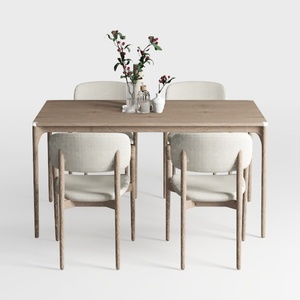
Minimalist Solid Oak Fabric Dining Table and Chair Set 3D Model


Linen Drum Pendant Light, 18” Double Drum Dining
Homestyler is the ultimate online platform for home design enthusiasts. With its easy-to-use design tool, stunning 3D renderings, and a wealth of DIY video tutorials, you'll find everything you need to turn your design dreams into reality effortlessly.
立即免费设计
































