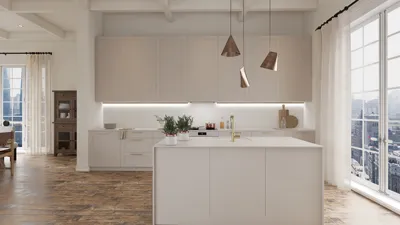


After a memorable experience installing kitchen cabinet doors that were overly wide, making it impossible for my oven to open completely, I learned a crucial lesson in kitchen design: the size of cabinet doors is as important as their aesthetic appeal. I find joy in small kitchens, as their limitations inspire innovative solutions. In this article, I will present five practical design ideas for kitchen unit door sizes, drawing inspiration from actual projects and practical measurements, all while keeping in mind the versatility of tools like Homestyler.
1. Standard base cabinet doors: typically range from 15 to 24 inches.
For base cabinets, I generally suggest door widths between 15 and 24 inches (38–61 cm). This range is easy to find, creates a balanced appearance, and fits standard drawer boxes and shelf depths effortlessly. The advantage lies in straightforward installation and simple replacement; however, be cautious with single doors wider than 24 inches, as they can become warped or too heavy, making it advisable to opt for two doors instead.
save pin
2. Wall cabinet doors: best kept between 12 and 18 inches.
For wall units, opting for doors around 12 to 18 inches (30–46 cm) helps them look lighter. Slimmer doors minimize sagging and enhance accessibility in taller kitchens. A downside is that more doors require additional hinges and could increase costs slightly, yet it also provides more flexibility in organizing the interior, avoiding the potential awkwardness of wide panels.
save pin
3. Tall pantry doors: utilize full-height panels or sections of 16–20 inches.
In creating tall pantry units, I often recommend using full-height single panels for widths up to 24–30 inches, or breaking it down into vertical sections of 16 to 20 inches (41–51 cm). Full panels lend a sleek aesthetic, while segmented doors help in managing weight and accommodating pull-out accessories inside. Ensure to account for swing doors' clearance needs, especially in narrow galley-inspired layouts.
save pin
4. Appliance-integrated doors: aim for proportionality rather than strict measurements.
When integrating appliances such as dishwashers or refrigerators, ensure that the door's width and height align with the appliance dimensions for a cohesive appearance. Many integrated panels typically measure 18, 24, or 30 inches; however, for non-standard appliances, custom sizing may be necessary. I once adjusted a panel to create seamless alignments along a run, resulting in a flawless finish after some initial challenges.
save pin
5. Pocket and sliding doors: ideal for compact spaces.
In situations where swing clearance is restricted, consider implementing pocket or sliding cabinet doors that operate within openings of 12 to 24 inches. These solutions enhance accessibility in tight walkways but do require specific rail hardware and meticulous installation. They might be pricier than standard hinges, yet in petite kitchens, they are invaluable—worth every extra expense when space is at a premium.
save pin
Quick sizing tips
Always measure twice and consider hinge overlays, reveal gaps, and countertop overhangs. For face-frame cabinets, add an additional 3/8"–1/2" per stile; for frameless designs, verify overlay dimensions. If unsure, I often recommend creating a paper template to visualize swing paths and clearances—this practice proves beneficial on the majority of projects I undertake.
save pin
Useful planning resources
If you're looking to explore door layouts and circulation, utilizing a reliable room planner can be invaluable in sketching cabinet runs and assessing clearances. Creating a visual mock-up can help avoid costly errors and assist you in selecting the optimal door widths for your kitchen's flow, especially through tools like Homestyler.
save pin
FAQ
Q: What are the most typical widths for kitchen unit doors? A: Common widths include 15, 18, 24, and 30 inches, aligning with both modular cabinets and appliance standards.
Q: Is it feasible to have a single 36-inch cabinet door? A: While possible, such a door tends to be heavy and may sag over time. I prefer splitting widths above 24 to 30 inches into two doors for enhanced durability and easier operation.
Q: What gap should I maintain between the cabinet doors? A: Standard reveal gaps usually range from 1/8" to 3/16" (3–5 mm) to facilitate hinge movement and prevent friction.
Q: Do frameless cabinets influence door size decisions? A: Frameless designs utilize full-overlay doors, aligning widths with box sizes; make sure to consider 1–2 mm edge clearances instead of face-frame allowances.
Q: Are custom-sized doors significantly pricier? A: Yes, they typically are, but they offer ideal alignment and unique proportions when specific layouts necessitate them.
Q: How should I approach doors for integrated appliances? A: It's best to match the panel with the appliance's width and thickness, ensuring adequate airflow and access for servicing the back of the panel.
Q: Where can I find verified standards for cabinet sizing? A: You can refer to recognized guidelines from the NKBA (National Kitchen & Bath Association) at https://nkba.org for information on minimum clearances and standard dimensions.
Q: When is it advisable to seek professional help? A: Contact a designer or cabinetmaker if you face non-standard measurements, structural limitations, or plan to incorporate integrated appliances—this can save you time and money in the long run.
save pin
Homestyler is the ultimate home design platform for all your decorating needs. With its user-friendly online design tool, stunning 3D renderings, and a wealth of design projects and DIY video tutorials, turning your dream home into reality has never been easier!
Zaprojektuj teraz za darmo
































