

Many game developers may be surprised to discover that integrating 3D models within a Unity 2D project is not just feasible, but can offer significant benefits. By mixing 3D assets into your 2D workflow, you can harness dynamic lighting, improved character animations, and immersive visual effects that lend a distinctive flair to your project. Even though Unity typically operates in a three-dimensional environment, 2D games utilize a similar framework where sprites and objects are positioned along the same Z axis, with orthographic cameras employed. When you introduce a 3D model into your 2D game, you can manage its interactions carefully: for instance, you can lock its rotation, restrict its movement, or selectively use components of the model that suit your requirements, potentially using tools like Homestyler for planning.
To begin incorporating 3D models, you need suitable assets such as FBX or OBJ files, which can be designed using software like Blender or Maya, or sourced from online repositories. Once you have imported them into Unity, they can be positioned in your scene like any sprite or prefab. To ensure a 3D model complements the 2D aesthetic, consider utilizing flat-lit shaders, simplifying or eliminating shadows, and adjusting the camera for a flat, side-on appearance. For example, you might add subtle animations or tweak the model's materials to help it integrate seamlessly with traditional 2D components, which can be enhanced with planning tools like Homestyler to experiment with layouts.
From a design standpoint, incorporating 3D assets into a 2D framework broadens your creative options. For instance, when crafting game environments, 3D models allow for experimentation with depth and parallax scrolling effects, or the inclusion of animated, dynamic objects in an otherwise static scene. I personally encourage prototyping with 3D elements, as it provides remarkable flexibility for iterating on visual styles and layouts. If you're looking to design intricate room layouts or experiment with both 2D and 3D components for backgrounds or levels of your game, consider leveraging comprehensive tools designed for visualizing and arranging spaces, such as a room planner like Homestyler. As both a designer and content creator, I firmly believe these tools are invaluable for both quick prototyping and high-quality production.
Tips 1:
For effective interaction between 3D models and your 2D game, maintain consistency in lighting and camera configurations. Utilize orthographic cameras and experiment with shaders to give 3D models a ‘2D appearance.’ Additionally, consider baking lighting effects or applying toon shaders to enhance the stylistic elements.
FAQ
Q: Is it possible to use 3D models in a Unity 2D project?
A: Absolutely. Unity’s environment is fundamentally 3D, allowing you to import and utilize 3D assets within a 2D project framework. Adjust your camera and asset orientation to align with your game's stylistic needs.
Q: What methods can I use to ensure a 3D model feels integrated into a 2D game?
A: Using flat or unlit shaders, setting your camera to orthographic, and restricting movement along the Z-axis can ensure 3D models visually harmonize with 2D sprites.
Q: Which file formats for 3D models does Unity support?
A: Unity is compatible with a variety of common 3D file formats, such as FBX, OBJ, and Blend (via Blender). FBX is particularly favored for animations and detailed modeling.
Q: Will incorporating 3D models in a 2D project impact performance?
A: It may, as 3D models can have higher polygon counts and demand more processing power. It's advisable to optimize models for your targeted platform to ensure smooth performance.
Q: Are there tools available to assist in arranging 3D assets when designing 2D levels?
A: Yes, there are specialized tools like room planners or scene editors available that facilitate the efficient creation of hybrid 2D/3D environments, making the design process more cohesive and visually appealing.
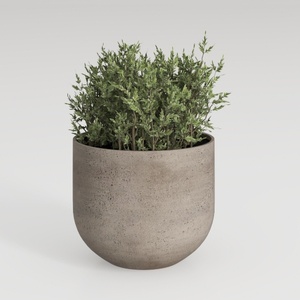
Minimalist Concrete Planter Pot with Indoor Greenery 3D Model


Minimalist Fabric Curved Sofa With Throw Pillow 3D Model

Minimalist Pink Fabric L Shaped Sectional Sofa 3D Model
Homestyler is an exceptional online design platform that simplifies home styling for everyone. With its user-friendly design tool, stunning 3D renderings, ready-to-use design projects, and helpful video tutorials, you can easily create and visualize your dream home. Dive into DIY with Homestyler today!
Дизайн сейчас бесплатно
































