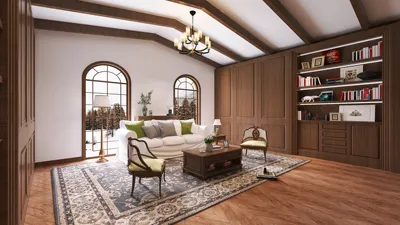


With over a decade of experience in interior design, I have witnessed the evolution of living room lighting trends. At this moment, track lighting is experiencing a significant resurgence. This style is not only versatile and chic but also ideal for compact spaces where every inch counts. I often remind my clients that a smaller living area can spark greater creativity. In this article, I will share 10 inspiring track lighting ideas for living rooms, merging my personal insights with expert design tips to enhance both aesthetics and functionality.
Sleek Minimalist Black Track Lighting
My Experience: I once installed sleek matte black tracks in a studio apartment, instantly transforming the living room into a sophisticated gallery space without overwhelming it.
Advantages: This style complements modern and minimalist decors beautifully; the dark lines enhance the ceiling while elegantly showcasing decorative elements. It pairs exceptionally well with neutral color schemes.
Drawbacks: It might appear overly stark in classic interiors. Additionally, dust tends to be more noticeable on darker finishes.
Suggestion: Pair with adjustable LED heads to create varying lighting moods based on the time of day.
Flexible Adjustable Spotlight Tracks
My Experience: In a recent project, I utilized adjustable spotlights to illuminate a client's curated book collection, adding both functionality and an element of drama. This has become a personal favorite for highlighting features.
Advantages: These tracks allow you to direct light precisely where it’s needed, making them perfect for art displays or cozy reading corners. They adapt brilliantly to evolving furniture arrangements.
Drawbacks: Overuse in small areas can generate undesired shadows, and constant adjustments may be necessary to reduce glare.
Incorporating minimalist storage solutions alongside this lighting style can maintain a clean aesthetic.
Charming Warm Wood and Track Lighting Combination
My Experience: In a Scandinavian-inspired living room, merging warm wood accents with track lighting created a welcoming atmosphere while retaining a modern edge.
Advantages: The juxtaposition of natural materials and contemporary metal fixtures adds depth and character. This combination suits both rustic-modern and Japandi designs.
Drawbacks: If dark wood tones are used too prominently, they can absorb light, making the space feel smaller than it is.
Curved Ceiling-Mounted Tracks
My Experience: I adore implementing curved track systems in uniquely shaped living rooms as they follow the flow of the space and guarantee that all corners receive light.
Advantages: Perfect for non-linear environments, they provide even lighting distribution and add a sculptural touch to the ceiling.
Drawbacks: These systems generally come at a higher price point and can be more challenging to install than straight tracks.
Track Lighting with Stylish Pendant Drops
My Experience: In one of my designs, I integrated standard tracks with pendant drops above a coffee table, achieving both practicality and visual appeal.
Advantages: This setup delivers focused lighting in conversation areas and creates a layered lighting effect, making it ideal for mixing diverse styles within a room.
Drawbacks: It’s crucial to consider ceiling height to prevent obstruction.
Using glass backsplashes in kitchens brightens the space, while similarly combining track and pendant styles in living rooms achieves a light, airy ambiance.
Two-Tone Track Fixtures
My Experience: I once installed white tracks paired with brass spotlight heads, and guests consistently praised the sophisticated look it created.
Advantages: This combination adds visual flair without overwhelming the decor. It's also great for matching metallic accents throughout the space.
Drawbacks: The market for these types can be limited, and they might come at a premium price point.
Low-Profile Tracks for Short Ceilings
My Experience: For a condo with low ceilings, I opted for ultra-flat tracks. They provided essential lighting without encroaching on the room's spaciousness.
Advantages: Ideal for tight vertical environments, these tracks remain unobtrusive and work well with flush-mount fixtures for a seamless appearance.
Drawbacks: Smaller light heads might not deliver substantial luminosity—be sure to check the lumens prior to purchase.
Wall-Mounted Track Lighting
My Experience: I installed a track along a feature wall in an industrial loft, which provided accent lighting while adding an unusual decorative feature.
Advantages: This style acts as wall art and is excellent for highlighting textures like brick or art pieces.
Drawbacks: The wiring can be more complex than ceiling-mounted options. If not aligned properly, visual lines may appear disruptive.
Using L-shaped layouts can enhance countertop space in kitchens; similarly, this wall-mounted approach can free up ceiling space in living rooms.
Smart Track Lighting Systems
My Experience: Recently, I employed a smart-enabled track system that allowed for adjustments in color temperature and brightness through an app—providing immediate mood changes at your fingertips.
Advantages: Highly adaptable and energy-efficient. This is ideal for tech-savvy homes seeking multiple lighting settings.
Drawbacks: The initial cost may be higher, and some systems necessitate compatible ecosystems for full functionality.
Using Track Lighting as a Room Divider
My Experience: In an open-living dining area, I placed a linear track directly above the space division line—effectively zoning without physical barriers.
Advantages: This method provides separation without walls and aids in defining functional spaces within multi-use areas.
Drawbacks: It requires precise placement, as misalignment may lead to unevenness in zones.
Conclusion
A compact living room doesn't restrict your options; rather, it promotes innovative track lighting designs that merge style with utility. Research from Houzz indicates that well-planned layered lighting can enhance the perception of room size by as much as 30%. Which of these 10 living room track lighting ideas are you eager to implement? Consider utilizing tools like Homestyler to visualize your space's transformation.
Frequently Asked Questions
1. What type of track lighting is best for a small living room?
Low-profile adjustable tracks are optimal since they conserve space and provide directional control without dominating the room.
2. Is it possible to dim track lighting?
Indeed, most contemporary systems support dimming when paired with suitable bulbs and switches, enhancing versatility.
3. Can track lighting complement traditional living room designs?
Absolutely; select warm finishes like bronze or antique brass alongside softer light temperatures for compatibility.
4. How many track heads should I use for an average living room?
For a typical 12x16 ft room, 4 to 6 adjustable heads are usually adequate to illuminate all areas effectively.
5. Is track lighting energy-efficient?
Yes, particularly when using LED bulbs. ENERGY STAR recommends LEDs for up to 75% energy savings compared to traditional incandescent bulbs.
6. Can track lighting effectively highlight wall art?
Certainly—adjustable spotlight heads allow for easy showcasing of specific artwork without causing glare.
7. Are installations of track lighting easy to do yourself?
Some plug-in alternatives are manageable, but for hardwired systems, it's best to hire a licensed electrician.
8. What’s the lifespan of LED track bulbs?
According to the U.S. Department of Energy, high-quality LED track bulbs can last over 25,000 hours, making them low-maintenance choices.
Homestyler is your go-to online platform for effortless home design. With its user-friendly design tool, stunning 3D renderings, a wealth of design projects, and helpful video tutorials, you can easily transform your living space into a stylish haven—no prior experience needed!
Design Now for FREE
































