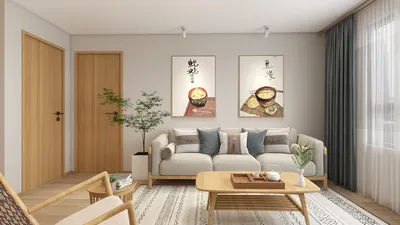


As a seasoned designer specializing in small spaces for more than a decade, I've witnessed firsthand how the right paint choice can transformative a home into a welcoming haven. Recently, the interior design trend has leaned towards muted earthy tones paired with striking accent walls, which I find quite enjoyable to work with. In compact apartments where the living room and kitchen are interconnected, a cohesive color strategy becomes essential for a harmonious flow. Small environments often ignite immense creativity, which leads me to share 10 inspiring paint ideas for your living room and kitchen, inspired by my design experiences and insights from the industry.
1. Warm Neutrals for Fluid Space Integration
My Experience: In a city loft renovation, applying a warm beige throughout both spaces established a unified ambience. The living room exuded a welcoming vibe, while the kitchen felt comfortably warm without appearing cramped.
Benefits: Warm neutrals blend perfectly with timber elements and soft illumination, creating a timeless, soothing atmosphere. Benjamin Moore’s trend report for 2024 highlights creamy sandstone shades as a top favorite this year.
Drawbacks: Overusing this palette may lead to a somewhat monotonous feel— as time passes, you might yearn for more contrast.
Warm neutrals complemented by integrated shelving in open layouts frequently enhance both functionality and aesthetic appeal.
2. Dramatic Charcoal for Urban Chic
My Experience: In a narrow galley kitchen linking to the living area, deep charcoal cabinetry set against a light wall posed a striking sense of sophistication.
Benefits: Charcoal adds remarkable depth and serves as an exquisite backdrop for metallic accents and artwork, while remaining forgiving with regard to minor damages.
Drawbacks: In smaller areas, dark shades can feel constrictive without proper layered lighting.
3. Serene Sage Green for a Natural Touch
My Experience: Soft sage has often been my preferred choice for clients desiring a fresh look devoid of the harshness of pure white. It seamlessly connects kitchen and living areas.
Benefits: Works beautifully with natural stone countertops and rattan textures, lending a biophilic aspect, which research from the WELL Building Standard indicates can enhance overall well-being.
Drawbacks: Selecting the incorrect undertone may result in a too minty appearance, diminishing its earthy allure.
4. White and Wood for a Striking Contrast
My Experience: In a 40m² apartment, applying crisp white walls alongside oak kitchen cabinets crafted a bright yet grounded atmosphere.
Benefits: This strategy amplifies light and creates a perception of spaciousness, while wood tones contribute warmth and character.
Drawbacks: White walls can be less forgiving when it comes to stains, particularly in cooking spaces.
5. Terracotta Accents to Evoke the Mediterranean
My Experience: A terracotta accent wall in a recent dining nook remodel sparked numerous conversations.
Benefits: It infuses warmth and character; pairing excellently with lush greenery and textured materials.
Drawbacks: Excessive use may dominate the space.
6. Subtle Blush for Timeless Elegance
My Experience: In a recent open-plan living-kitchen space for a young couple, a blush-toned paint allowed for a light, inviting atmosphere.
Benefits: This hue pairs wonderfully with gold details and warm timber, enhancing a romantic vibe without excessive femininity.
Drawbacks: It might not appeal to everyone in the long run; it can sometimes give off the impression of an off-white in certain lighting conditions.
7. Navy Blue for Bold Definition
My Experience: In a coastal-themed apartment, navy lower cabinets against off-white walls created an engaging contrast.
Benefits: It’s a classic choice that complements brass or chrome fixtures beautifully and conceals scuff marks more effectively than lighter colors.
Drawbacks: Adequate natural light or layered artificial lighting is crucial to avoid a heavy atmosphere.
8. Two-Tone Walls for Visual Zoning
My Experience: In spacious open layouts, I prefer employing a slightly darker shade on the kitchen side to discreetly delineate it from the living section without physical barriers.
Benefits: This method visually defines spaces while promoting a seamless flow; it's a cost-effective alternative to partitions.
Drawbacks: Achieving a polished, intentional appearance requires precise masking and painting skills.
9. Versatile Greige for Balanced Appeal
My Experience: Greige serves as my go-to solution for clients unable to choose between cool and warm palettes—its adaptability is remarkable.
Benefits: It complements both grey-toned modern furnishings and beige rustic decor while hiding imperfections effectively.
Drawbacks: Some might consider it too conventional or lackluster for their preferences.
10. High-Gloss White for a Sleek Minimalist Style
My Experience: In a micro-apartment, I applied high-gloss white throughout the kitchen and living spaces to maximize light reflection.
Benefits: It enhances brightness and imparts a crisp, fresh look, while easily coordinating with various accent colors.
Drawbacks: Fingerprints and smudges tend to be more visible; touch-up paint can be tough to match if the gloss diminishes over time.
Conclusion
Designing small kitchens and living rooms doesn't limit creativity—instead, it calls for strategic paint selections. The American Society of Interior Designers emphasizes that coordinated color schemes can augment perceived space and comfort. Which of these paint suggestions would you be excited to explore in your home? For a seamless design experience, consider utilizing tools like Homestyler to visualize your ideas before committing to a color.
FAQ
Q1: What are the best paint colors for compact living rooms and kitchens?
A: Light, neutral shades such as warm beige, greige, and sage foster openness. Incorporating a bold accent wall can also help define different areas.
Q2: How can I achieve cohesion between my kitchen and living room?
A: Employ a uniform base color and repeat accent tones throughout both areas to create visual continuity.
Q3: Are darker shades unsuitable for smaller rooms?
A: Not necessarily — with appropriate lighting, rich colors like navy or charcoal can add dramatic flair without feeling cramped.
Q4: Is it possible to combine warm and cool tones in one open layout?
A: Yes, opting for greige provides a naturally versatile option to bridge both color temperatures.
Q5: What paint finish is ideal for busy kitchen spaces?
A: Semi-gloss or satin finishes are optimal, as they are easier to clean and resist stains better than matte.
Q6: Should the kitchen and living area feature the same wall color?
A: Not necessarily — using subtle contrasts or two-tone techniques can help define spaces while preserving harmony.
Q7: In what way can paint color affect mood according to experts?
A: Research published by the Journal of Environmental Psychology indicates that warmer shades foster a feeling of coziness, while cooler tones evoke a calming atmosphere.
Q8: Is repainting expensive for smaller combined areas?
A: Generally, it's more cost-effective than for separate rooms due to shared walls; using high-quality paint can also reduce long-term maintenance expenses.
Homestyler is your go-to online home design platform, perfect for turning your ideas into reality. With an intuitive design tool, stunning 3D renderings, a wealth of design projects, and helpful video tutorials, creating your dream space has never been easier or more enjoyable!
立即免费设计
































