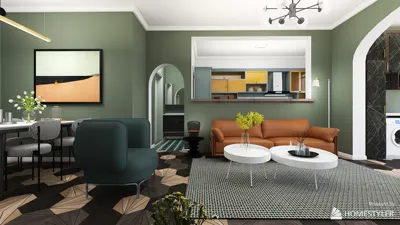


Over the past few years, a noticeable transformation in interior design has occurred, with modern vintage evolving from a niche aesthetic to a widely favored style. Small spaces have always captivated me due to their unique charm, prompting creativity and the seamless blending of functionality with emotion—an endeavor that larger rooms often don’t demand. In this article, I will present 10 inspiring modern vintage living room concepts drawn from my personal projects and industry observations, highlighting a balance of aesthetics, comfort, and practicality, all enhanced by tools like Homestyler.
1. Sleek Furniture with Vintage Touches
Insight: When redesigning a friend's studio, we successfully paired a contemporary, low-profile sofa with a vintage 1960s wooden coffee table, creating a stunning contrast that enhanced the room's uniqueness.
Advantages: This combination merges clean lines with character-rich elements while adhering to the widely searched term "modern vintage living room decor ideas," resulting in a design that retains its appeal over time.
Disadvantages: Searching for authentic vintage pieces in good condition can be time-intensive and occasionally expensive.
Suggestion: Flea markets and estate sales are excellent resources for genuine finds. I also recommend considering minimalist vintage arrangements early on in your design pursuit while utilizing tools like Homestyler for better visualization.
2. Neutral Walls Accompanied by a Striking Vintage Rug
Insight: One of my favorite strategies involves utilizing a simple white or beige backdrop while allowing a bold statement rug to capture attention; it instantly becomes a conversation starter.
Advantages: A vibrant, time-worn rug infuses warmth and character without overwhelming the space; it’s easily replaceable for a change of color scheme.
Disadvantages: Quality vintage rugs can sometimes come with a hefty price tag, and many require professional cleaning before they can be used.
3. Blending Metals and Wood
Insight: In a loft project, I fused brushed brass light fixtures with deep walnut shelves, resulting in a harmonious interplay of different eras.
Advantages: This approach contributes depth and texture, cultivating a layered visual that complements both modern and vintage styles.
Disadvantages: An overabundance of mixed tones may create a chaotic ambiance if balance is not maintained.
4. Eclectic Art Gallery Wall
Insight: In my living room, I have a gallery wall showcasing contemporary prints alongside 1920s portraits—these pieces visually narrate my personal story.
Advantages: This affordable option personalizes your space and highlights your unique style while enhancing visual engagement in smaller living areas.
Disadvantages: A poorly spaced gallery can appear cluttered if the framing and spacing lack consistency.
5. Statement Vintage Lighting Fixtures
Insight: For a recent project, we sourced a mid-century Sputnik chandelier, which, when paired with contemporary furniture, became the room’s focal point.
Advantages: Unique lighting serves as functional art; it’s an excellent way to embody the "modern meets vintage" narrative, as highlighted by industry experts.
Disadvantages: Some original fixtures may require rewiring to meet safety standards.
6. Textured Fabrics and Layered Throws
Insight: By draping a chunky knit blanket over a leather armchair, I instantly create warmth; this approach worked wonderfully in a winter staging project, showcasing beautifully in photographs.
Advantages: This technique provides tactile comfort; it’s easy to adapt seasonally without incurring substantial expenses.
Disadvantages: Excessive layers can lead small spaces to feel cramped.
Concept Idea: Drawing inspiration from texture layering in compact arrangements can effectively combine modern structure with vintage coziness.
7. Vintage Mirrors to Create an Illusion of Space
Insight: A large, ornate mirror positioned behind a contemporary sofa dramatically alters spatial perception. I’ve applied this successfully in various apartment designs.
Advantages: Mirrors reflect light and create an illusion of spaciousness while imparting historical charm without overwhelming contemporary elements.
Disadvantages: Hefty antique mirrors may pose challenges when mounting securely.
8. Open Shelving with an Array of Decor
Insight: I enjoy seeing clients integrate sleek ceramic vases with classic books, engaging the eye and creating interest.
Advantages: This arrangement invites an ever-changing display, offering refreshing updates to the space while servicing both practical and decorative purposes.
Disadvantages: Open shelves require regular tidying to maintain order.
9. Restored Architectural Elements
Insight: In a renovation of a 1930s home, we revitalized crown molding and matched it with minimalist paint choices, preserving its essence while adopting a modern twist.
Advantages: This method fosters authenticity and can enhance property value, as noted by research from industry authorities.
Disadvantages: Restoration may prove demanding in terms of labor and expense.
10. Incorporating Plants in Classic Containers
Insight: I love mingling modern plants, like fiddle leaf figs, in vintage terracotta pots—this combination introduces life and texture to the space.
Advantages: Plants purify air and inject vibrancy, while vintage pots brilliantly unify the aesthetic.
Disadvantages: Regular maintenance is required, and some plants may not flourish in dim living areas.
Final Insight: Recently, I utilized AI-assisted design techniques for plant arrangement, achieving a perfect balance of vintage and modern elements, which aligns seamlessly with inspirations from Homestyler.
Conclusion
Compact living rooms should not be viewed as constraints but rather as opportunities for clever design work. Merging modern vintage aesthetics allows you to craft an environment that feels both inviting and contemporary. As reported by the New York Times, storytelling through interior design is increasingly significant. Which of these 10 modern vintage living room ideas captivate you to implement first?
Frequently Asked Questions
1. What characterizes a modern vintage living room?
A modern vintage living room harmonizes contemporary furnishings with vintage elements, creating a warm and eclectic ambiance that feels timeless.
2. How do I select a color palette for a modern vintage living room?
Begin with a neutral base and layer in accents through textiles, art, or decor. This approach secures a balance between old and new.
3. Can I create a perception of space in a small living room using modern vintage design techniques?
Absolutely—effective use of mirrors, light tones, and thoughtful furniture arrangement can make compact areas appear larger. Consider utilizing visualization tools like Homestyler for optimal layout planning.
4. Is achieving the modern vintage aesthetic expensive?
It can be affordable by combining thrifted discoveries with a few well-chosen investment pieces. Vintage markets often provide great options.
5. How can I prevent clutter in a modern vintage setting?
Limit decorative pieces to those that hold personal significance, and utilize closed storage for items that may disrupt visual coherence.
6. Can contemporary lighting be harmonized with vintage furnishings?
Definitely—a standout chandelier or sleek floor lamp can heighten contrast and visual intrigue.
7. Where can I source authentic vintage items?
Estate sales, flea markets, and online platforms are top choices, as suggested by design publications.
8. What is a common pitfall in modern vintage design?
Overfilling the area with conflicting styles is a frequent mistake. Aim for cohesion through color, materials, and recurring themes.
Homestyler is your go-to online home design platform! With its easy-to-use design tool, stunning 3D renderings, and a wealth of DIY video tutorials, you can effortlessly create and visualize your dream spaces. Transform your home design journey today!
Projete agora para LIVRE
































