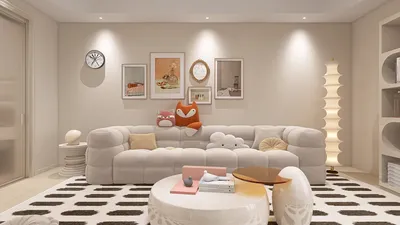


In my experience, I've had a client who expressed a desire for their barren living room wall to "feel like a movie set but without any clutter at all". I responded with a huge map, some ambient lighting, and an invoice with an apologetic tone. This unexpected solution ended up being one of my favorite design ideas, and it kickstarted my list of five suggestions for dressing up those empty living room walls that I frequently share with friends and clients. If you’re curious, take a look at my small-room layout case to see this technique in action.
1. Create a mixed-scale gallery wall
Gallery walls hold a special place in my heart as they beautifully blend storytelling with practical space solutions. When you combine larger anchor artworks with smaller frames, and perhaps a mirror or a sculptural piece, you quickly transform a plain wall into a rich narrative focal point. Although curating such a collection takes time, the end result becomes a personal masterpiece that reflects your style.
save pin
2. Add shallow built-in shelves
Shallow built-in shelves are not only functional for storage but also provide a lovely space for plants and books, as well as a surface for changing up décor. While they may require some carpentry skills and thoughtful planning, the clean and elegant outcome is well worth it, especially when you aim for a polished aesthetic without sacrificing valuable space.
save pin
3. Opt for a mural or textured wallpaper
Transforming a room's ambiance can sometimes be accomplished in just a few hours with a mural or textured wallpaper. These options cleverly conceal wall imperfections and come in a range of budgets; removable peel-and-stick varieties are an affordable and temporary solution. However, intricate patterns can compete with furniture, so I generally pair them with calming textiles and simple lighting. If you’d like to visualize how that mural will coexist with your furniture, I often create a layout sketch using a tool like Homestyler to ensure that the scale aligns perfectly.
save pin
4. Design a vertical wood slat feature
Incorporating vertical slats can introduce warmth, sound absorption, and a modern rhythm to an empty wall. They are great for concealing wiring or providing shallow storage, particularly effective behind a couch or media console. However, keep in mind that slats can be costly and require a commitment, as they are not easily adjustable. On the plus side, they age gracefully and can enhance the resale value of your home.
save pin
5. Layer art, plants, and lighting for a bit of depth
I advocate for layering as a simple decorator's trick: a mid-sized piece of artwork, a hanging plant, softly illuminated picture lights, and a slim floating shelf can create a lush and intentional atmosphere without necessitating major renovations. This approach is adaptable for both renters and homeowners, but it’s important to consider weight limits for mounting various elements. For extensive setups, I often leverage a 3D render, created with tools like Homestyler, to help clients visualize light and shadow dynamics before making any changes to their walls.
Each of these methods can be adjusted to fit your budget, style, and the unique features of your living room. Sometimes, working within tighter constraints can spark the most creative solutions, which is why I find small spaces so intriguing.
save pin
FAQ
1. How can I determine the best idea for my space?
Begin by measuring the height and width of your wall, considering sightlines from your seating, and deciding if you want a main point of interest or a supporting background. Choose the idea that addresses both functional needs (like storage and acoustics) and the ambiance you wish to create.
2. Are gallery walls difficult to hang evenly?
Not at all! I suggest arranging the frames on the floor first, taking a photo of the setup, and creating paper templates to place on the wall. Using a simple level alongside a few removable hooks often does the trick.
3. Will wallpaper make a small room feel smaller?
Not necessarily — vertical or softly textured patterns can actually elongate the appearance of a room, while overly busy prints might overwhelm the space. Generally, lighter colors and subtle patterns expand the perceived room size.
4. Can renters implement these ideas?
Absolutely! Utilizing peel-and-stick wallpaper, standalone slatted screens, floating shelves with easily removable anchors, and art placed on ledges can create a significant impact without high commitment.
5. How much should I plan to spend on a feature wall?
Costs can vary significantly: a curated gallery might cost under $200, peel-and-stick wallpaper ranges from $100 to $400, while built-ins or slatted walls can run into the thousands based on materials and labor. It’s crucial to prioritize aspects like material quality, installation, and longevity for the best outcome.
6. What’s the quickest way to make a wall feel homely?
Consider hanging a large mirror or a significant piece of artwork, placing a floor lamp nearby for warm illumination, and incorporating a couple of plants. According to Architectural Digest, mirrors are one of the quickest methods to enhance natural light and spatial perception.
7. How can I secure walls when hanging heavier items?
Utilize anchors that are rated for the weight you intend to hang, and for very heavy pieces, locate studs or install a French cleat system. When uncertain, it's wise to consult a professional to prevent costly damages.
8. Is it possible to combine two of these ideas?
Definitely! You can merge a slatted wall design with inset shelves or a mural alongside a floating ledge. Combining elements adds depth and functionality; just be cautious to maintain balance so that no single component overshadows the others.
save pin
Homestyler's roots trace back to Autodesk, the global leader in design and engineering software. That heritage lives on in every feature we build. Today, with a community of more than 18 million users worldwide, Homestyler continues to make professional-quality interior design accessible to everyone — from first-time decorators to seasoned architects.
Homestyler is your go-to online design platform for transforming your home. With an intuitive design tool, stunning 3D renderings, and a wealth of inspiring design projects and DIY video tutorials, you can effortlessly create the perfect space—no prior experience needed!
Progetta ora GRATIS
































