


As a seasoned interior designer with over ten years of experience in transforming compact spaces, I've discovered that the latest design trends favor clean lines, multifunctionality, and warm textures. Small living rooms can be seen not as constraints but as creative opportunities. In this article, I'll present 10 innovative wall shelf concepts for living areas that I've utilized, blending personal projects with expert insights, all while incorporating the versatile tool, Homestyler.
1. Minimalist Floating Shelves
My Experience: In a 20 m² apartment, I opted for sleek, matte-white floating shelves which instantly lightened up the walls. This 'floating' design keeps the space airy while maximizing display options.
Advantages: They offer a chic appearance, seamlessly blend with modern and Scandinavian styles, and are particularly effective in small living room arrangements. The wall-mounted design saves floor space and highlights minimalist trends, as noted by Apartment Therapy (2023).
Disadvantages: Their limited load capacity may not suit heavy items like ceramic vases or books, presenting a challenge for avid readers.
Suggestion: Employ hidden brackets to achieve a clean look and prevent future sagging.
2. Wooden Cubes for Added Warmth
My Experience: I installed staggered solid-oak cube shelves in a client's lounge with neutral tones, instantly infusing warmth and depth into the space.
Advantages: They introduce earthy textures, creating a cozy atmosphere; they complement rustic, mid-century, or Japandi styles. The cube design allows for imaginative arrangement of personal items.
Disadvantages: They may appear bulky in very small areas and upkeep requires occasional oiling.
Case in Point: These cubes look stunning above a sofa when paired with wooden decor elements for a layered effect.
3. Glass Wall Shelves
My Experience: In a narrow studio, clear glass shelves were transformative—they visually receded while elegantly displaying plants and decor.
Advantages: They enhance spatial perception, making them ideal for dim or petite rooms; they reflect light and maintain sightlines. According to Houzz, glass shelves can help reduce visual clutter, making spaces seem larger by up to 20%.
Disadvantages: They tend to show dust and fingerprints easily, and may chip if not handled carefully.
Suggestion: Opt for tempered glass to ensure safety, especially in homes with children.
4. Corner Shelves to Optimize Space
My Experience: In my own living space, I utilized L-shaped corner shelves for books and decorative bowls, transforming previously unused corners into functional areas.
Advantages: They utilize awkward corner spaces and divert attention from cramped floor areas, making them ideal for small living room shelf designs.
Disadvantages: They can be challenging to access for frequently used items and are best for decorative objects.
5. Ladder-Style Leaning Shelves
My Experience: For a client seeking a boho-chic style, we leaned a 5-tier ladder shelf against the wall, resulting in an immediate style enhancement.
Advantages: They are portable and require no mounting; they provide a relaxed aesthetic and suit eclectic design themes perfectly. They're excellent for layering plants, books, and decor.
Disadvantages: They aren’t ideal for households with playful pets or young children as they can tip if overloaded.
6. Industrial Pipe Shelving
My Experience: In a loft project, I paired reclaimed wood with black iron pipes, which became a striking focal point in the room.
Advantages: This type offers a substantial load capacity and a bold, industrial look, perfectly complementing urban or steampunk aesthetics.
Disadvantages: They can feel heavy in darker spaces, and installation often requires specialized tools.
Case in Point: This style beautifully complements rugged textures and functions well in open-plan layouts, like an L-shaped setup that maximizes surface area.
7. Built-In Recessed Shelves
My Experience: In a compact condo, we recessed shelves directly into the wall for a streamlined look with no protrusion.
Advantages: They save both physical and visual space, blending perfectly with the surrounding wall finishes and adding a custom, high-end touch.
Disadvantages: Installation may require renovations and might not be feasible depending on wall types.
Suggestion: Consider installing LED strips within the recesses for mood-enhancing lighting.
8. Asymmetrical Shelf Layouts
My Experience: I enjoy implementing non-uniform spacing, transforming shelving into a visually striking element.
Advantages: This approach creates a modern, dynamic appearance and allows for both book and larger decor item display.
Disadvantages: Planning can be more complicated, and miscalculations may waste some space.
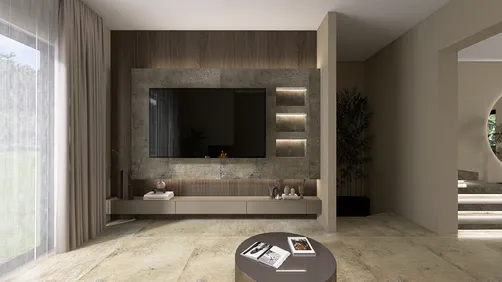
9. Floating Media Shelf
My Experience: In a project, I replaced a cumbersome TV cabinet with a sleek floating media shelf, opening up the entire floor area.
Advantages: They integrate your entertainment setup while conserving floor space, and managing cables becomes simpler.
Disadvantages: They often provide less storage than traditional cabinets.
10. Gallery Wall with Integrated Shelves
My Experience: I created a living art wall for a family by combining photo frames and narrow shelves.
Advantages: This setup is both personal and decorative; the shelves act as ledges for small accents, allowing storytelling through curated objects.
Disadvantages: They might not be the most space-efficient; best for feature walls rather than heavy storage needs.
Case in Point: This arrangement harmonizes beautifully with contemporary art displays and setups achieved through glass backsplashes, enhancing the openness of the space.
Conclusion
Small living rooms don't dictate design limitations—they inspire innovative and intentional storage and styling solutions. Wall shelves can significantly alter a room's functionality and ambiance, with layered wall features often becoming central to a living area, as highlighted by Elle Decor. Which of these 10 concepts sparked your interest for implementation?
FAQ
1. What are the most effective wall shelf solutions for living room spaces?
Floating shelves, wooden cubes, and built-in recessed shelves rank among the best options for optimizing storage in small living rooms whilst maintaining aesthetic appeal.
2. Are glass shelves safe for use in living rooms?
Yes, provided you opt for tempered glass, they are both safe and durable, as advised by The Spruce's design safety recommendations.
3. How do I decide between wooden and metal shelving?
Your choice should align with your interior style—wood for warmth and metal for a more industrial or contemporary vibe.
4. Is it possible to install shelves without drilling?
Ladder-style shelves and some adhesive-mounted options can be installed without drilling, although their weight capacity may be restricted.
5. Are wall shelves suitable for compact apartments?
Definitely—wall shelves effectively free up floor space, which is crucial for smaller layouts.
6. What is the typical cost for wall shelf installation?
DIY floating shelves generally range from $30 to $60 each, while custom built-in options may exceed $300, depending on materials used.
7. Should I combine open and closed storage?
Absolutely; mixing open shelves with closed cabinets creates an ideal balance between display and hidden storage, resulting in an organized appearance.
8. Where are the best locations for wall shelves in a living room?
Above sofas, beside TVs, or in unused corner spaces are excellent spots to enhance functionality and flow.
Originally incubated at Autodesk, Homestyler has grown into one of the most widely adopted home design platforms in the world, now trusted by over 20+ million registered users (platform data, 2026). Whether you're a homeowner exploring ideas or a professional designer delivering client-ready renders, Homestyler brings industry-leading 3D technology to your fingertips — no experience required.
Discover your dream home with Homestyler! This intuitive online design platform offers a user-friendly design tool, stunning 3D renderings, and a wealth of inspiring design projects. Plus, with DIY video tutorials, transforming your space has never been easier. Let your creativity flow!
Concevez maintenant gratuitement












![[For my dearest Sabrinik 🧡]](https://hs-designs.homestyler.com/production/design/images/3f463715-5ed6-4c49-9346-16d464510aa6/1714085722568.jpg?x-oss-process=image/resize,w_502,m_mfit/format,webp)