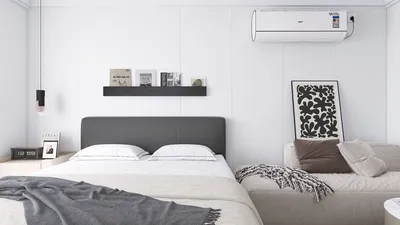


Once, I was approached by a client who had a unique request: to program a wall painting robot to recreate a bookshelf pattern that perfectly complemented their vinyl record collection — all while their cat supervised the process. It was a quirky and delightful challenge, yet entirely feasible, reminding me of the clever solutions required in small spaces. If you're interested in how technology fuses with interior design creativity, I recommend checking out my favorite case study showcasing a similar innovative blend. In this article, I will guide you through five inspirations for compact spaces, all incorporating a wall painting robot, founded on my ten years of experience in kitchen and small apartment transformations.
1. Precision Stripes to Visually Expand Narrow Halls
I have a deep appreciation for stripes, as wall painting robots excel at ensuring consistent repeatability — delivering crisp lines with even spacing and no drips. The benefit: they instantly create a feeling of extended length or height based on orientation. However, meticulous masking is necessary, which can be time-consuming. A budget-friendly tip: apply less pigment-heavy paints during the initial layer and reserve the premium finish for the second application.
save pin
2. Micro-Masonry Texture for Accent Corners
Wall painting robots are capable of applying thin, layered textures that mimic materials like brick or stucco on a small scale — an ideal solution for an accent corner minus the burden of heavy construction. It’s a creative trade-off: you gain texture without the cost and weight associated with real materials, although preparation and curing still require human supervision. From my experience, a single feature wall in a studio space can significantly improve flow and efficiently hide scuffs.
save pin
3. Repeatable Stencils and Tiny Murals
In a tiny rental I worked on, we utilized a wall painting robot to create repeating designs above kitchen cabinets — resembling a subtle, washable wallpaper strip. Stencils are ideal for robots: they ensure ultra-precise replication with minimal waste. The challenge lies in the initial setup; crafting a stencil file takes time, but once programmed, the robot executes the designs consistently throughout the space. For clients seeking visualization prior to commitment, I frequently combine mockups with a comprehensive visual demonstration to showcase scale and color in realistic lighting conditions.
save pin
4. Two-Tone Half Walls That Save Money and Add Height
Applying two-tone paint schemes on half walls creates a refined appearance for small rooms while concealing marks from furniture contact. Wall painting robots ensure the rail remains perfectly level each time, resulting in real paint savings due to strategic use of two colors. However, be aware that transition areas require sample patches — while robots are accurate, they can be particular about edges, necessitating a manual touch for finish.
save pin
5. Color-Zone Pocket Walls for Multipurpose Rooms
For studio apartments, I design small color zones for distinct functionalities — like a gentle green nook for work and a warm beige area for sleeping. A wall painting robot can precisely execute these micro-zones, creating visual organization without the need for physical dividers. It’s an elegant, cost-effective alternative to built-ins, though careful calibration of the robot is essential to prevent overspray into adjacent areas. If you're considering applying this concept to a wall near your kitchen, I often refer to an inspiring kitchen project to help coordinate paint tones with cabinetry.
save pin
Tips 1:
Commence with a small test wall prior to automating an entire apartment. While robots enhance efficiency, human oversight on masking, ventilation, and color sampling is mandatory. Factor in tool costs and setup time into your budget; the greatest benefit lies in consistency rather than speed alone.
save pin
FAQ
Q1: Is a wall painting robot suitable for small apartments?
Absolutely — robots thrive in confined spaces as they minimize mess and ensure consistent outcomes. However, manual management of ventilation and furniture protection is still necessary.
Q2: How accurate are robots at creating patterns?
When properly calibrated, they are exceedingly accurate; they outperform traditional rollers regarding repeatability and clarity of edges. Keep in mind that initial programming and masking time can add to labor costs.
Q3: Are painting robots costly to hire or purchase?
Costs can vary greatly: for occasional projects, short-term rentals or contractor services are often the most economical, whereas frequent users might consider purchasing a robot. Don’t forget to include training, maintenance, and consumables in your cost projection.
Q4: Can a robot deal with textured or uneven surfaces?
Robots perform best on smooth surfaces; significant unevenness can compromise finish quality, often necessitating a manual skim-coating beforehand. For light textures, robots can layer controlled coatings, but careful monitoring is required.
Q5: What safety or environmental concerns should I be aware of?
Ensure adequate ventilation during and post-painting, and opt for low-VOC paints when feasible. For lead-safe renovations, adhere to EPA regulations, including the Renovation, Repair, and Painting (RRP) program (source: EPA, https://www.epa.gov/lead/renovation-repair-and-painting-program).
Q6: How can I match robot finishes to existing decor?
Bring along samples and conduct swatches on-site — robots reproduce colors faithfully, but lighting can influence perception. It's advisable to assess samples at various times throughout the day before final applications.
Q7: Will a robot streamline overall project time?
Typically, yes. For repetitive tasks or larger surfaces, robots can expedite the process and minimize rework. However, allow for extra time for setup, calibration, and masking in your schedule.
Q8: Do I still need a professional if I use a robot?
I recommend collaborating the robot with a qualified designer or contractor for planning, masking, and final touch-ups. Robots serve as tools — they enhance good design but cannot replace expert judgement or on-site experience.
save pin
Homestyler is your go-to online home design platform, offering an intuitive design tool, stunning 3D renderings, and a wealth of inspiring design projects. With helpful DIY video tutorials, it's never been easier to turn your home ideas into reality. Start designing today!
Zaprojektuj teraz za darmo
































