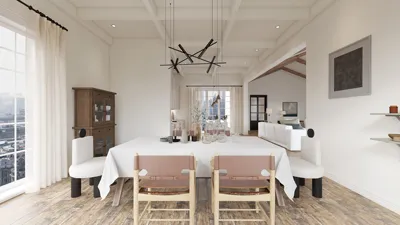


The future is upon us, as today's residences grapple with challenges like noise, zoning regulations, and storage limitations. I view the split-level design as an innovative approach to adaptive living. The National Association of Home Builders (NAHB) reports that smaller living spaces are increasingly popular in new constructions, compelling designers to enhance functionality without sacrificing tranquility. In this compact 6x10 meter layout, implementing house split level 1.5 floor plans transforms it into a dynamic interface for movement, light, and privacy. It's clear that future living spaces will require less square footage, smarter sequencing, and improved sightlines—all of which can be effectively visualized using tools like Homestyler.
spatial reasoning toolkit
Lower Living + Mid Landing
Design Logic: The ground level establishes a social hub, while a mid-landing serves as a sound and mood buffer—modern households require flexible thresholds to accommodate both work and leisure activities.
Flow: Entry → coat storage → living area → half-flight to landing → kitchen/dining; a straightforward sequence that reduces cognitive load for users.
Sightlines: Diagonal views from the entry to the window wall, along with glimpses of the dining area, maintain a clear and serene user interface hierarchy.
Storage: Incorporating bench toe-kicks, under-stair drawers, and landing lockers results in easily accessible storage that is predictable in its retrieval.
Furniture Fit: A 2.1m sofa, 0.8m lounge chair, and 1.6m media unit create tight spatial arrangements while leaving 900mm clear pathways for movement.
Verdict: This civic living layer, with its tranquil buffer, allows residents to stream, host, and adapt their activities without traffic conflicts—ideal for harnessing the benefits of Homestyler design solutions.
save pin
Kitchen/Dining on Half Level
Design Logic: By elevating food preparation slightly, heat and chaos are contained, maintaining close proximity; the kitchens of the future will be nodes of control rather than open spaces.
Flow: Landing → single-step gate → galley → dining area → terrace; this sequence enhances efficiency from grocery to plate with minimal backtracking.
Sightlines: A low vantage point to the living area and a high sightline to the terrace ensure that the user interface prioritizes natural light and the dining experience.
Storage: A 600mm deep tall pantry, overhead 350mm shelving, and toe-kick drawers create diverse storage solutions for quick access, slower use, and archival needs.
Furniture Fit: A 1.6m dining table, four stackable chairs, and 600mm work zones accommodate future micro-appliances without compromising flow.
Verdict: The half-level design shifts meal preparation into a focused ritual—less spillover, more intentionality that can last efficiently through the next five years.
save pin
Upper Sleep + Flex Loft (0.5)
Design Logic: The sleeping area is positioned on the full upper level while a 0.5 loft accommodates flexible functions—future living demands modularity that incorporates sleep, focus, and play.
Flow: Stair → hallway node → bedroom → bathroom → loft; an organized flow that minimizes noise and supports restful moments.
Sightlines: The incorporation of clerestories allows for borrowed light to the hallway and loft, creating visual layers that ensure privacy without feeling enclosed.
Storage: A wardrobe wall measuring 600mm deep, loft cubbies of 300mm, and a linen column correspond to the rhythms of daily and weekly storage needs.
Furniture Fit: Featuring a 1.5m bed, two 450mm nightstands, and a compact 1.0m desk in the loft, this layout maintains 800–900mm of clearance for nighttime safety.
Verdict: The upper stack acts like a serene server rack, protecting rest while providing flexibility on-demand, thus ensuring readiness for evolving lifestyle needs.
save pin
Final Takeaway
In a compact 6x10 meter split-level home, the 1.5-floor arrangement serves as an operational framework for everyday routines: intentional, layered, and cognizant of bandwidth requirements. Variations of these split-level designs enhance privacy, thermal regulation, and mobility with remarkable precision. The overarching goal is straightforward—achieving more communication, less disruption—since well-sequenced compact architecture can offer significant benefits. In my experience, the thoughtful spatial decisions within these stacked configurations continually redefine how clients experience their living spaces, showcasing the true potential of innovations like Homestyler.
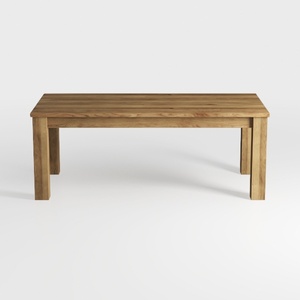
Minimalist Solid Oak Wood Dining Table 3D Model
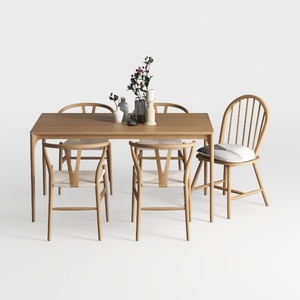
Minimalist Solid Wood Dining Table And Chair Set 3D Model

Minimalist Tan Leather L-Shaped Sectional Sofa 3D Model
Looking to transform your space? Homestyler is the ultimate online home design platform, offering a user-friendly design tool and stunning 3D renderings. With a wealth of design projects and DIY video tutorials, you can easily turn your ideas into reality and create your dream home!
Design Now for FREE
































