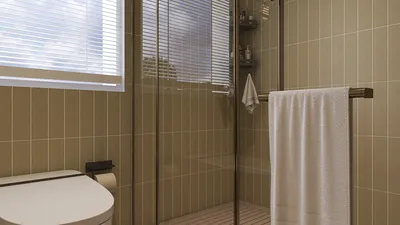


In one of my past projects, I had a client who envisioned a bathroom that catered to both a toddler and an overnight guest simultaneously, while ensuring that the two did not see each other when brushing their teeth. This unique challenge pushed me to think creatively, and my initial design featured a space-efficient layout that clearly delineated different zones within the room. It’s amazing how small spaces can teach us valuable lessons, compelling us to confront real challenges with innovative solutions that engage tools like Homestyler.
1. Wet/Dry Separation
For shared bathrooms, I often recommend a wet/dry separation strategy: place the shower and bathtub on one side, while situating the vanity and toilet across from them. This arrangement enhances privacy and helps mitigate moisture transfer, but careful drainage and ventilation are crucial; otherwise, the "dry" area may still become damp.
save pin
2. Half Wall with Glass Partition
Incorporating a half wall topped with frosted glass or a clear screen provides visual separation without associating a sense of confinement. I implemented this design in a city apartment, where it minimized splashing while allowing light to permeate. However, keep in mind that the custom glass and finishing touches may require a higher investment. For a budget-friendly option, consider a fixed glazed panel, complemented by a moisture-resistant paint on the half wall.
save pin
3. Jack-and-Jill Style Dual Access
For bedrooms shared by siblings or friends, a Jack-and-Jill layout, featuring two entrances and a lockable central toilet room, is incredibly effective. You can draft a simple floor plan to assess door swings and privacy lines. However, it’s important to note that consolidating plumbing might present challenges if the plumbing stack isn’t ideally positioned.
save pin
4. Sliding Partition or Pocket Door Zone
Utilizing sliding partitions can transform one area into two, all without sacrificing space. I often choose barn-style or pocket doors to create a flexible split that feels expansive when opened. While they provide elegance and versatility, anticipate a slightly elevated installation cost and ensure you plan for proper seals at the base to control sound and steam.
save pin
5. Toilet Cube + Shared Vanity
Creating a small, enclosed toilet cube within a larger bathroom allows for privacy while maintaining a communal sink and shower space. This design is particularly beneficial for rental properties where privacy is a priority; the cube is compact and cost-effective to construct, but attention to ventilation and lighting within the cube is necessary for comfort.
save pin
Quick tips from my projects
Opt for materials that can withstand moisture, such as porcelain, sealed wood, or painted cement board. Additionally, it's important to keep electrical elements away from wet areas and invest in a quality extractor fan — an often-overlooked hero in split designs. If you’re exploring options, a light 3D mockup can be surprisingly helpful in determining sight lines and door placements, and considering the wet-dry concept early can prevent costly revisions later on.
save pin
FAQ
Q1: What is a split bathroom?
A split bathroom is designed to separate functions—such as the shower, toilet, and vanity—into distinct zones or areas. The goal is to provide privacy and facilitate simultaneous use rather than adhering to a specific layout.
Q2: Are split bathrooms suitable for small apartments?
Absolutely, when planned thoughtfully. An intelligently designed split can enhance functionality and the perception of space; however, poor air circulation or inexpensive partitions can lead to a cramped feeling.
Q3: How much does it cost to divide an existing bathroom?
Costs can vary significantly based on plumbing changes, partitions, and finishing details. Generally, adding a simple partition and door is economical, while structural alterations and rerouting plumbing can substantially increase expenses.
Q4: Do split bathrooms require special ventilation?
Yes, indeed. Every enclosed area needs adequate ventilation or a suitable air exchange system to prevent mold growth and unpleasant odors. Consult a qualified HVAC professional for appropriately sized fans.
Q5: Can split bathrooms adhere to accessibility standards?
They can, but it’s essential to comply with local codes and accessibility guidelines regarding door widths, clearances, and grab bars. The ADA Standards for Accessible Design (2010) offers clear directives (see: https://www.ada.gov/2010ADAStandards_index.htm).
Q6: What materials are best for partitions?
Reliable options include moisture-resistant drywall, cement backer board, glass, and sealed wood; each material presents its own cost and maintenance benefits. Glass allows for an open illusion but comes at a higher price, while solid partitions offer superior sound privacy.
Q7: Is it necessary to relocate plumbing for a split layout?
Not necessarily. Many split designs can be realized through strategic partitioning and door configurations; however, if a second toilet or shower needs to be situated far from the existing plumbing stack, be prepared for plumbing upgrades and increased expenses.
Q8: How can I test a layout before implementation?
Create a scaled floor plan using graph paper or a straightforward digital mockup to evaluate door swings and sight lines. I often recommend marking walls with tape to experience the spatial flow before any construction begins.
save pin
Homestyler is your go-to online home design platform, perfect for anyone looking to create stunning spaces. With its user-friendly design tool, impressive 3D renderings, and a wealth of DIY video tutorials, you can effortlessly turn your design dreams into reality. Start designing today!
Zaprojektuj teraz za darmo
































