

The rental landscape is swiftly evolving, with current trends indicating shorter leases, fluctuating incomes, and an increasing emphasis on privacy. As highlighted by Zillow, rental demand is particularly focused on flexible, well-positioned units amid a rise in household fragmentation. This context positions a house plan for rental properties as a cohesive framework designed for the coexistence of individuals, effectively balancing personal independence with communal engagement. I view this as a spatial reasoning toolkit that transforms modern constraints into the new standard of living, seamlessly integrating tools like Homestyler for optimized spatial design.
Clients often approach me with pressing issues such as noise transfer, disorganized storage, and inefficient layouts. I align these challenges with future trends like the persistence of remote work, shorter leasing periods, and the growth of accessory dwelling units (ADUs). Both AIA and NAHB data reveal a shift towards smaller living spaces that emphasize functionality. Consequently, the design of a house gets divided into distinct modules—such as entries, utilities, sightlines, and storage—each designed to enhance rental resilience within a single property.
Stacked Duplex with Split Entry
Design Logic: This concept features two units arranged vertically, maximizing accessibility for the lower unit while capturing ample light and views from the upper unit. Future developments are leaning towards separable utility systems and flexible rental agreements; the stacked design effectively minimizes land costs while maintaining tenants' privacy.
Flow: Two separate entries create immediate divergence—one leading to a shared stoop and a divided vestibule, directing left to the stairs of Unit A and right to the hallway of Unit B. The service core aligns vertically, functioning like a centralized trunk for kitchens, bathrooms, and laundry areas.
Sightlines: The upper unit features a living space that opens onto a balcony, with expansive sky views; conversely, the lower unit is oriented towards a garden. Private rooms utilize staggered doors to deflect line of sight, reducing visual intrusion at entry points.
Storage: Strategic use of under-stair compartments, vertical pantry towers, and external lockers provides space for bicycles and seasonal items. Each unit is equipped with a locked utility closet, keeping maintenance details separate from tenants’ living experiences.
Furniture Fit: The living areas are designed to accommodate an 84–90" sofa, a 42" round table, and a queen bed, ensuring ample space on either side. Desk niches with a width of 48" integrate remote work setups without overwhelming the overall design.
Verdict: This stacked configuration operates like a dual-core processor—distinct functions with a shared foundation—primed to adapt to evolving work patterns and tenant turnover over the next five years.
Courtyard Triplex with Side-Load Access
Design Logic: This design incorporates three compact units arranged around a micro-courtyard, allowing for a circulation of space that enhances outdoor interaction. Future leasing trends emphasize outdoor privacy, making the courtyard a protective social space.
Flow: A side alley serves as the main thoroughfare, with each unit branching off for efficient access; utility rooms are positioned along the alley wall to optimize venting. Courtyard doors are designed as secondary entries during weekends, enhancing connectivity.
Sightlines: The glazing layers create a visual hierarchy: public areas connect to green spaces, semi-private spaces link to light wells, while private areas maintain a tight visual connection to clerestories. This arrangement prevents direct sight lines from bedrooms to the courtyard, mitigating visual disruptions.
Storage: Integrated perimeter benches with drawers, ceiling-hung racks at entries, and a shared shed with coded divisions optimize storage. The trash and recycling area is discreetly concealed behind a soundproof barrier to maintain a clean aesthetic.
Furniture Fit: Studio units can accommodate a bed/daybed hybrid, a 30" café table, and a 60" media console. One-bedroom units can host an L-shaped sofa at 96" length, provided that the kitchen peninsula remains at a 24" depth.
Verdict: This triplex embodies a mesh network effect—units operate independently yet benefit from a shared community space—preserving quality living experiences in compact designs as they adapt to upcoming leasing demands.
Primary Unit + ADU Over Garage
Design Logic: The main dwelling and the rent-generating ADU create distinct income streams, effectively decoupling financial earnings from personal living spaces. Future trends indicate a consistent demand for accessory dwellings, making this layout a strategic choice for monetizing space without disrupting home life.
Flow: The primary entrance faces the street, while the ADU stairway is accessed via a rear exterior door, ensuring paths do not cross with family traffic. Wet stacks are aligned above the garage wall, with meter banks positioned for efficient access while maintaining separation.
Sightlines: The ADU’s living space offers views of treetops rather than the backyard, with frosted windows that safeguard the primary residence's privacy. From the primary kitchen, there is a view overlooking the yard, while bedrooms are situated away from busy areas for reduced noise.
Storage: The garage provides shared facilities, along with a locked area for the ADU; the ADU itself includes a wardrobe wall with an 18" depth and an overhead luggage rack. The primary unit features cubbies in the mudroom, facilitating efficient storage solutions.
Furniture Fit: The ADU can hold a 72" sofa, a drop-leaf 36" table, and a queen murphy bed which has 62" of clearance when folded. The primary unit can support a 9' island, granted the walkway remains at least 42" wide.
Verdict: This setup is akin to a hybrid system, allowing family life and rental income to run concurrently, providing steady cash flow without interference—ideal for the evolving suburban housing model.
Final Takeaway
Designing a rental unit floor plan transcends mere room layouts; it serves as a dynamic interface that manages privacy, upkeep, and income generation. Whether through duplexes, triplexes, or ADU configurations, each rental floor plan evolves into a functional protocol that adapts to the needs of remote work, shorter lease agreements, and compact living. Addressing long-term needs—like sound insulation and independent utility meters—plays a crucial role in enhancing tenant satisfaction. In my view, the most intelligent rental designs for the next decade will not necessarily be larger but rather more thoughtfully organized, utilizing tools like Homestyler for optimal layout efficiency.
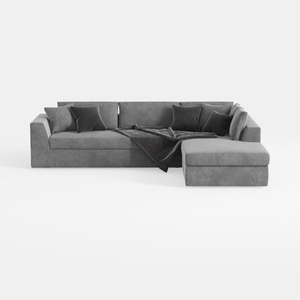
Minimalist Gray Fabric Sectional Sofa with Throw Pillows and Blanket 3D Model


Modern Pink Velvet Curved 3 Seater Sofa with Decorative Throw Pillows 3D Model
Looking to transform your space? Homestyler offers an intuitive online design tool that brings your ideas to life with stunning 3D renderings. Dive into a wealth of design projects and DIY video tutorials to inspire your creativity. Start designing your dream home today!
تصميم الآن مجانا
































