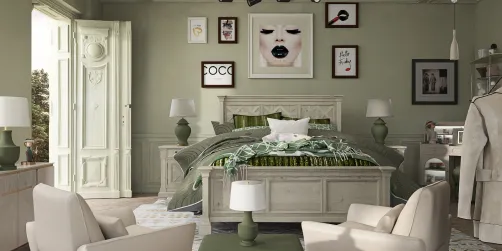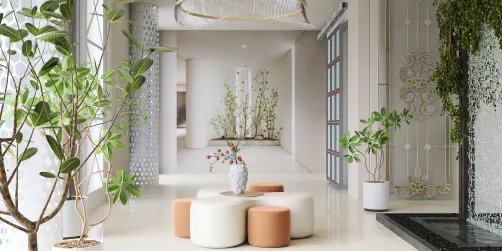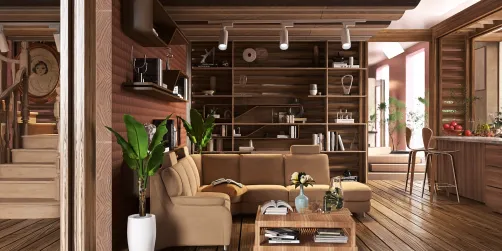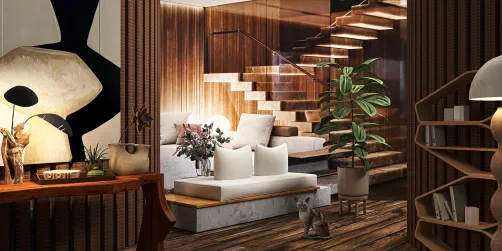



In recent years, I've observed a notable trend among my clients swapping out their bulky televisions for sleek projectors. This change isn’t merely for saving space; it's about crafting a versatile, cinematic atmosphere that molds to individual lifestyles. As a designer, I get inspired by how small living spaces can ignite vast creativity. In this article, I am excited to share 10 innovative projector ideas for living rooms, inspired by my own experiences and insights from industry experts, ensuring a balance of style and practicality.
1. Sleek Ceiling-Mounted Projector
Personal Insight: In a compact loft I designed, a ceiling-mounted projector melted into the clean white ceiling, becoming nearly invisible until movie night arrived.
Advantages: Maximizes floor and wall space, enhances modern minimalist design, and complements open-concept living areas effectively.
Disadvantages: Installation can be complicated, often requiring a professional touch. Careful planning for cable management is essential.
Suggestion: Choose a projector color that matches your ceiling for an inconspicuous effect.
2. Hidden Drop-Down Screen
Personal Insight: In one of my projects, we cleverly concealed a motorized drop-down screen within crown molding – the astonished reactions when it descended were unforgettable.
Advantages: Maintains a screen-free living room when not in use, ensuring a tidy aesthetic. Ideal for versatile spaces.
Disadvantages: Costs increase due to the motorized feature, and precise measurements are crucial to align with ceiling lines.
Combining this style with smart living room layout planning can enhance proportions and sightlines effectively.
3. Projector Camouflaged in a Bookshelf
Personal Insight: In my home, I integrated a compact projector into an open shelf, transforming it into a decorative feature while servicing functional needs.
Advantages: Seamlessly merges technology with decor, keeps the unit protected from dust, and is excellent for compact areas.
Disadvantages: Adequate ventilation is necessary; an enclosed setting can cause overheating. Additionally, the projection angle must be optimized.
4. Short-Throw Projector for Compact Spaces
Personal Insight: In a slender living room, setting a short-throw projector directly beneath the screen turned a challenging space into a home theater.
Advantages: Perfect for limited rooms, minimizes shadows from movement, and reduces the need for overhead mounts.
Disadvantages: It can be more expensive than traditional models and requires a flat surface for optimal viewing.
5. Multifunctional Media Wall
Personal Insight: I crafted a media wall combining closed storage with a spot for a retractable screen, cleverly hiding the projector behind sliding panels.
Advantages: Merges storage, aesthetics, and entertainment into one stylish feature wall.
Disadvantages: More intricate carpentry is involved, leading to increased installation costs.
6. Ambient Light Rejecting (ALR) Screens
Personal Insight: For clients who prefer daytime movie marathons, I recommend ALR screens – they provide striking contrast even under direct sunlight.
Advantages: Suitable for brightly lit rooms, they enhance image quality, and are ideal for multi-purpose living spaces.
Disadvantages: ALR screens tend to be pricier and may have limitations regarding the viewing angle.
7. Utilizing Ceiling Paint as a Projection Surface
Personal Insight: In a unique project for an artist, we applied projection paint to a ceiling panel allowing them to watch comfortably while reclining on the sofa.
Advantages: Offers a distinctive viewing experience, acts as a conversation starter, while saving space.
Disadvantages: Not everyone appreciates this setup as it may lead to neck strain during extended viewing.
8. Art Panel with Dual Purpose
Personal Insight: I employed a large canvas art piece on hinges to conceal a screen; when flipped, it revealed the projector components, consistently impressing guests.
Advantages: Artistic design, cleverly camouflages technology, and maintains focus on decor.
Disadvantages: Restricted to certain screen sizes, and the hinge mechanism must be sturdy.
Couple it with a well-thought-out wall arrangement ensuring your furniture complements the screen's placement.
9. Portable Projector for Versatile Options
Personal Insight: During a renovation, we introduced a portable projector, providing flexibility to watch anywhere without locking into a specific setup.
Advantages: Highly adaptable, perfect for renters, and easy to store when not in use.
Disadvantages: Often, they offer lower brightness and resolution than fixed projectors.
10. Concealed Projector Lift in a Cabinet
Personal Insight: For an upscale client, we integrated a motorized lift into a sideboard, causing the projector to rise at movie time, creating a magical experience.
Advantages: Completely hides the equipment, maintains uncluttered lines, and adds a significant wow-factor.
Disadvantages: This is the most expensive installation option and requires precise engineering.
In a recent project, we synergized this approach with an AI-supported living room redesign that optimized the viewing environment entirely, showcasing the usefulness of tools like Homestyler in interior design.
Conclusion
Personally, I believe a compact living room shouldn’t compromise your aspiration for a big-screen experience – it simply calls for smarter design choices. Projectors open up a flexible entertainment arena that harmonizes with your aesthetic. The American Society of Interior Designers acknowledges that multifunctionality is a leading trend in residential design. Which of these projector concepts for your living room captivate you the most?
Frequently Asked Questions
1. Which projector is ideal for a small living room?
Short-throw projectors often work best since they perform well in confined areas without sacrificing image size or quality.
2. Can I use a regular wall for projection?
Yes, however, to achieve optimal results, utilize a smooth, light-colored wall or projection paint to enhance image clarity.
3. How can I conceal projector cables?
Implement cable channels along the ceiling or within walls; proper planning during renovations simplifies this process.
4. Are projector screens superior to walls?
Typically, yes – screens offer enhanced color fidelity and contrast, especially ALR screens in brightly lit rooms.
5. What strategies can I use to integrate a projector without detracting from my decor?
Conceal it within furniture, ceilings, or bookshelves; sometimes, art panels can effectively disguise screens.
6. What is the appropriate screen size for a living room?
It varies based on viewing distance; the SMPTE recommends maintaining a 30-degree field of view for an immersive experience.
7. Is it possible to create a cinematic ambiance without blackout curtains?
Definitely, ALR screens or high-brightness projectors perform admirably in ambient light conditions.
8. Do projectors consume more energy than TVs?
It varies by model, but many LED and laser projectors are designed to be energy-efficient, with modern units often consuming power on par with flat-screen televisions as noted by Energy Star.
Built on technology originally developed at Autodesk, Homestyler empowers anyone to design beautiful, realistic spaces in minutes. Join over 20+ million registered users (platform data, 2026) who have already discovered a smarter way to plan, visualize, and bring their dream homes to life — all from the comfort of a browser.
Discover your dream space with Homestyler! This user-friendly online home design platform offers an intuitive design tool, stunning 3D renderings, a plethora of inspiring design projects, and helpful DIY video tutorials. Transform your vision into reality effortlessly and creatively—perfect for any design enthusiast!
Design Now for FREE













![[For dear Adelina madee 🤎]](https://hs-designs.homestyler.com/production/design/images/8a07e535-9cbc-4132-a42a-5932dac3a112/1706972286037.jpg?x-oss-process=image/resize,w_502,m_mfit/format,webp)