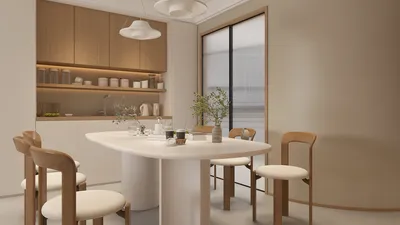


In the last ten years, I've observed a significant transformation in living rooms, which have transitioned from being formal, seldom-used spaces to versatile hubs of activity. One of the most notable trends today is the incorporation of play areas for children. It's amazing how small spaces can ignite creativity, especially when you aim to maintain a sophisticated adult ambiance. In this article, I'll present ten innovative playroom concepts integrated into living room designs that I have personally created or tested, combining my family-oriented insights with professional recommendations. This is where tools like Homestyler can play a crucial role in planning.
1. Streamlined Toy Storage Wall
My Insight: I collaborated with a young family who wanted their living room to remain organized after the kids' bedtime. We designed a sleek wall unit featuring hidden bins that blended seamlessly with the room's decor.
Advantages: It manages clutter effectively; complements a minimalist aesthetic; allows kids to access their toys independently.
Disadvantages: May require customized furniture or an eye for matching pre-made units; compartment sizes could limit the kinds of toys that can be stored.
Advice: Think about incorporating a minimalist storage design for play items into your existing wall unit, so it doesn't feel like a distinct area.
2. Adaptable Furnishings for Play and Rest
My Insight: A sofa that includes concealed storage and collapsible play mats has been a game-changer for me. Cleanup is a breeze, taking only minutes after playtime.
Advantages: Optimizes space in compact living rooms; provides both seating and a play area; toys can be concealed swiftly when guests arrive.
Disadvantages: High-quality convertible furniture can be on the expensive side; some mechanisms aren’t child-friendly without adult supervision.
3. Designated Play Area with Carpeting and Shelving
My Insight: A vibrant, machine-washable rug effectively delineates a children's zone without erecting walls. Paired with floating shelves at an accessible height, it encourages interaction.
Advantages: Visually segments the space; promotes imaginative play; shelves can serve as storage for books.
Disadvantages: Rugs require consistent maintenance; areas may appear cluttered if not tidied regularly.
4. Chalkboard or Whiteboard Feature Wall
My Insight: My niece adores the chalkboard wall I created for doodling. It eliminates the need for endless paper and integrates flawlessly into the decor with a smart frame.
Advantages: Fuels creativity; reduces paper waste; simple to refresh the look.
Disadvantages: Chalk dust can make a mess; whiteboards might reflect light in an annoying way.
5. Nook Playroom Under the Stairs
My Insight: In one compact apartment project, we transformed an overlooked alcove under the stairs into a cozy play space.
Advantages: Utilizes otherwise wasted space; cultivates a magical, closed-off environment for kids; adds character to the living space.
Disadvantages: Height limitations exist; might not accommodate larger toys.
6. Open Shelving Accent with Baskets
My Insight: For a client wanting both visible toy storage and neat organization, we chose stylish wicker baskets arranged on open shelves mid-wall.
Advantages: Simplifies cleaning; allows kids to identify toys at a glance; harmonizes storage with surroundings.
Disadvantages: Regular reorganization is necessary; baskets might wear out over time.
Advice: Integrate shelving with your seating layout for a seamless flow, akin to an open-plan family living room design.
7. Foldable Play Surface
My Insight: I appreciate surfaces that serve multiple purposes; I designed a table that folds into the wall with a chalkboard underside — perfect for crafts by day and extra seating by night.
Advantages: Conserves floor space; lightweight; ideal for apartments.
Disadvantages: Limited in size; must be securely mounted to the wall.
8. Indoor Tent or Teepee
My Insight: A simple fabric teepee can serve as a reading nook, a hide-and-seek spot, or even a ‘castle’. I've styled these to complement Scandinavian, bohemian, and contemporary designs.
Advantages: Offers imaginative play possibilities; easy to relocate; budget-friendly.
Disadvantages: Occupies floor space during use; fabrics may crease or fade over time.
9. Vertical Play Space
My Insight: For energetic children, we utilized a wall for a Lego board, climbing grips, and a pegboard for hanging artwork.
Advantages: Promotes physical engagement and creativity; maximizes wall usage; frees up floor space.
Disadvantages: Requires safety planning; some setups may need professional installation.
Example: Combining vertical storage with a feature wall reminds me of how L-shaped configurations can create more usable space in small kitchens, a principle that translates effectively here as well.
10. Discreet Playroom Behind Sliding Panels
My Insight: A dream project for an artistic client involved a children's play zone concealed behind colorful sliding panels that transformed into an art wall when closed.
Advantages: Maintains a sleek living room appearance; offers easy access; the panels can also serve as decorative elements.
Disadvantages: Custom carpentry can be expensive; requires careful measurement for smooth operation.
Conclusion
Creating a playroom within your living room is not about compromise; it's about intelligent designs that maximize functionality in limited spaces. As highlighted by the American Society of Interior Designers, multifunctional spaces are increasingly relevant, and for good reason. Which of these ten playroom ideas in living room configurations would you be excited to implement with tools like Homestyler?
FAQs
Discover the ease of home design with Homestyler! This user-friendly platform offers an intuitive online design tool, stunning 3D renderings, diverse design projects, and helpful DIY video tutorials. Bring your creative vision to life effortlessly and transform your space today!
Design Now for FREE
































