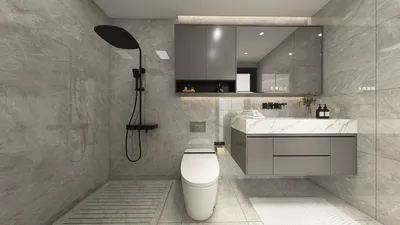


A past client once demanded that their compact powder room be "literally olive." To my surprise, I encountered walls lined with floor-to-ceiling tiles in a shade resembling a salad bowl—humorous yet enlightening. This experience highlighted the impact that a single color can make when applied thoughtfully, prompting me to modify my bathroom designs for future small projects, often incorporating tools like Homestyler to visualize layouts.
Indeed, compact spaces can ignite grand ideas—they compel you to prioritize design choices and be innovative with materials, fixtures, and lighting. Below I’ll present five olive-green bathroom decor ideas that I've implemented, complete with advantages, potential challenges, and practical advice drawn from my own experiences.
1. Matte Olive Walls with Brass Accents
Matte olive paint sets a warm, inviting backdrop that conveys sophistication without being overwhelming. In a recent renovation, I paired it with aged brass hardware, which enhanced the green tone, infusing a sense of elevation into the entire space.
The benefits include timelessness, a forgiving nature for minor wall imperfections, and a spa-like ambiance. The downside is that matte surfaces can easily show water marks, so it's wise to designate wipeable zones around sinks and select durable brass with appropriate sealing.
save pin
2. Olive Subway Tile Half-Wall with Light Marble
Utilizing olive subway tiles on the lower wall paired with light marble or quartz above achieves contrast without overwhelming heaviness. This combination is particularly appealing in smaller bathrooms, as lighter materials reflect light and prevent the area from seeming cave-like.
Advantages include visual depth and minimal upkeep for tiled areas. However, grout maintenance can be a hassle; opt for a slightly darker grout to mask stains and budget for a sealant if porous stone is chosen.
save pin
3. Monochrome Olive with Textured Accents
Monochromatic designs need not be flat; textured wallpaper, fluted vanities, or woven baskets can add dimension. In one project, I emphasized texture, even leveraging one of my preferred 3D designs using Homestyler to visualize how various surfaces would interact with light prior to finalizing my material choices.
This approach is both elegant and unified, making photography stunning. Nevertheless, an overload of textures can be overwhelming, so select a dominant texture while keeping others understated.
save pin
4. Olive Tiles on the Floor with Neutral Walls Above
Grounding the space with olive encaustic or patterned floor tiles while opting for neutral walls creates a striking yet calming effect. I applied this in a rental conversion—tenants appreciated the distinctive personality without it feeling too permanent.
The perks include intriguing flooring visuals and ease of updating wall paint later. However, patterned floors can accentuate layout, necessitating meticulous placement of plumbing and fixtures to avoid visual chaos.
save pin
5. Olive Accents with Smart Lighting in Small Bathrooms
If a fully green room seems daunting, consider incorporating olive through a vanity, a feature wall, or plants and textiles. Aim for layered lighting to add depth; I even experimented with an AI-supported concept using Homestyler to preview lighting effects and adjust fixture placements.
This method is budget-friendly and reversible. The small challenge lies in ensuring that accents appear deliberate rather than haphazard—select a couple of focal pieces to anchor the design and allow them to guide the color scheme.
save pin
FAQ
Q: Is olive green an appropriate choice for small bathrooms?
A: Absolutely—when balanced with lighter elements and ample lighting, olive can transform small bathrooms into cozy and luxurious spaces rather than feeling cramped. Utilizing accents or partial walls helps mitigate saturation concerns.
Q: What finishes complement olive green effectively?
A: Warm metals such as brass or bronze, natural stones, and matte ceramics all work well with olive. I often combine a warm metal with a neutral stone for a grounded and sophisticated look.
Q: Are olive tiles difficult to maintain?
A: Not necessarily. Glazed tiles are typically low-maintenance, while textured or porous tiles require sealing and regular grout upkeep. Selecting the right grout color can help minimize staining visibility.
Q: Can using olive green enhance property value?
A: While color itself may not directly impact value, a well-executed timeless design can increase appeal. Neutral accents and premium materials ensure the aesthetic feels intentional to prospective buyers.
Q: How do I select the appropriate shade of olive?
A: Test paint swatches under your bathroom’s lighting—olive hues can range from warm to cool. I always sample paint on large boards and observe them at different times throughout the day before finalizing my choice.
Q: Which type of lighting works best with olive walls?
A: It's crucial to layer ambient, task, and accent lights. Warm LED bulbs (2700–3000K) typically harmonize beautifully with olive tones and brass fixtures without overpowering the green.
Q: Do you have suggestions for budget-friendly ways to incorporate green?
A: Start with smaller accents—such as towels, a vanity refresh, or floor tiles—then gradually phase in larger changes. Repainting and replacing hardware offers significant impact at a relatively low cost.
Q: Where can I learn more about color pairing with olive green?
A: For professional advice on color coordination, manufacturers like Sherwin-Williams provide extensive palettes and undertone guidance. Their resources on color selection offer accurate, expert references (https://www.sherwin-williams.com/).
save pin
Homestyler is your go-to online home design platform! With its user-friendly design tool, stunning 3D renderings, and a wealth of inspiring design projects and video tutorials, transforming your space into a dream home has never been easier. Start creating today!
Design Now for FREE
































