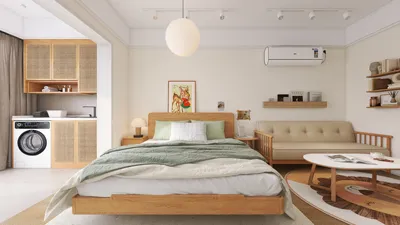


In recent years, the trend in lighting design for modern living rooms has evolved towards creating layered and adaptable setups that effectively merge functionality with ambiance. Personally, I’ve noticed that smaller living spaces often ignite the most innovative lighting ideas—constraints challenge you to think more creatively about the positioning of each light source. In this article, I will present ten lighting concepts I have employed in actual projects, integrating personal insights with expert recommendations to help you enhance your area using tools like the Homestyler app.
1. Streamlined Track Lighting
My Experience: I once updated a 25m² apartment that required sleek, adjustable lighting which wouldn’t dominate the aesthetics. Track lighting was the perfect solution—slim, neutral, and remarkably versatile.
Advantages: Provides directional control, is ideal for open layouts, and fits seamlessly into contemporary living room design concepts. Architectural Digest emphasizes its effectiveness in showcasing specific artwork or furnishings.
Drawbacks: Could appear industrial without the right complementary textures. Also, dust tends to accumulate on tracks.
Advice: Combine with warm LED bulbs to counteract a gallery-like coldness and instead create inviting daylight-like hues.
2. Sculptural Floor Lamps
My Experience: In one renovation project, an oversized arc floor lamp not only provided light but also became the focal point of a reading nook.
Advantages: Introduces vertical interest and can serve as a piece of art, fitting nicely within compact living room lighting strategies. It's also easily movable when rearranging furniture.
Drawbacks: Occupies valuable floor space—this can be problematic in extremely small rooms. Improper placement might create tripping hazards.
Example: I blended brass and a linen shade to soften the lines—echoing a minimalist living room design I executed in a downtown loft.
3. LED Cove Lighting Solutions
My Experience: Concealed light strips placed within a ceiling recess can elevate even an 8-foot ceiling’s perception. I appreciate how it softly illuminates the walls.
Advantages: Produces a gentle ambient glow, eliminates glare, and is energy-efficient. The IESNA guidelines indicate that indirect lighting enhances visual comfort.
Drawbacks: Installation may require carpentry work or modifying a ceiling, making it less suitable for swift renovations. Achieving even dimming can be challenging without quality drivers.
Advice: Use dimmers to easily transition from bright light to a cozy movie-night ambiance.
4. Clustered Glass Pendants
My Experience: In a compact living area, I enjoy arranging small glass pendants above a coffee table to create sparkle without overwhelming the space.
Advantages: Provides a visual centerpiece, reflects both natural and artificial light, and adapts beautifully to both modern and transitional styles.
Drawbacks: Requires careful height adjustments to prevent obstructing sightlines or views of a television.
Advice: Opt for clear or smoked glass for a lighter, more ethereal effect.
5. Zone-based Layered Lighting
My Experience: I frequently divide living areas into distinct zones for reading, socializing, and viewing media, each illuminated by its own light source—this approach tends to feel more intimate than relying solely on an overhead fixture.
Advantages: Supports tailored lighting for various activities, reduces glare, and enhances energy efficiency through selective use of light.
Drawbacks: Requires more intricate planning; retrofitting older homes might necessitate upgrading wiring.
Example: In a family residence, the thoughtful combination of table lamps, wall sconces, and ceiling lights created a warm balance—similar to the strategic space organization I advocate for.
6. Striking Chandeliers
My Experience: Even in a smaller living room, a stunning chandelier can serve as a design anchor—provided its scale and proportion are appropriate.
Advantages: Acts as a conversation starter, draws the eye upward, and can successfully integrate diverse materials like metal and glass.
Drawbacks: Maintenance can be taxing; rooms with low ceilings require careful consideration of clearance.
Advice: Incorporate dimmer switches for versatility, especially with such a commanding fixture.
7. Wall Sconces for Both Ambient & Task Lighting
My Experience: Wall sconces transformed a client’s tiny apartment—their installation freed up table surfaces while providing elegant side lighting for reading.
Advantages: Perfect for narrow spaces, they double as decorative features and easily blend with modern rustic or industrial styles.
Drawbacks: Their fixed positions limit adaptability unless you opt for plug-in swing-arm styles.
Example: A pair of brass sconces positioned above mid-century chairs proved effective, reminiscent of my approach to light placement in multifunctional layouts.
8. Intelligent Lighting Controls
My Experience: Recently, I’ve embraced app-based dimmers that adjust the warmth of lighting throughout the day—ideal for clients who work from home.
Advantages: Enhances comfort, aligns with circadian rhythms, and diminishes energy usage.
Drawbacks: Depends on Wi-Fi reliability; those less comfortable with technology might find setup challenging.
Advice: Integrate with voice assistants for effortless control over lighting scenes.
9. Harmonizing Curtain and Light Interaction
My Experience: By combining sheer curtains with targeted lighting, I’ve created enchanting twilight effects—transforming compact spaces into serene retreats.
Advantages: Softens harsh lighting, increases privacy, and elevates ambiance without significant renovations.
Drawbacks: Requires upkeep (like laundering curtains) and may not suit ultra-minimalist designs.
10. Blending Bulb Temperatures for Visual Depth
My Experience: Occasionally, I mix warm and neutral white bulbs within a single room to achieve subtle distinctions between different areas.
Advantages: Introduces visual depth, accommodates both work and relaxation within the same space, and offers greater creative control over moods.
Drawbacks: Requires careful balance; improper execution can lead to a disjointed appearance.
Advice: Maintain color temperatures within 500K of each other to ensure a harmonious look.
Conclusion
Even small or modest living rooms can inspire creativity—prompting smarter lighting solutions. As noted in Houzz's design survey, layered lighting has become an essential focus for contemporary interiors. Which of these innovative modern living room lighting strategies would you be excited to explore first with tools like Homestyler?
FAQ
1. What are the primary types of modern living room lighting?
Ambient, task, and accent lighting comprise the foundation, yet layering them leads to the most adaptable and versatile results.
2. How should I select the appropriate light temperature?
Warm light (2700–3000K) feels inviting, while neutral tones (3500–4000K) are more suitable for task-oriented lighting. Consistency is key within each designated zone.
3. Can contemporary lighting designs fit into traditional living rooms?
Definitely—focus on forms and finishes that complement your existing décor effectively.
4. How can lighting make a small living room appear larger?
Utilize indirect light sources like cove lighting and mirrors to reflect light, thus creating an illusion of spaciousness.
5. Are LED strips suitable for living rooms?
Absolutely, they boast energy efficiency and flexibility. The U.S. Department of Energy recognizes LEDs as superior energy savers.
6. Should I hire a professional for my lighting layout?
If your space contains numerous zones or unique features, a professional can ensure seamless integration of lighting into your design.
7. How can I minimize glare from my lighting?
Utilize dimmers, employ diffusers, and ensure indirect placements to soften brightness.
8. Is it permissible to combine smart lighting with traditional switches?
Yes, many systems facilitate hybrid setups—just make sure to check compatibility to avoid wiring complications.
Discover your inner designer with Homestyler! This user-friendly online platform offers a powerful design tool and stunning 3D renderings to help you visualize your ideas. Explore a wealth of design projects and watch DIY video tutorials to elevate your home decor effortlessly. Transform your space today!
立即免费设计
































