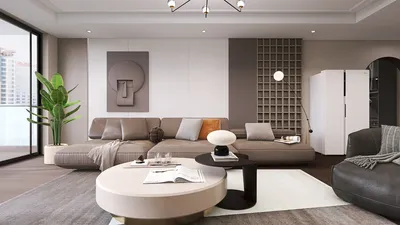


Over the past ten years as an interior designer, I have observed that smaller spaces often inspire the most innovative ideas. This holds true for mobile home living rooms as well—contemporary design trends focus on multifunctional layouts, materials that reflect light, and ingenious storage solutions. Today, I’m excited to present 10 creative living room concepts for mobile homes that combine my practical experience with findings from industry research, including insights from tools like Homestyler.
In a recent project, we revamped an outdated and confined living room into a bright, efficient hub suitable for a family of four—all without significant construction. If you’re intrigued by how features like minimalist storage designs or light color schemes can transform a space, you’ll appreciate this curated list.
1. Minimalist Furniture Setup
My Perspective: I always begin with a philosophy of 'less is more.' In mobile home living rooms, bulky furniture can consume valuable floor space, so I tend to opt for slim sofas and nesting tables to create an airy atmosphere.
Advantages: Promotes better flow, gives the illusion of a larger space, and harmonizes well with Scandinavian-style elements—a long-tail keyword that many clients often seek. Research by the National Association of Home Builders reveals that open layouts in compact interiors can enhance perceived size by as much as 15%.
Drawbacks: Limited storage if furniture does not serve dual purposes. You might also miss the snugness provided by larger pieces.
Advice: Select furniture that includes concealed compartments to compensate for reduced storage.
2. Bright and Reflective Color Schemes
My Perspective: White walls can be invigorating—they act as an ideal canvas. In a recent beach-themed mobile home project, I employed off-white walls paired with light oak flooring to enhance natural illumination.
Advantages: Maximizes daylight, works well with any décor style, and establishes a clean aesthetic. Implementing a reflective color scheme is a cost-effective tactic to make your living room appear more spacious.
Drawbacks: Tends to show dirt easily; risk of feeling sterile without added warmth.
Advice: Introduce textured throws or patterned rugs to create visual interest.
3. Built-In Storage Seating
My Perspective: In a past redesign, I incorporated a storage bench beneath a window, which provided additional seating for guests while cleverly hiding seasonal decorations.
Advantages: Optimizes space, keeps clutter hidden, and is perfect for small-scale mobile home living room concepts. This strategy aligns with guidance from design planners focused on multifunctional furnishings.
Drawbacks: Fixed seating offers limited flexibility in arranging layouts.
Advice: Enhance style versatility with removable cushions.
4. Multifunctional Divider Shelves
My Perspective: Vertical shelving units can subtly define your living area from the kitchen while still keeping it open. I’ve applied these in open-plan mobile homes to establish various zones without compromising light.
Advantages: Provides storage, showcases décor, and acts as a room divider, all while maintaining an airy feel.
Drawbacks: Requires regular dusting; maintenance may be demanding.
Advice: Consider open-back shelves to enhance the sense of space.
5. Area Rugs to Define Spaces
My Perspective: In elongated mobile home layouts, a striking area rug can visually anchor the seating arrangement. For instance, I utilized a navy geometric rug to differentiate the living area in a 400-square-foot home.
Advantages: Introduces warmth, delineates areas, and permits color infusion without long-term commitment; complements transitional design styles well.
Drawbacks: Requires frequent cleaning, particularly in high-traffic households with children or pets.
Advice: Opt for low-pile rugs for easier upkeep.
6. Wall-Mounted Lighting Solutions
My Perspective: Table lamps can occupy precious surface space, so I frequently use sconces or swing-arm lamps to free up those areas. This is particularly effective in narrow layouts.
Advantages: Preserves floor and table space, adds layered lighting, and can enhance specific design aesthetics like mid-century modern.
Drawbacks: Installation is required—may not be suitable for renters unless plug-in alternatives are utilized.
Advice: Employ dimmers to modify the atmosphere for various activities.
7. Striking Accent Wall
My Perspective: A single wall adorned with bold wallpaper or shiplap can instantly revitalize a standard mobile home living room. In one instance, I established a rustic focal point using reclaimed wood panels, which harmonized the entire area.
Advantages: Infuses character and individuality into the space, serving as a natural conversation starter. This is especially suitable for farmhouse or coastal-themed living room designs.
Drawbacks: Risks becoming outdated with trends; might overshadow other décor aspects if excessively done.
8. Sliding Barn Doors
My Perspective: These doors offer both practicality and charm for mobile homes, eliminating the need for swinging space. I installed one to separate the living room from a guest bedroom, enhancing both efficiency and aesthetics.
Advantages: Conserves space, adds rustic charm, and fits well in narrow layouts. Demand for barn doors in compact homes has surged, according to Houzz.
Drawbacks: May not provide the best sound insulation; cost of hardware can accumulate.
9. Floating Media Console
My Perspective: To visually broaden the floor area, I enjoy mounting the TV on the wall and incorporating a floating shelf beneath. This approach proved invaluable in a 300-square-foot renovation.
Advantages: Keeps the floor clear, facilitates easy cleaning, and contemporizes the appearance. Ideal for modern mobile home interiors.
Drawbacks: Limited capacity for heavy storage; requires assurance of wall strength.
Advice: Pair with cable organizers to keep the aesthetic tidy.
10. Layered Textures for Added Warmth
My Perspective: Incorporating various textures is essential in preventing smaller spaces from appearing flat. I have combined linen curtains, soft knits, and woven baskets to create a cozy yet organized living space.
Advantages: Adds dimension, enhances the inviting nature of the room, and allows for seasonal updates—similar to how we layer clothing. In my most recent winter project, I mixed textures to reflect the warmth of wood elements alongside sleek contemporary lines.
Drawbacks: Risk of a cluttered appearance if overdone; a consistent color scheme is needed for cohesiveness.
Advice: Limit textures to 2-3 per zone for balanced design.
Conclusion
Designing a mobile home living room is not about constraints—it's about making smarter selections. Research from Small Home Design (2023) supports the idea that a compact space can indeed inspire greater creativity. Which of these 10 living room ideas for mobile homes will you implement first?
FAQ
1. What colors work best for a mobile home living room?
Light, neutral shades like beige, greige, or white effectively reflect light and enhance the spacious feel of the area.
2. How can I create the illusion of a larger living room?
Utilize mirrors, light-reflective paint, and minimal furniture. The NAHB indicates that open layouts significantly enhance perceived size.
3. Are built-in storage solutions beneficial?
Absolutely, particularly in mobile homes where space is limited. They help conceal clutter and optimize utility.
4. What’s the most cost-effective enhancement?
Repainting walls and refreshing textiles—such as curtains and rugs—can rejuvenate the room without incurring significant costs.
5. Can barn doors be integrated into modern styles?
Certainly. Many contemporary designs now feature sleeker barn doors characterized by clean lines and matte finishes.
6. How crucial is lighting in a compact living room?
Extremely important. Layered lighting (ambient, task, accent) enhances mood and functionality. Plug-in sconces present a renter-friendly option.
7. How do I select the appropriate rug size?
Ideally, the rug should be large enough to accommodate all primary furniture legs, effectively defining the seating area.
8. Is it possible to blend design styles in my mobile home?
Yes, provided there is a unifying color scheme or material theme. For example, you can harmonize rustic wood with modern metal accents.
Homestyler is your go-to online home design platform. With its user-friendly design tool, stunning 3D renderings, and a wealth of DIY video tutorials, you can effortlessly create your dream space. Transform your ideas into reality and inspire your interior design journey with ease!
Design Now for FREE
































