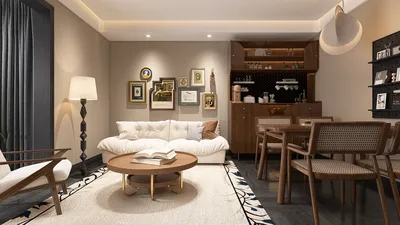


Over the last ten years in my career as an interior designer, I've observed a significant transformation in living room TV wall decoration. We’ve moved from bulky entertainment centers to streamlined, multifunctional showpieces. With contemporary design trends favoring minimalism and adaptable spaces, I truly believe that even compact areas can spark immense creativity. In this article, I’ll present ten TV wall design ideas that I have successfully utilized in various projects, incorporating my personal insights and expert recommendations—ideal for enhancing the style and functionality of your living room with the help of Homestyler.
Minimalist Floating TV Unit
My observation: In a small studio project, the client desired a clutter-free environment, so I opted for a wall-mounted floating TV unit with discreet storage options underneath. This choice immediately made the space feel more airy and expansive.
Advantages: It maximizes floor area, simplifies cleaning, and supports an elegantly minimalist living room aesthetic. This design pairs excellently with neutral colors and provides hidden cable management.
Disadvantages: Storage capacity is limited compared to larger units, and it requires secure wall installation for safety.
Suggestion: If your living space embraces a minimalist storage approach, floating units can seamlessly fit in while keeping cables and devices out of sight.
Feature Wall with Textured Panels
My observation: Incorporating textured panels behind the TV adds layers of depth without overwhelming the room. I've employed acoustic wood slats in several residences to enhance sound quality during movie nights.
Advantages: This creates a visual centerpiece, boosts sound absorption, and complements various design styles from Scandinavian to industrial.
Disadvantages: Installation may be labor-intensive; not suitable if you frequently change wall designs.
Cost consideration: MDF panels are generally more cost-effective than genuine wood, yet can still impart a luxurious look.
Framing TV with Built-in Shelving
My observation: For a client with an extensive book collection, we incorporated the TV into custom-built shelving. This setup fostered a library-like atmosphere, reducing the TV's visual prominence.
Advantages: It enhances wall utility, merges entertainment with storage, and is ideal for maximizing small spaces.
Disadvantages: May appear cluttered if not styled thoughtfully; requires regular dusting.
Tip: Ensure that decorative items and books are color-coordinated for a cohesive appearance.
Accent Lighting Around the TV
My observation: LED backlighting has become one of my favorite techniques in TV wall decoration—not only does it add drama, but it also alleviates eye strain during evening viewing.
Advantages: It creates a cinematic vibe, is energy-efficient, and is budget-friendly. As noted by the CIE, bias lighting can enhance visual comfort.
Disadvantages: If used excessively, it might seem gimmicky or too harsh; inexpensive LED strips can sometimes display inconsistent color temperatures.
Gallery Wall Surrounding the TV
My observation: In my personal space, I softened the starkness of a black screen by framing it with art prints and family photographs.
Advantages: This approach personalizes the area, can obscure the TV's dimensions, and is easily modifiable.
Disadvantages: An excess of frames can create a chaotic look; careful layout planning is necessary for balance.
Marble or Stone Backdrop
My observation: In a high-end project last year, we installed a marble slab behind the TV, which significantly uplifted the room’s sophistication.
Advantages: This choice adds elegance, is durable, and easy to maintain; it blends beautifully in both modern and traditional settings.
Disadvantages: Material and installation costs can be high; heavy materials necessitate reinforced wall support.
Consideration: Engineered quartz offers a similar aesthetic at a lower cost, with simpler maintenance.
Concealed TV in Sliding Panels
My observation: For clients who prefer their TV out of sight, I’ve designed sliding wood or fabric panels to conceal it when not in use, transforming the wall into an art or storage display.
Advantages: This approach keeps the design focus on the space, shields the TV from dust, and provides dual functionality.
Disadvantages: The installation of the mechanism can be costly; sufficient space is necessary for the sliding panels.
Tip: If paired with an L-shaped layout to maximize counter space in an adjoining open plan, the TV wall can smoothly integrate into the overall design flow.
Frameless Mounted TV with Hidden Cables
My observation: This is the preferred choice for modern enthusiasts; I adore the artful appearance when a TV is mounted flush against the wall with cables entirely concealed.
Advantages: It delivers a super clean look, maximizes visual space, and fits seamlessly in minimalist or contemporary environments.
Disadvantages: Some construction is needed to route cables; flexibility is limited if repositioning the TV is desired.
Mixed Material Wall Design
My observation: In one of my projects, we combined metal panels, reclaimed wood, and painted drywall to create a richly layered backdrop behind the TV.
Advantages: This approach introduces texture, warmth, and contrast, making the wall interesting and conversation-starting.
Disadvantages: Balancing multiple materials can be challenging without overcrowding the space.
Tip: Limit your palette to two or three main materials for harmonious design.
Built-in Electric Fireplace Under the TV
My observation: A recent favorite among clients is the combination of a wall-mounted TV positioned above a linear electric fireplace—this feature wall embodies the perfect blend of coziness and modernity.
Advantages: It adds both physical and visual warmth, creating a luxurious focal point suitable for both small and spacious living rooms.
Disadvantages: Careful heat management is essential; electric fireplaces can widely vary in realism and quality.
Styling note: I recommend incorporating wood elements in the surrounding décor to harmonize modern technology with comfort.
Conclusion
Small living areas should not stifle creativity; rather, they demand more intelligent, integrated design solutions. As highlighted in various reports by the ASID (American Society of Interior Designers), striking a balance between aesthetic appeal and functionality is vital for multifunctional living. Which of these TV wall design concepts would you like to explore through Homestyler?
FAQ
1. What are some innovative living room TV wall decorating inspirations for small areas?
Floating TV units, built-in shelving, and concealed sliding panels can effectively conserve space while enhancing style.
2. How can I manage cable visibility in my TV wall design?
Utilize in-wall cable management systems or choose furniture with built-in cable channels for a tidier appearance.
3. Are LED lights placed behind a TV beneficial for eye comfort?
Indeed, according to the CIE, bias lighting can help mitigate eye strain and enhance viewing comfort in dimly-lit spaces.
4. What is the best material choice for a TV feature wall?
It depends on your aesthetic preference—marble for opulence, wood slats for warmth, or textured panels for sound absorption.
5. Can I incorporate a fireplace into my TV wall design?
Absolutely, electric fireplaces below TVs are a popular trend; just ensure that you adhere to the manufacturer's recommended heat clearance.
6. How can I make my TV wall appear less like a technology fixture?
Surround it with artwork, integrate it into built-in shelving, or conceal it behind sliding panels for a seamless look.
7. What are some budget-friendly options for TV wall décor?
Painted accent walls, MDF panels, or DIY gallery frames are economical choices that still deliver a significant impact.
8. Should my TV wall complement the rest of my décor?
It should coordinate in color and style; however, contrasting materials can help to make it a stunning focal point.
Homestyler is your go-to online home design platform, offering a user-friendly design tool, stunning 3D renderings, and a wealth of inspiring design projects. Plus, with helpful DIY video tutorials, you’ll have everything you need to create your dream home effortlessly!
Design Now for FREE
































