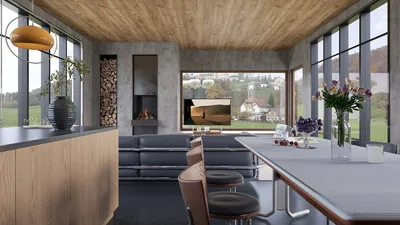


As an expert who has crafted numerous living rooms over the past decade, I can assure you that rectangular layouts are surprisingly advantageous. Today's interior design trends favor clean lines, versatile furniture, and smooth movement throughout the area. In my experience, smaller or oddly shaped rooms often ignite the most imaginative ideas. In this article, I’ll present 10 innovative living room concepts for rectangular spaces, merging my professional insights with data-driven design principles. You might find tools like Homestyler particularly useful for visualizing these ideas.
1. Floating Furniture Arrangement
My Perspective: I once assisted a young couple in creating an illusion of expanded space by positioning their sofa away from the wall. This floating arrangement in their rectangular living room allowed for distinct zones without the need for permanent dividers.
Benefits: Enhances traffic flow and gives the illusion of a larger room. This setup works particularly well with long sofas and slender console tables, making it an excellent method for embracing minimalist living room zoning. Consider using design software like Homestyler to explore your options.
Drawbacks: It necessitates more attention to cable management, which can be a slight inconvenience.
Suggestion: Utilize a rug to anchor the seating area, ensuring harmony within the elongated layout.
2. Mirror for Depth Enhancement
My Experience: In my own apartment, a tall vertical mirror on one of the shorter walls expanded the perceived space significantly. Guests frequently remarked on the apparent width of my living room.
Advantages: Instantly boosts natural light and broadens visual perception without any structural modifications. This effect is particularly effective when combined with bright color schemes.
Disadvantages: Mirrors require regular cleaning and can reflect undesirable views if not placed thoughtfully.
Advice: Position mirrors across from windows to maximize the reflection of daylight.
3. Custom Wall Storage Solutions
My Insight: I designed bespoke built-in shelves for a client residing in a rectangular loft. The vertical lines attracted the eye upward, successfully balancing the narrow space.
Benefits: Offers significant storage without infringing on floor space, a widely-acknowledged space-saving strategy highlighted in Architectural Digest. Utilizing a tool like Homestyler can help you visualize how these shelves integrate with your design.
Limitations: Custom installations can be costly and may necessitate professional help.
Tip: Mix open shelving with closed cabinets to manage clutter while displaying decor effectively.
4. L-Shaped Sectional for Cohesion
My Experience: I integrated an L-shaped sectional for a family with young children, effectively utilizing a corner to craft a cozy gathering area within their long, narrow room.
Pros: Maximizes seating, establishes clear conversational zones, and utilizes corner spaces effectively. It also serves as a visual break in a lengthy room layout. You can check out design options using Homestyler for seamless planning.
Cons: Larger pieces may be difficult to reposition if you prefer frequently refreshing layouts.
Tip: Choose modular sectionals to maintain flexibility in your design.
5. Diagonal Rug Placement
My Take: This unconventional approach is one of my favorites. I once placed a rug at an angle in a rectangular living room, and the transformation was strikingly dynamic.
Pros: Disrupts the typical "bowling alley" effect and injects vibrancy into elongated designs.
Cons: Furniture arrangement might become more complex, requiring careful selection of proportions.
Tip: Keep the remaining layout simple to emphasize the rug's angled placement.
6. Multi-Layered Lighting
My Insight: During a recent renovation, we installed wall sconces, table lamps, and pendant lights within a single rectangular room. This layering created a rich, warm atmosphere.
Advantages: Adds depth and can instantly alter the mood. It distinguishes different functional areas within the same space.
Disadvantages: More fixtures lead to increased initial costs and maintenance.
Tip: Use dimmers for each light source to control the ambiance.
7. Large Art on Short Walls
My Experience: Hanging sizable art pieces on the shorter walls has helped visually widen elongated living rooms. I’ve witnessed this trick work wonders in both modern and rustic settings.
Benefits: Serves as a focal point, enhancing the room's proportions beautifully.
Drawbacks: Oversized art can overpower the space if colors clash with the existing palette.
Tip: Select art that complements the primary color scheme for a unified aesthetic.
8. Sliding Glass Panels
My Take: Last spring, we substituted a solid wall with sliding glass panels, instantly transforming the living area into a more airy space.
Advantages: Enhances light flow while allowing for functional separation, as noted in Houzz's 2023 layout report. Integrating glass panels also helps maintain clear sightlines.
Disadvantages: Requires precise installation and regular upkeep.
Tip: Opt for frosted glass if privacy is a concern without sacrificing brightness.
9. Vertical Greenery
My Insight: I implemented a living plant wall in a rectangular condo last year. It not only improved air quality but also added appealing texture to the long walls.
Advantages: Introduces nature indoors, enhances acoustics, and makes narrow spaces feel more welcoming.
Limitations: Requires consistent care and appropriate lighting.
Tip: Utilize modular planting systems for easier maintenance.
10. Zoning with Flooring Material
My Insight: In a studio apartment, I opted for wood flooring in the seating area and tile in the dining section, subtly demarcating spaces without walls—this aligns perfectly with L-shaped flooring transitions.
Benefits: Creates distinct areas and adds visual interest without physically disrupting the layout.
Drawbacks: Careful color and texture coordination is essential to avoid clashing.
Tip: Ensure smooth transition strips to prevent tripping hazards.
Conclusion
A rectangular living room should not be seen as a constraint but an opportunity to design intelligently. As highlighted in Elle Decor, careful furniture placement, proportion balancing, and multifunctional pieces can entirely revamp an elongated space. Which of these ideas would you consider implementing in your home? Additionally, tools like Homestyler can help you visualize these concepts in your unique space.
FAQ
Q1: What is the simplest approach to arrange furniture in a rectangular living room?
A1: Begin by identifying a primary focal point, such as a television or fireplace, then arrange seating to facilitate conversation. Ensure that traffic can flow unobstructed through the length of the space.
Q2: Can a sectional fit into a small rectangular living room?
A2: Absolutely, particularly a compact L-shaped sectional. It can effectively maximize seating while clearly establishing the living area without overwhelming the space.
Q3: How can I create a sensation of width in my rectangular living room?
A3: Incorporate horizontal elements—like low shelves or artwork on shorter walls—and choose light colors to visually expand the space, a technique supported by Architectural Digest.
Q4: Is it advisable to paint a rectangular living room a single color?
A4: Not necessarily. Accent walls on the shorter ends can help in balancing proportions, while using a single color scheme can create a seamless continuity.
Q5: What type of lighting is best for narrow environments?
A5: Layered lighting—which combines sconces, pendants, and floor lamps—adds dimension and versatility. Relying solely on overhead lighting should be avoided, as it can flatten the space.
Q6: How can I incorporate storage without overcrowding the room?
A6: Opt for built-in storage solutions or wall-mounted units. These choices conserve floor space and maintain clean visual lines, which is perfect for rectangular designs.
Q7: Can mirrors truly alter the perceived size of a room?
A7: Definitely. Mirrors reflect light and scenery, creating an impression of a larger, brighter space when arranged strategically, ideally positioned opposite a light source.
Q8: Are rugs essential in rectangular living rooms?
A8: Yes, rugs help define seating arrangements and break up the length visually. You can even play with angles to disrupt linear monotony.
Homestyler is an amazing online home design platform that makes it easy to visualize your ideas. With its user-friendly design tool, stunning 3D renderings, and a wealth of DIY video tutorials, you can effortlessly transform your home into a masterpiece. Start designing today!
Zaprojektuj teraz za darmo
































