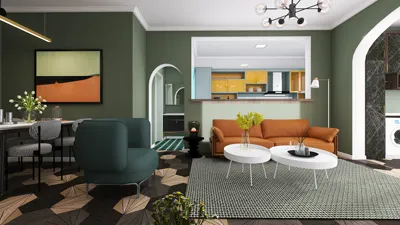


Recently, there has been a noticeable trend in interior design that merges aesthetic appeal with functionality, particularly in living rooms. Drawing from my ten years in the design field, I have discovered that even small elements—such as a strategically placed chair rail—can significantly enhance a space. In fact, compact living rooms often encourage more inventive ideas, and a well-chosen chair rail can effectively demarcate areas, add charm, and shield walls from wear. Today, I’m excited to present ten innovative chair rail ideas for living rooms that I've implemented in real projects, infusing personal reflections alongside expert insights.
1. Timeless White Chair Rail Against Neutral Walls
My Perspective: I once transformed a small urban apartment where the client desired a look of eternal sophistication. A bright white chair rail against soft beige walls immediately elevated the room's ambience without overwhelming it.
Advantages: It enhances spatial proportions and complements neutral color schemes, making it ideal for smaller living rooms as it visually increases height without causing clutter.
Disadvantages: If overly applied in sleek, modern designs, it may seem too conventional. Additionally, it can be challenging to maintain if the walls are susceptible to marks.
Tip: Combine with soft-toned furnishings for a cohesive appearance.
2. Two-Tone Wall Design
My Perspective: By painting the section below the chair rail a darker hue and the upper portion a lighter shade, I have seen wonderful results. This two-tone strategy in transitional living spaces effectively balances visual elements.
Advantages: It visually enlarges the room and conceals minor damage on walls below the rail. Architectural Digest's color theory supports that it also anchors furniture well.
Disadvantages: It demands precise painting; any uneven lines become glaringly obvious.
Tip: Employ painter’s tape and measure carefully before selecting colors.
3. Rustic Wooden Chair Rail
My Perspective: In a rustic loft design, I utilized reclaimed oak for the chair rail, instantly adding warmth to the contemporary decor.
Advantages: It imparts a cozy, authentic feel and pairs wonderfully with wooden flooring and earthy color tones.
Disadvantages: Using genuine reclaimed wood can be pricey; it might also need sealing to prevent splinters.
Tip: Engineered wood options can offer a similar aesthetic while being budget-friendly.
4. Sleek Metal Chair Rail
My Perspective: Stainless steel or brushed aluminum chair rails can add an unexpected yet stunning touch to a modern loft setting.
Advantages: These materials are incredibly durable and can help brighten a room by reflecting light.
Disadvantages: They may lend a cold, industrial vibe if not balanced with cozier elements.
Tip: Include softer textiles and plants to create a warm atmosphere.
5. Chair Rail with Decorative Panels
My Perspective: By adding raised panels between the floor and the chair rail, a client’s modest living room was enhanced, achieving an upscale, custom look.
Advantages: This approach enhances the architectural richness and protects walls from everyday wear.
Disadvantages: The installation process can be labor-intensive and demands precise carpentry skills.
Tip: MDF moldings can help keep costs down without compromising style.
6. Bold Color Below Chair Rail
My Perspective: Deep emerald green or navy below the rail creates a stylish framework for seating areas, similar to color-blocking seen in eclectic kitchens but tailored for living rooms.
Advantages: This technique makes a striking design statement and is forgiving for marks on the lower wall.
Disadvantages: If the upper wall and ceiling are not kept light, it might darken a small room.
Tip: Balance the look with light-colored furniture.
7. Wallpaper Below the Chair Rail
My Perspective: A floral wallpaper treatment beneath the rail added whimsy to a reading nook I designed, and the chair rail provided a clean separation to avoid visual clutter.
Advantages: It allows for experimenting with bold patterns while keeping overpowering visuals at bay.
Disadvantages: Wallpaper can be expensive and might peel in areas with high humidity.
Tip: Opt for wipeable wallpaper for easier cleaning.
8. Minimalist Thin Chair Rail
My Perspective: A barely-there chair rail painted to match the wall is ideal for minimalistic interiors.
Advantages: It offers wall protection while maintaining a clean, sleek look; perfect for smaller contemporary spaces.
Disadvantages: It makes less of a visual impact, which may feel lacking in highly decorative rooms.
Tip: Experiment with matte and satin finishes to create subtle texture variations.
9. Integrated LED Lighting in Chair Rail
My Perspective: In an open-plan apartment, I hid LED strips within a hollow chair rail, providing a soft, ambient light reminiscent of AI-assisted living room designs.
Advantages: It offers functional lighting without the need for extra floor lamps, great for mood setting.
Disadvantages: This setup requires careful planning during construction and can be complex to retrofit later.
Tip: Use dimmable LEDs to allow for brightness adjustments.
10. Fusion of Contrasting Materials
My Perspective: The combination of wood above the rail and painted drywall below, or vice versa, gives depth and dynamism to the design. This approach works beautifully in hybrid modern-rustic spaces.
Advantages: The contrast draws attention and permits creative mixing of textures.
Disadvantages: This design may need routine repainting or refinishing to maintain both materials’ freshness.
Tip: Stick to a unified color scheme so the juxtaposition appears intentional.
Conclusion
Having a small or modest living room doesn’t limit your design options; it simply calls for more intentional decisions. Chair rails serve as a powerful tool for achieving design unity, safeguarding walls, and imbuing personality into any space. As interior design expert Jonathan Adler states, “It’s all about the mix—proportion, texture, and surprise.” Which of these ten living room chair rail inspirations would you explore next—perhaps utilizing Homestyler to visualize your designs?
FAQ
1. What height is optimal for a living room chair rail?
Chair rails generally sit at about one-third the height of the wall, which tends to be around 32–36 inches from the floor.
2. Can chair rails fit into modern living room settings?
Absolutely. Incorporating sleek designs and coordinating colors allows chair rails to blend seamlessly into minimalist or contemporary aesthetics.
3. Which paint finish is preferable below a chair rail?
A satin or semi-gloss finish works best, as it is easier to clean and is resistant to scuffs.
4. Are there affordable alternatives for chair rails?
MDF and PVC chair rails offer a cost-efficient substitute for hardwood while maintaining visual appeal.
5. How can I coordinate chair rail color with my living room décor?
Consider either matching the wall for a subtle effect or opting for a contrasting color for a more striking look. Explore examples in transitional living room designs.
6. Will adding a chair rail harm my walls?
If installed with care, using moderate adhesive and finishing nails, the impact is minimal and can be easily repaired.
7. Is DIY chair rail installation feasible?
Yes, with basic carpentry skills, a miter saw, and patience, it is an achievable weekend project.
8. Is a chair rail merely decorative?
Not at all—its original function was to protect walls from damage caused by chair backs, but it now also serves a significant decorative purpose.
Homestyler is your go-to online home design platform, perfect for transforming your ideas into reality. With its user-friendly design tool, stunning 3D renderings, and a wealth of DIY video tutorials, you can effortlessly create and visualize your dream space. Start designing today!
Design Now for FREE
































