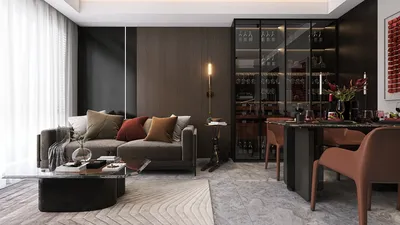


Throughout my 10+ years of experience in interior design, I've come to realize that baseboards are often overlooked when people style their living rooms. Today, as design trends shift towards seamless finishes and custom details, baseboards have emerged as a notable design element. Particularly in smaller areas, they can add depth, introduce character, and even create the illusion of taller walls. I've discovered that working with small spaces often challenges us to think more creatively—and in this article, I’ll present 10 innovative baseboard ideas for living rooms that I've implemented and cherished, supported by both hands-on insights and design data, including how Homestyler can assist in visualizing these concepts.
1. Sleek Minimalist Baseboards
My Experience: I once transformed a compact Scandinavian apartment by installing a 3-inch flush baseboard in matte white. This design melted into the wall, making the living room appear much larger and more open. You can see a similar minimalist baseboard design achieved using Homestyler in one of my favorite projects.
Benefits: It creates a clean, continuous wall line that enhances the feeling of spaciousness and works wonderfully with modern and Nordic designs.
Drawbacks: It is less forgiving if walls or floors aren’t perfectly aligned—precision is key for installation.
2. Painted Contrast Baseboards
My Experience: During a mid-century living room makeover, I opted to paint the baseboards a deep navy against light gray walls, which immediately grounded the entire space.
Benefits: It effectively defines the room’s architectural lines and is a cost-effective way to inject personality into the decor.
Drawbacks: Dark hues may attract more dust; not the best choice for homes with pets that shed frequently.
3. Oversized Traditional Baseboards
My Experience: For a heritage-style renovation, I selected 8-inch MDF baseboards with intricate profiles that instantly enhanced the room's elegance.
Benefits: These add a classic appeal and can cover minor gaps between the wall and floor.
Drawbacks: They can dominate very small living rooms if not proportionately balanced with the furnishings.
4. Wood-Toned Baseboards
My Experience: In bohemian-inspired interiors, I love pairing natural oak baseboards with white walls to bring warmth into the space.
Benefits: Introduces texture and warmth, highly resistant to wear and tear.
Drawbacks: If the wood tone is too dark, it might make the room feel heavier.
5. Shadow Gap Detail Baseboards
My Experience: In a high-end loft, I chose a recessed shadow gap instead of a traditional baseboard, creating a striking floating-wall effect.
Benefits: This option is extremely modern and sleek, avoiding any dust-catching ledges.
Drawbacks: It is more expensive and requires skilled craftsmanship to achieve correctly.
6. Integrated LED Baseboards
My Experience: I installed LED strips behind a partially recessed baseboard in a studio living arrangement, providing a chic ambient night light.
Benefits: It enhances the mood lighting and serves as a subtle path illumination.
Drawbacks: The upfront costs are higher, and it necessitates electrical planning from the start.
7. Textured or Paneled Baseboards
My Experience: I once incorporated vertical groove panels into the baseboard design for a coastal home—it's a subtle yet distinctive touch.
Benefits: It adds tactile fascination and complements rustic and cottage styles well.
Drawbacks: Cleaning can be challenging if the texture is deep or complex.
8. Color-Matched Baseboards
My Take: Painting baseboards the same color as the walls in a compact living room can create a cohesive feel and lessen the visual clutter. I discovered a similar technique while designing an open-concept space with Homestyler.
Benefits: It seamlessly blends with the wall, reducing distractions.
Drawbacks: If not juxtaposed with contrasting textures, it can appear flat.
9. Curved or Rounded Edge Baseboards
My Experience: I opted for gently bullnosed baseboards in a family room to ensure safer edges for children.
Benefits: This design offers a softer aesthetic and is safer, making it ideal for family-oriented spaces.
Drawbacks: It has limited style versatility, suiting modern or playful styles better than formal ones.
10. Metal or Aluminum Baseboards
My Experience: For an industrial loft, I chose brushed aluminum baseboards that harmonized beautifully with the exposed ductwork.
Benefits: Highly durable and perfect for high-traffic, contemporary spaces.
Drawbacks: If not balanced with warmer elements, they may feel stark; reflective finishes can show smudges easily. You can see how we balanced this in a modern industrial case study using Homestyler.
Conclusion
My experiences show that whether your living room is small or large, the choice of baseboard can serve as a defining design feature rather than a limitation. From sleek minimalist designs to bold painted styles and custom creations, the appropriate baseboard can elevate the entirety of your space. As noted by the American Society of Interior Designers, your choices in trim and molding directly affect the perceived quality of interiors. So, which living room baseboard idea sparks your interest?
FAQ
1. What is the most popular baseboard style for living rooms?
Currently, contemporary baseboards with clean lines are in vogue, as they fit both compact and expansive areas.
2. How tall should living room baseboards be?
Usually between 3–8 inches, depending on the ceiling height. Taller ceilings can accommodate larger baseboards without appearing heavy.
3. Can baseboards make a living room look larger?
Absolutely—especially with slim, flush baseboards or by painting them to match the walls, minimizing visual breaks.
4. Are wood baseboards superior to MDF?
Wood offers warmth and can be refinished; MDF is budget-friendly and provides a consistent texture. Each has its advantages based on your budget and desired aesthetics.
5. Should baseboards match the crown molding?
Generally, yes, for a cohesive look, but contrasting styles can bring a modern touch.
6. How do I maintain baseboards?
Regular dusting and periodic repainting will keep them looking fresh. Avoid harsh cleaning substances on painted finishes.
7. Is changing baseboards costly?
Not necessarily—MDF baseboards are often affordable. Labor costs may vary based on the condition of the walls and the complexity of the installation.
8. Where can I find examples of modern baseboard integration?
You can use Homestyler to explore design inspiration and see how different baseboards fit within your interior space.
Homestyler is an outstanding online home design platform that caters to all your decorating needs. With its user-friendly design tool, stunning 3D renderings, diverse design projects, and helpful video tutorials, you can effortlessly create your dream space, no matter your experience level!
Zaprojektuj teraz za darmo
































