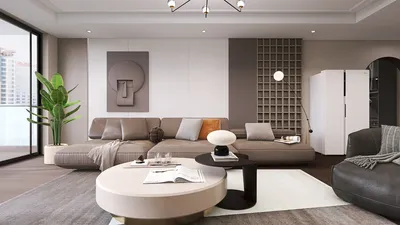


Throughout my experience in interior design, I've discovered that working with small living rooms featuring low ceilings can lead to innovative and creative lighting solutions. Currently, the trend is leaning towards layered lighting and statement fixtures that add character without overpowering the area. I've assisted numerous clients in transforming tight spaces into welcoming environments simply by reimagining their lighting designs. In this article, I'll present 10 lighting ideas perfect for low-ceiling living rooms, combining my firsthand experience with professional insights and even incorporating Homestyler for virtual planning assistance.
1. Flush Mount Fixtures for Sleek Aesthetics
My Insight: I frequently advocate for flush mount fixtures because they deliver abundant light while keeping ceiling space unobtrusive. In one instance, I replaced a hefty chandelier with a streamlined brass flush mount, instantly giving the room an airier feel.
Advantages: Ideal for evenly distributing light in compact areas; complements low ceilings effectively; suits a variety of styles from contemporary to retro.
Disadvantages: Less visually striking compared to pendant styles; may require several fixtures in larger spaces.
Advice: Opt for a flush mount that features a reflective or glass finish to enhance light reflection.
2. Recessed Lighting for an Airy Experience
My Insight: In a recent minimalist apartment remodel, the addition of recessed LED lighting significantly brightened the living space, making it feel open and uncluttered, which is ideal for lower ceilings.
Advantages: Promotes a seamless ceiling look; dimmable options help in controlling ambiance; aligns with modern clean design (essential for minimalist living rooms).
Disadvantages: Installation necessitates alterations to the ceiling; can be unsuitable for rental properties.
Advice: Utilize warm white LEDs within the 2700–3000K range to create a cozy environment.
3. Track Lighting for Versatile Focus
My Insight: I appreciate employing slim track systems in compact areas—on one project, I installed it in a studio adorned with art prints on the walls, and it significantly enhanced the overall atmosphere.
Advantages: Flexible heads allow you to spotlight artwork, furniture, or shelving; easier to install than complete rewiring; fits both modern and industrial designs.
Disadvantages: Visible rails may conflict with traditional or ornate decor.
Cost Note: High-quality track lighting typically begins around $150 for a 4-foot section, including installation.
4. Wall Sconces for Efficient Space Utilization
My Insight: In a 12'x12' client living room, I installed slim wall sconces beside the sofa, which allowed for more room for a side table.
Advantages: Keeps surfaces tidy; creates soft ambient lighting; easily layered with overhead fixtures.
Disadvantages: Usually requires wiring or has visible cords; may not be adequate as the sole light source.
5. LED Cove Lighting for a Subtle Glow
My Insight: Adding LED strips in ceiling coves in a rental (using peel-and-stick systems) fostered a soft, hotel-like ambiance.
Advantages: Gives depth and an elevated feel; colors and brightness can be adjusted; energy-efficient.
Disadvantages: Best utilized as supplementary lighting; can result in uneven lighting if not installed precisely (think creative LED cove designs).
6. Semi-Flush Mounts for Added Flair
My Insight: When a client desired a striking fixture but had limited ceiling clearance, a semi-flush model with glass orbs was the perfect solution.
Advantages: Adds style without hanging too low; complements eclectic or contemporary styles; can be dimmed for versatility.
Disadvantages: Still extends from the ceiling; may not be suitable for extremely low ceilings (under 8 feet).
7. Layered Table and Floor Lamps
My Insight: In my own living room, I mix a large tripod floor lamp with a small reading light, effectively creating distinct areas.
Advantages: Provides flexible positioning; enhances warmth and individuality; no need for ceiling modifications.
Disadvantages: Occupies floor space; cords can create visual clutter.
8. Sheer Curtains for Natural Light Amplification
My Insight: To maximize daylight usage, I recommend sheer curtains, which significantly reduced the need for artificial lighting during the day—this was particularly effective in a recent bohemian-style renovation.
Advantages: Brightens the room; softens window outlines; budget-friendly option.
Disadvantages: Offers limited nighttime privacy; provides no light after dark.
9. Accent Lighting Behind Furniture
My Insight: Concealing LED strips behind a media console produced a stylish floating effect, making the space appear more expansive.
Advantages: Introduces visual depth; cost-effective; ideal for enhancing movie night experiences.
Disadvantages: Does not significantly brighten the space.
10. Smart Bulbs for Adaptive Illumination
My Insight: In various client homes, I've integrated smart bulbs so homeowners can alter brightness and color effortlessly—perfect for adapting to different moods and multifunctional spaces.
Advantages: Highly customizable; promotes energy savings; can be controlled via applications or voice commands (ideal for dynamic living areas).
Disadvantages: Higher initial costs; some systems may require a hub.
Conclusion
Designing a lighting scheme for a small living room with low ceilings shouldn't be viewed as a challenge but as an opportunity to make strategic, stylish choices. As the American Lighting Association points out, utilizing layered lighting sources not only enhances aesthetics but also boosts functionality. Which of these innovative ideas would you be interested in trying with the help of tools like Homestyler in your own home?
FAQ
Discover the power of Homestyler for your home design journey! This user-friendly online platform offers an intuitive design tool, stunning 3D renderings, a wealth of inspiring design projects, and helpful video tutorials, making it easy for anyone to create their dream space.
Design jetzt kostenlos
































