


For years, the future has been encroaching upon our garages, a sensation tangible in every tedious morning commute and confined parking space. The National Association of Home Builders (NAHB) highlights that both parking and storage are crucial concerns for home buyers; however, many buildings treat these aspects as mere afterthoughts. This innovative 2-level basement parking layout exemplifies how mobility should be considered as a lifestyle interface instead of just leftover space. It is here, beneath the street, that the foundation of daily routines transforms into essential infrastructure, aided by tools like Homestyler.
Tiered Loop with Central Spine
Design Logic: Imagine two stacked rings connected to a straight core—this configuration allows arrivals on the upper level while providing long-stay options below. As congestion evolves, it will shift towards managed cycles, ensuring stability in movement.
Flow: Entry ramps feed the upper loop, while a down-ramp at mid-spine guides vehicles to deeper parking areas. Exits are separately routed to prevent cross-traffic accidents, similar to a precise function call in programming.
Sightlines: The column grids establish a rhythmic viewing experience; mirrors present at ramp openings serve as user interface cues, while light wells at spine nodes help reveal different orientation layers.
Storage: Features such as electric vehicle (EV) lockers, tire racks, and small shelving near stair cores facilitate storage for seasonal equipment and charging cables, all organized based on dwell time.
Furniture Fit: Parking stalls are designed at dimensions of 9x18 ft, with accessible bays measuring 11x18 ft; buffers at end caps respect vehicle turning radii, adhering to the API limits of vehicle design.
Verdict: This structured approach interprets traffic patterns like code: efficient routines are accommodated above, while archival needs are addressed below. As automotive technology advances towards autonomy, this design will seamlessly adapt, allowing vehicles to self-sort based on their intended use.
save pin
Split-Grid with Offset Ramps
Design Logic: Featuring a rectilinear grid divided by a half-level offset ramp, this layout minimizes dead ends and anticipates various vehicle types, from compact electric cars to larger delivery vans.
Flow: Access begins on Level -1, routing to -2 through the offset ramp, with exits separated on the opposite corner to reduce loop time and prevent blockages—creating a non-blocking thread model.
Sightlines: Long sight lines span 120-150 ft; clear signage acts as breadcrumb trails, and painted bands guide information upwards on walls, ensuring drivers can read while maintaining speed.
Storage: Wall-mounted modular cages and overhead racks create effectively tiered caches; maintenance supplies like mop stations and spill kits are strategically placed at nodes for easy access.
Furniture Fit: Drive aisles measure 24 ft for two-way traffic and 20 ft for one-way; van bays are designed at 9.5x20 ft, and EV charging islands are sized to allow seamless access without tripping hazards.
Verdict: The split-grid design brings predictability to parking operations. As demands for delivery and ridesharing services increase, this intelligently choreographed plan maintains low friction among users.
save pin
Radial Hub with Peripheral Bays
Design Logic: This design positions a central hub as both a dispatch point and a navigational aid, with surrounding arcs of parking stalls. Future automation will benefit from the simplicity of roundabout logic, minimizing decision-making nodes.
Flow: Vehicles descend into the hub, with drivers branching out to arcs based on indicated duration; exits connect back to the ring—akin to data packets being routed through a stable network switch.
Sightlines: The hub provides a full 360-degree visual range, where cameras serve as heads-up displays; illuminated perimeter bands provide stall status, transforming the area into an interactive interface.
Storage: Bulk lockers are clustered around elevators for convenience; quick-access cubbies are positioned near the hub, while service areas for drainage and washing are placed at the lowest level for efficiency.
Furniture Fit: Stalls within arcs are oriented at 60 degrees for easier entries; motorcycle parking and bike storage fit neatly between columns, optimizing space without collisions.
Verdict: The radial plan foresees the emergence of semi-autonomous driving patterns. As user habits shift, the design will adapt gracefully, guiding movements without resistance.
save pin
Final Takeaway
A 2-level basement parking plan transcends the notion of hiding vehicles. Instead, it encodes movement within the building's daily flow. Variations such as split-grid ramps, radial hubs, and tiered loops breathe purpose into subterranean spaces, creating a comprehensible interface for electric vehicles, bicycles, and future autonomous systems. From my perspective, the most advanced structures of tomorrow will not necessarily be larger but more intentional, and within these underground realms, they will echo the clarity of well-written code, enhanced by tools like Homestyler.

Minimalist Japandi Solid Wood Concrete Office Desk 3D Model
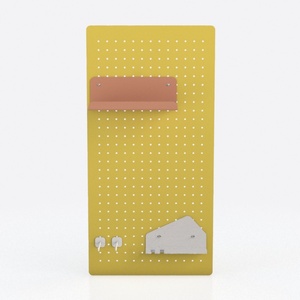

Modern Minimalist Yellow Pegboard Wall Organizer 3D Model

Modern Black Metal Glass Solid Wood Bookshelf with Storage Drawers 3D Model
Discover your dream space with Homestyler! This intuitive online home design platform offers a user-friendly design tool, stunning 3D renderings, and a treasure trove of DIY video tutorials. Perfect for both novices and pros, it empowers you to effortlessly create and visualize your ideal home!
Progetta ora GRATIS
































