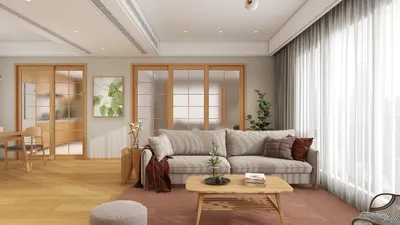


Once, a client sought a divider that would "keep odors out while letting jazz rhythms in"—this experience taught me to regard kitchen dividers as performative elements. When designing layouts, I frequently utilize a kitchen layout planner, like Homestyler, to visualize sightlines, movement patterns, and the arrangement of furnishings prior to construction.
Working with compact spaces compels me to embrace creativity: a smart divider can delineate areas without obstructing light or space. Here are five concepts I've implemented in actual kitchens, complete with candid advantages, minor hurdles, and budget-savvy recommendations gleaned from a decade of renovations.
1. Sliding glass partition with a metal frame
A sliding glass partition combines the characteristics of a door and a window: it contains steam and sound when closed and floods the area with light when open. For instance, I incorporated a black-framed sliding screen in a loft to maintain its industrial aesthetic—clients appreciated that it felt bespoke yet was significantly cheaper than full glass installations.
Advantages include great light transmission coupled with a contemporary aesthetic. Challenges arise with the need for high-quality hardware and regular track maintenance, so be sure to allocate funds for those necessities. An economical alternative would be to choose single-pane tempered glass with a slimmer frame.
save pin
2. Open shelving island as a semi-divider
I have a fondness for islands that serve dual purposes: a cooktop or preparation space on one side, with display and storage on the other. In a rental project, I placed open shelving facing the living room so that plants and cookbooks could intricately "soft divide" the areas while infusing personality into the room.
This method adds storage and maintains an open sightline; however, neat styling is essential—clutter will be visible from the living space. Opt for adjustable shelves and budget-friendly units that can be painted for a tailored appearance.
save pin
3. Half-wall with a countertop (breakfast bar)
A half-wall topped with a cantilevered counter is my preferred option when clients desire casual dining without a complete island. I implemented this in a narrow kitchen, successfully creating a distinct separation while adding seating—a perfect spot for morning coffee and homework.
The benefits include defined zones and additional preparation area, whereas poorly positioned ones can disrupt flow. Prior to construction, I recommend using cardboard to mimic the height and ensure chairs and pathways feel comfortable. Utilizing a free floor plan creator, such as Homestyler, can alleviate uncertainty when positioning the bar.
save pin
4. Pocket pantry or sliding door pantry wall
When storage is a priority, a pocket pantry or a sliding door that conceals itself within the wall is truly magnificent. I specified a pocket pantry for a bustling family kitchen, effectively hiding bulky appliances while returning an open ambiance when closed.
Key benefits include maximum storage without the need for bulky cabinetry; however, pocket doors necessitate careful framing and skilled carpentry. As a more economical solution, consider a shallow sliding door system or repurpose a tall pantry cabinet with an appealing front panel.
save pin
5. Hanging pot rack or green wall as a visual divider
Not every divider must be a wall structure. I often opt for a hanging pot rack or a vertical planter situated between the kitchen and living areas to add texture and color while maintaining a seamless flow. In one instance, an herb wall facing the living room not only smelled delightful but also fostered conversation between the cook and guests.
This solution is both airy and adaptable, yet it’s important to keep weight limits in mind (especially with pots and soil) and secure proper mounting. If you're experimenting with aesthetics, a quick test using a 3D floor planner like Homestyler can help visualize how hanging elements impact sightlines and traffic.
save pin
Tips 1:
Budget Tip: Begin with visual mockups instead of immediate demolition. Most divider ideas—shelves, half-walls, or suspended screens—can be trialed with temporary pieces. I always advise assessing heights and clearances using cardboard or lightweight panels first.
save pin
FAQ
Q1: What are the best kitchen divider concepts for small apartments?
A1: For smaller apartments, I recommend open shelving islands, half-walls with counters, or hanging features that preserve light and flow. These selections offer function without closing off the space.
Q2: How much can I expect to pay for a sliding glass partition?
A2: Prices can vary significantly based on size and hardware, but anticipate that high-end metal-framed sliding glass systems will be pricier than framed wood or simple glass options. Be sure to account for installation costs and quality tracks for optimal functionality.
Q3: Are vertical herb walls practical for kitchens?
A3: Absolutely, vertical herb walls can be effective if you select low-maintenance herbs and ensure proper watering and lighting. They serve as both decorative elements and fresh ingredients but can require more upkeep than traditional potted plants.
Q4: Can a half-wall impact resale value?
A4: A well-designed half-wall with a counter can improve resale value by creating functional areas and added seating. Avoid overly tailored fixtures that may deter potential buyers.
Q5: Is a permit necessary for installing a half-wall or pocket door?
A5: Generally, small half-walls don’t require permits, but any structural changes affecting plumbing or electrical systems usually will. Always verify local building regulations before commencing any work.
Q6: How do I differentiate between choosing open shelving and closed cabinets as dividers?
A6: Opt for open shelving if you prioritize light and aesthetic display; opt for closed cabinets if concealed storage and a tidier appearance are your goals. I often suggest a combination of both for balance: open shelves at eye level and closed storage below.
Q7: What safety considerations should I keep in mind for hanging dividers?
A7: Hanging dividers must be securely mounted to studs or structural supports, considering weight limits for items like pots or soil. For living walls, ensure proper waterproofing and drainage to protect cabinets and flooring.
Q8: Is there any authoritative information regarding kitchen design dimensions?
A8: Certainly—the National Kitchen and Bath Association (NKBA) offers recommended clearances and ergonomic guidelines for kitchen designs. They advise maintaining at least 42 inches of clearance for single-cook work aisles and 48 inches for multi-cook areas (source: https://www.nkba.org).
save pin
Looking to transform your space? Homestyler is your go-to online home design platform! With its user-friendly design tool, stunning 3D renderings, and a plethora of DIY video tutorials, you can easily create and visualize your dream home. Start designing today!
Diseño ahora GRATIS
































