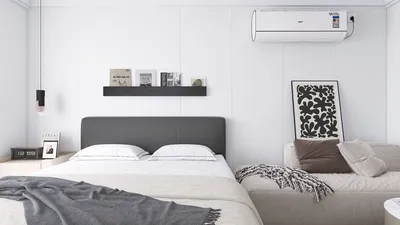


As we move towards the future, it’s essential to address the limitations of today’s homes in areas such as privacy, natural light, and storage efficiency. In this context, I envision designs that anticipate tomorrow's needs. According to the AIA's latest insights on residential trends, there is a consistent demand for flexible layouts that prioritize wellness, all while home sizes continue to decrease. Amidst these challenges, the traditional Japanese house floor plan operates like a minimalist operating system—focusing on elements like tranquility, organization, and transitions, all interpreted through a spatial reasoning framework. An excellent tool for designing such spaces is Homestyler, which allows for thoughtful visualizations.
Engawa Ring + Courtyard Core
Design Logic: The perimeter walkway serves as a protective barrier while the courtyard acts as a central moderator. This integration allows nature to balance temperature fluctuations and community interactions—combining rituals and adaptability seamlessly.
Flow: The routing from Genkan to engawa, then to living tatami, kitchen node, and bath suite forms a continuous cycle, reminiscent of a smooth non-blocking thread.
Sightlines: The view across the low horizon through shoji screens leads to the serene garden; here, depth is communicated through translucency rather than mere distance—where the UI softens instead of starkly appearing.
Storage: Oshiire and stair tansu function like a cache, where immediately needed items sit in Level 1 (daily use), while seasonal futons are stored in Level 2 (deep storage).
Furniture Fit: The modular tatami grid, at 910 mm, sets the limits for furniture layout; low tables, floor seating, and a narrow console along the engawa enhance the flow of movement.
Verdict: This design effectively buffers both noise and time; in five years' time, it will accommodate hybrid work environments without necessitating additional square footage.
save pin
Split-Threshold Genkan + Washitsu Switch
Design Logic: The entry functions like a firewall, quarantining shoes, coats, and deliveries, while the washitsu transitions from a tea area to a sleeping area with ease.
Flow: The sequence of drop from the Genkan, a handwash area, then to the kitchen for unloading, followed by the dining area and private rooms—an approach focused on hygiene, akin to preparing for a flight.
Sightlines: From the entryway, you experience layered transparency; light is visible while faces remain concealed, allowing for quick privacy, while the layout remains intuitively understandable.
Storage: A dedicated shoe wall, an umbrella nook, and a shallow pantry conveniently located near the door support fast access; a futon closet adjacent to the tatami room allows for rapid transitions.
Furniture Fit: Implementing a compact table on wheels, stackable zabuton, and maintaining a 600 mm aisle discipline; appliances are designed to integrate flush to uphold a consistent line.
Verdict: This intelligent threshold design successfully future-proofs compact living spaces; the room layout endures while functionalities adapt to changing needs effortlessly.
save pin
Deep Eaves + Timber Grid Kitchen Spine
Design Logic: Enlarged eaves help regulate solar heat, while a prominent central timber beam orchestrates the kitchen, laundry, and storage into a centralized service system.
Flow: The design progresses from the garden space through a mud niche, to the galley spine, then to a laundry pocket, and finally the bath area; this creates an uninterrupted workflow, minimizing context switching during chores.
Sightlines: Beneath the beams, the long, calm axis is complemented by designated task zones that punctuate the space like menu options, ensuring the garden remains the focal point.
Storage: Ceiling racks positioned between beams, pull-out pantries, and floor-level drawers establish a multi-tiered vertical cache, keeping countertops clutter-free.
Furniture Fit: Seating beneath the window, a 450 mm deep sideboard, and a narrow island (700×1600) designed with legroom for tatami access enhance usability.
Verdict: Centralizing service areas creates a low-maintenance environment; even after five years, the home continues to retain its efficient feel.
save pin
Final Takeaway
The floor plan of a Japanese house transcends basic design; it serves as a structured interface where thresholds, light, and storage elements operate akin to code. Variants such as engawa loops, washitsu transformations, and expansive eaves allow compact homes to function as adaptable systems rather than mere boxes. In the face of urban living, the tatami-centric design and sanitary genkan systems are well-prepared for evolving demands in health, work, and hospitality, all without increasing space. From my perspective, the most forward-thinking homes of the future will not need to be larger but will instead be characterized by their purposeful design, potentially realized through innovative tools like Homestyler.


Discover the power of Homestyler, your go-to online home design platform! With its user-friendly design tool, stunning 3D renderings, extensive design projects, and helpful video tutorials, you can effortlessly create and visualize your dream spaces, regardless of your experience level. Transform your home today!
Design jetzt kostenlos
































