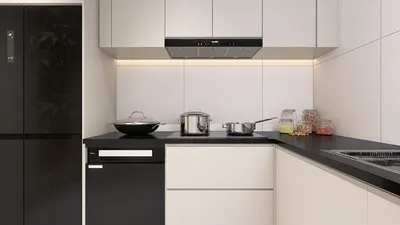


As we look towards the future, today's renters are caught up in balancing cost, personal space, and creativity in their living arrangements. Research from Zillow indicates that studio and one-bedroom apartments are highly sought after in urban areas, suggesting that compact living is not merely a fad but rather a standard way of life. With this perspective, I view Ikea studio apartment layouts as essential guides for envisioning our upcoming living environments. The Homestyler tool serves as an invaluable resource, aiding in the visualization of how we can optimize space, flow, and storage into a cohesive story.
Linear Studio Spine
Design Concept: This layout features a streamlined, corridor-like structure that sequentially organizes cooking, working, and resting areas, illustrating a future where daily routines function like well-coordinated scripts.
Flow: The path starts from the entry, moves to the kitchen area, then to a workspace, followed by a lounge, and finally leads to a sleeping area, all while maintaining a straightforward route with only a few diversions.
Sightlines: An extended view from the entrance to the windows establishes a hierarchy; the use of sliding partitions provides privacy while also softening the aesthetic.
Storage: Tall cabinets for pantries and wardrobes act as efficient storage solutions, while drawers under the sofa and bed ensure quick access to items without clutter.
Furniture Arrangement: Modules that are 24–30" deep align with the space limitations, featuring a convertible sofa that measures 78–80" along with a 30" table, ensuring no overlapping of furniture.
Conclusion: This spine configuration is designed with the future of hybrid work in mind, minimizing latency between tasks while maintaining a calm visual environment.
save pin
L-Shaped Micro Zones
Design Concept: The L configuration organizes daily activities around a corner with windows, translating the needs of future multi-functional living into clear, grouped zones.
Flow: Starting from the entry buffer, it moves to a compact cooking area, followed by a lounge or work space, and concludes at a cozy sleeping nook; the layout remains easy to navigate.
Sightlines: The corner windows act as the primary viewpoint while lateral shelves establish secondary layers, preventing overwhelming clutter.
Storage: The vertical cabinets at the corner serve as effective storage gateways, while bench seating conceals larger storage items, facilitating smooth movement.
Furniture Arrangement: Featuring a 60" loveseat, a 48" folding table, and a 30" deep Murphy bed, this design optimizes space in narrow areas without collision risk.
Conclusion: The L-shaped layout provides flexibility where it’s most required, supporting workday activities while allowing for evening space expansion—future-proofed thanks to its modular elements.
save pin
Split Studio with Sliding Kernel
Design Concept: A movable partition becomes the central element, allowing the space to shift between communal and private areas without the need for redesigning the entire layout.
Flow: From the entry, you move into a shared kitchen/living area, with the option to slide a partition to create a private sleeping pod; it’s akin to toggling between tabs with minimal loss of context.
Sightlines: Translucent panels create visual filters along the main axis, presenting silhouettes rather than fully revealing figures, thus enhancing privacy.
Storage: Rail-mounted cabinets and overhead shelves function as flexible storage solutions, with seasonal bins stored overhead for items not in regular use.
Furniture Arrangement: A 72–76" sofa bed clears the partition path while nested tables provide variable functionality without taking up unnecessary space.
Conclusion: This partitioned approach anticipates the future of studio living, prioritizing adaptable privacy with minimal impact on the structural design.
save pin
Final Thoughts
Ikea's studio apartment floor plans offer insights into how compact homes can operate like living software—modifying flow patterns, optimizing storage, and refining visibility through well-planned sightlines. Variations such as linear spines, L-shaped zones, and sliding partitions ensure that small studio layouts can adapt to evolving work-life demands. In my view, the most effective micro-homes are not those that just increase in size, but rather those designed with intention, and I believe that the interface fundamentally shapes the user experience, which is where tools like Homestyler become essential.
Homestyler is your go-to online home design platform, perfect for transforming your ideas into reality. Enjoy an intuitive design tool, stunning 3D renderings, a wealth of design projects, and helpful DIY video tutorials—all in one place. Bring your dream home to life effortlessly!
지금 무료로 디자인하세요
































