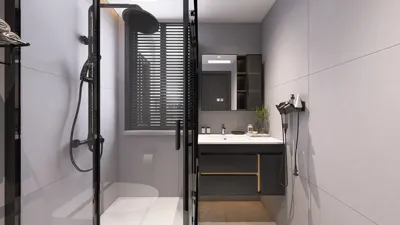


The hospitality sector's evolution is first revealed through our simulations: when our daily lives encounter limitations in bandwidth, we begin to innovate new rituals within sandbox environments. Reports from AIA and NAHB indicate a growing interest in adaptable amenity programming for mixed-use developments, which resonates with my experience while configuring Sims 3 resort floor plans that emphasize manageable, human scale. In this transitional space between the present and the future, I interpret rooms as if they are early-stage code, with this toolkit for spatial reasoning serving as a subtle compiler for our designs.
Linear Boardwalk Spine
Design Logic: The layout features a single-loaded corridor that mimics a coastal boardwalk, connecting lobby, lounge, pool deck, and bungalows. Future guests navigate seamlessly between public and private spaces, much like switching tabs in a browser, which minimizes disruptions and enhances experience.
Flow: The entryway anchors the design's axis; reception leads into a café; large windows direct views towards water elements; the spa at the end reestablishes the loop, allowing for a smooth return via an external pathway—showcasing a refined connectivity.
Sightlines: Long views create layers of information: check-in areas overlook the pool, guests can see rooms, and the ocean serves as a constant visual status, enhancing the ambiance.
Storage: Functional areas for staff are discreetly placed beneath the spine: linen lockers are positioned every 40 feet, towel chutes are located at strategic points, and there’s shared equipment storage conveniently positioned behind the café.
Furniture Fit: Service clearances of 30–34 inches, lounge aisles at 42 inches, and modular seating arranged into segments of 72 inches ensure precise coordination for both staff movements and guest interactions—akin to an API in design terms.
Verdict: The layout is lightweight yet highly efficient, projected to remain relevant in five years as convenience becomes the cornerstone of amenities.
save pinOpen in 3D Planner Processing...
Court with Social Core
Design Logic: The courtyard is envisioned as a processor socket, where rooms function as pluggable modules encircling a climate-controlled square, coding privacy around the perimeter while fostering community at its heart.
Flow: From the porte-cochère to reception, a decision-making path emerges: left for dining, right for wellness, and straight into the courtyard; staircases connect upper walkways similar to buses linking chips in a circuit.
Sightlines: Framed views of the courtyard are prioritized before revealing the sky; guests consistently perceive the social core as their home screen, while the edges provide spaces for retreat.
Storage: Perimeter ‘cache walls’ absorb carts, luggage, and housekeeping areas; pool equipment is carefully stored beneath stairwell voids to maintain visual serenity.
Furniture Fit: Café clusters with tables at 36 inches, communal seating at 96 inches, and paired chaises at 60 inches create a tight arrangement that fosters community and engagement.
Verdict: In this hospitality model, the public areas serve as a central operating system while private spaces are clearly delineated at the edges, allowing for adaptability throughout different seasons and events—making room for future enhancements.
save pinOpen in 3D Planner Processing...
Stacked Atrium Towerlet
Design Logic: This design presents a compact vertical resort optimized for smaller plots, where the atrium functions akin to an event bus, stacking lobby, dining, spa, and suites for ease of upgrade.
Flow: Upon arrival at ground level, paths diverge towards elevators and a gradual staircase, choreographing reveals; amenities are situated on transitional mezzanines to create micro-journeys for guests.
Sightlines: The atrium communicates all layers at entry, functioning as a vertical user interface where luminous thresholds invite discovery without breaking the flow of movement.
Storage: Each floor is designed to incorporate service closets on the atrium’s less visible side, and bulk storage is contained within the podium structure for effective replenishment.
Furniture Fit: Suites offer clear dimensions of 11–12 feet in width and 27–30 inches bedside; spa rooms measure 10x12 feet with under-bench cubbies—ensuring efficient operation and guest comfort.
Verdict: Designed for future adaptability, this structure allows for the function of an entire floor to be modified without the need to overhaul the entire design—an essential feature in rapidly changing guest demands.
save pinOpen in 3D Planner Processing...
Final Takeaway
In designing Sims 3 resort floor plans, I consider square footage akin to code, created for communal bandwidth, relaxation periods, and exploration cycles. Whether employing a linear spine, a core courtyard, or a vertical atrium, the most effective hospitality interfaces maintain clarity while evolving to incorporate new features and different participation patterns. Compact resort suites and innovative hospitality layouts are emerging as proving grounds for the future of mixed-use living, reinforcing my belief that smaller, more deliberate designs consistently outperform expansive configurations.
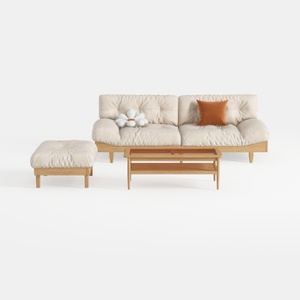
Minimalist Solid Wood Fabric Sofa Ottoman Coffee Table Set 3D Model
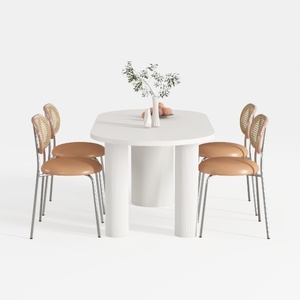
DUOMAY Modern Boucle Dining Chairs Set of 2,

Boucle Fabric Solid Wood Base Modern Sofa 3D Model
Homestyler is your go-to online home design platform, perfect for creating stunning spaces! With its user-friendly design tool, impressive 3D rendering, diverse design projects, and helpful video tutorials, you can effortlessly turn your interior design dreams into reality. Start designing today!
Design Now for FREE
































