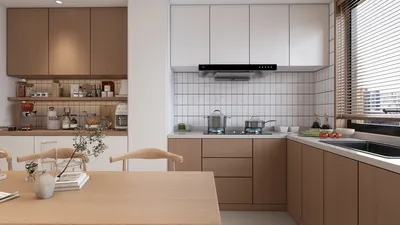


In recent times, I've observed a marked inclination towards open-concept living rooms featuring half walls. As someone who has reimagined many small to medium spaces, I can confidently state that half walls can truly transform a room. Small spaces often inspire significant creativity, and today, I will present 10 innovative half wall design ideas derived from both my personal experiences and professional insights to help you rethink your living room with the aid of tools like Homestyler.
Open-Shelf Half Wall Divider
My Insight: I once revamped a compact apartment by incorporating a half wall with built-in open shelves that separated the living and dining areas. This design provided a sense of separation without disrupting the flow of the space.
Advantages: Perfect for storage and display, and the open shelving allows light to permeate between areas. Architectural Digest notes that such open partitions can enhance the perceived size of a room.
Disadvantages: Requires frequent tidying up; clutter can diminish the intended effect quite rapidly.
Suggestion: Opt for adjustable shelving to accommodate your evolving needs. I paired mine with a streamlined kitchen storage design to maintain a harmonious look.
Glass-Panel Half Wall
My Insight: A client sought privacy without losing natural light, so we opted for a half wall topped with framed glass panels — a perfect blend of both privacy and openness.
Advantages: Boosts brightness, infuses modern elegance, and visually enlarges the area. Glass remains timeless, complementing multiple decor styles effortlessly.
Disadvantages: Cleaning fingerprints can be a hassle, particularly with kids or pets around.
Suggestion: Choose frosted glass to enhance privacy while still allowing light to pass through.
Half Wall with Upholstered Back
My Insight: In my home, I constructed a half wall that also serves as a backrest for the sofa. This approach subtly designates the space while offering functionality.
Advantages: Space-saving by offering seating support; it can be customized with fabrics to blend with your color scheme.
Disadvantages: Fixed upholstery may reduce versatility; cleaning can be challenging if the fabric isn’t removable.
Suggestion: Look for stain-resistant fabrics to prolong its longevity.
Planter-Topped Half Wall
My Insight: I adore the idea of incorporating greenery indoors. Adding a planter ledge atop a half wall brings vibrancy and dimension to any living area.
Advantages: Enhances air quality, softens hard lines, and introduces biophilic elements known to elevate well-being, as supported by various studies.
Disadvantages: Managing plant care is essential; overwatering could harm the wall surface.
Suggestion: Utilize self-watering planters to lessen upkeep.
Half Wall with Integrated Lighting
My Insight: In a city loft project, we incorporated an LED strip within a half wall to create a cozy ambiance in the evenings.
Advantages: Provides a warm glow and can act as a nightlight; ideal for accentuating art or architectural features.
Disadvantages: May incur additional costs for electrical work; lighting options can become dated over time.
Suggestion: Choose dimmable LEDs for added versatility and energy efficiency.
Storage Cabinet Half Wall
My Insight: One family needed more storage in their compact living space. A half wall with integrated cabinetry became the ideal solution.
Advantages: Optimizes vertical storage; conceals clutter while maintaining openness.
Disadvantages: Custom cabinetry may be costly, and relocation can be challenging.
Suggestion: Keep cabinet depth minimal to preserve floor space and ensure a smooth flow. This design worked exceptionally well alongside a nearby L-shaped kitchen layout, freeing up more counter space.
Textured Surface Half Wall
My Insight: Incorporating texture, such as shiplap or tile, onto a half wall can transform it into a striking design feature.
Advantages: Adds depth and visual intrigue without overwhelming the space; easily adaptable to match existing finishes.
Disadvantages: Certain textures may accumulate dust and might be more challenging to clean.
Suggestion: Opt for painted shiplap for a low-maintenance, timeless finish.
Movable Half Wall Partition
My Insight: I experimented with a lightweight, movable half wall in a studio setup. This allowed for a flexible layout for entertaining or everyday living.
Advantages: Offers adaptability in room division; requires less installation effort than permanent walls.
Disadvantages: Might not provide the same durability or soundproofing as fixed options.
Suggestion: Install lockable casters to secure it in place when necessary.
Half Wall with Art Display
My Insight: Transforming a half wall into a mini-gallery continues to be one of my favorite creative applications — I implemented this in my sister’s apartment to showcase her artwork.
Advantages: Personalizes the area and makes the divider a centerpiece; effortlessly refreshed by simply changing the displayed art.
Disadvantages: Requires thoughtful planning to avoid a cluttered look.
Suggestion: Use uniform frames for a cohesive and balanced aesthetic.
Stone-Clad Half Wall
My Insight: A rustic stone half wall can anchor a living room, adding character. I installed one in a mountain cabin, and it became the most photographed area of the home.
Advantages: Sturdy, enduring, adds texture, and increases home value. It works beautifully in open-concept designs to subtly delineate spaces.
Disadvantages: Heavy and requires structural support; materials can be expensive.
Suggestion: Pair stone with wooden elements for a cozy atmosphere reminiscent of the warmth that wood provides in kitchens.
Conclusion
In my view, a small living room doesn’t limit design possibilities — it calls for smarter solutions. Half walls are among those ingenious options that enhance flow, provide storage, and add aesthetic appeal without complete separation. As noted by Houzz, open-yet-partitioned areas can elevate both functionality and ambiance. Which of these half wall concepts are you excited to try in your space with the help of Homestyler?
FAQ
1. What exactly is a half wall in a living room? A half wall is a partition typically ranging from waist to chest height, designed to delineate areas without fully closing them off.
2. Are half walls considered outdated? Not at all — modern design trends embrace them for facilitating adaptable layouts and promoting light in open-plan settings.
3. What height should a living room half wall be? Generally, a height of 36 to 48 inches works well, though this can vary based on ceiling height and intended use.
4. Can a half wall be load-bearing? Yes, it can be load-bearing, but a structural assessment by a professional is crucial before making any alterations (per International Residential Code).
5. How can I add decor to a half wall? Options include shelving, vegetation, textured finishes, or artistic pieces to make it both practical and visually appealing.
6. Do half walls enhance the appearance of space? Absolutely — by maintaining open sightlines while subtly defining areas, they can enhance the perceived spaciousness.
7. What materials are best suited for half walls? Wood framing with drywall is the most common choice, yet glass, stone, and cabinetry serve as strong alternatives.
8. What is the estimated cost of building a half wall? Costs can vary significantly based on materials and design features. Simple drywall constructions may only cost a few hundred dollars, while custom cabinetry or stonework can reach into the thousands.
Discover the ease of home design with Homestyler! This intuitive platform offers a powerful online design tool, stunning 3D rendering, and a wealth of design projects and DIY video tutorials. Whether you're a beginner or a pro, bring your vision to life effortlessly!
Design Now for FREE
































