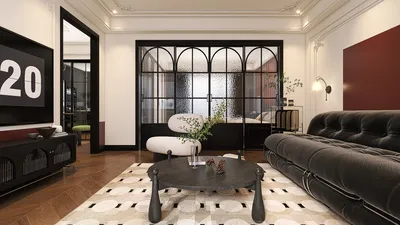


As we navigate the complexities of modern living, the pressing demands of future lifestyles clash with the chaotic routines of today. Issues like kitchen bottlenecks, segmented family spaces, and inadequate storage solutions necessitate innovative design approaches. At the core of my design methodology for a 10 marla house ground floor plan is a spatial reasoning toolkit—a key element in ensuring that family spaces are flexible and multifunctional rather than merely expansive. Research by the AIA suggests that families value adaptable spaces over mere square footage. In reimagining the house's ground floor plan, I envision a prototype where each entryway serves as guidance, and every wall acts as a limit to noise and distraction, much like the Homestyler tool can help visualize such concepts.
Open-Core Living Ring
Design Logic: The structure features a central living-dining zone, with the kitchen adjacent, creating a cohesive loop that supports family interactions—this streamlined approach ensures that adaptability is built around a clear core.
Flow: A logical sequence moves from the entry to a foyer buffer, through the living area, dining space, and into the kitchen bay, culminating in outdoor access—this seamless pathway eliminates confusion.
Sightlines: Upon entry, a gentle axis directs attention to the living area, showcases the dining space, and presents a partially revealed kitchen—a thoughtful layering of visual information.
Storage: Perimeter sideboards and a concealed pantry function as storage caches, ensuring daily usability while maintaining visual serenity.
Furniture Fit: Sofa placements maintain circulation margins of 36–40 inches, allowing for dining configurations with 6 to 8 seats and a kitchen peninsula acting as an efficient access point.
Verdict: This living arrangement resembles a forward-thinking dashboard—families can engage in gatherings, work, and meals without the need to reorganize their environment.
save pin
Privacy Spine with Flex Suite
Design Logic: A bedroom suite positioned along a privacy spine, with a flexible room at the front capable of transforming into a study, guest space, or micro-studio—ensuring adaptability for evolving needs.
Flow: The sequence progresses from foyer to flex room, following a corridor spine that leads to the bedroom suite and bath core, strategically reducing interruptions.
Sightlines: Limited sightlines from entry safeguard privacy zones, while lateral windows contribute to a sense of depth from the corridor to the garden.
Storage: Built-in wall systems along the spine organize belongings like a well-indexed archive, categorizing linens, seasonal items, and tech gear in labeled compartments.
Furniture Fit: The queen bed accommodates 30 inches of clearance on either side, while desks measure 24–30 inches in depth, and wall beds are an option in the flex space for optimizing functionality.
Verdict: This design allows for privacy to adapt as life circumstances evolve; while functions may shift over time, the core framework remains stable.
save pin
Service Grid with Courtyard Breath
Design Logic: The wet zones—kitchen, powder room, and utility—are strategically aligned on a service grid, complemented by a pocket courtyard that enhances both thermal comfort and emotional well-being.
Flow: The layout promotes short maintenance paths that contribute to cleanliness and efficiency, moving from the kitchen to utility and powder rooms, looping back to the courtyard.
Sightlines: From the dining area, a framed view opens up to the courtyard—an informative glimpse of natural light and tranquility.
Storage: Tall utility closets, a pull-out pantry, and strategically placed overhead storage create a rhythm of availability, placing essentials close at hand.
Furniture Fit: Utility counters are set at 24 inches in depth, with courtyard seating designed to modular dimensions of 600–650 mm, while planters act as movable elements in the space.
Verdict: The service grid helps maintain order, while the courtyard provides a refreshing balance—representing an elegant interaction for modern domestic environments.
save pin
Final Takeaway
The concept of a 10 marla house ground floor plan shifts from traditional room layouts to interfaces of rings, spines, and grids that harmonize living experiences. Whether termed ground-level layout or family core zone, this highlights that effective design is both structured and dynamic. Based on my observations, the homes of the future will not necessarily expand in size—rather, they will become more intentional in nature. What I consistently witness in my projects is how a meticulously outlined flow can fundamentally reshape daily living patterns, which can be adeptly modeled using tools like Homestyler.


Homestyler is your go-to online platform for effortlessly designing your dream space. With a versatile design tool, stunning 3D renderings, and informative video tutorials, you can explore various styles and create beautiful interiors, even as a beginner. Dive into your next DIY project with Homestyler!
今すぐ无料でデザイン
































