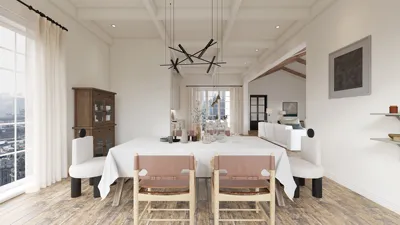


The future is challenging traditional architecture, leading us to confront modern difficulties such as escalating rents, the necessity for mobility, and zoning complications. This pressure motivates us to adapt our living spaces into more compact forms. Recent data from the National Association of Home Builders indicates a decrease in average new home sizes since their peak in 2015, subtly suggesting that efficiency is becoming the new norm. I'm discovering how 30 ft shipping container floor plans can serve as a framework for a more adaptable lifestyle, where the concept of square footage acts like software—streamlined, updatable, and purpose-driven, much like using the Homestyler app for design.
Linear Studio Rail
Design Concept: Utilizing a corridor-based approach aligns various functions along a singular path, resonating with trends in micro-living and off-grid capabilities.
Flow: The pathway progresses from entry to a galley kitchen, then transitions to a convertible lounge/desk area, followed by a Murphy bed, and finally leads to a compact bathroom, ensuring a straightforward route with minimal diversion.
Sightlines: A continuous line of sight from the entrance through to the rear window creates an illusion of greater space; strategically placed glazing acts like user interface headers to define areas.
Storage: Features like overhead cabinets, toe-kick drawers, and a full-height pantry provide storage solutions, maximizing usability on the floor space.
Furniture Fit: Modules measuring 24–30 inches in depth, a 60-inch foldable table, and a 78-inch Murphy bed optimize circulation space without interference.
Verdict: Looking ahead five years, this rail configuration maintains its functionality, allowing for easy adaptations for work, rest, and incorporating modern technology without significant structural changes.
save pin
Split Core with Wet Box
Design Concept: The integration of a centralized wet core concentrates plumbing, providing a stable point that frees up the ends for both day and night functionalities, allowing for future modifications.
Flow: From the entrance to the core junction, the left side features kitchen and dining, while the right side hosts a sleeping alcove and at the back, the bathroom is placed—with shallow branching to maintain cognitive ease.
Sightlines: Mid-height partitions structure the space like layered menu options; frosted sliders offer privacy while hinting at adjoining areas.
Storage: The core area includes tall closets and utility racks, with modular bins stacking like versioned storage, clearly labeled for easy identification.
Furniture Fit: A compact 18-inch deep dining bench, a 30-inch cookline, and a queen-platform bed with 12-inch under-bed storage maintain tight spaces without excess.
Verdict: As household technology evolves, the core remains a pivotal element; clients can update aspects on the periphery without disrupting the plumbing framework.
save pin
Porch-Extended Hybrid
Design Concept: An external deck serves as an extension of living space, increasing functionality for both social gatherings and environmentally adaptive living.
Flow: The journey begins at the entry, moving to a compact kitchen, then to a lounge that flows onto the deck, transitioning to a sleeping area via a sliding partition, and concluding in the bathroom; this setup supports both indoor and outdoor living.
Sightlines: A large lateral opening functions as the primary interface; ventilation lines operate like data channels, ensuring low noise levels and high clarity.
Storage: Weather-resistant deck lockers coupled with interior wall rails ensure that storage is strategically distributed for efficiency in daily activities.
Furniture Fit: A 72-inch sofa with an integrated table, stackable chairs, and a 30-inch grilling area all respect critical egress paths as defined by space utilization protocols.
Verdict: Given the impact of climate change and increases in remote work, the deck extension enhances the container’s perceived size, supporting comfortable living cycles.
save pin
Final Takeaway
The 30 ft shipping container floor plans demonstrate that the mere measurement of space does not dictate living experience; rather, it is the design pattern that truly matters. Within these compact structures, modular storage solutions, intentional flow, and well-calibrated sightlines convert limitations into opportunities. Long-tail variations such as off-grid layouts or single-unit tiny homes illustrate how future living designs can compile within metal frames. In my observation, the most intelligent homes of the coming years won’t simply be larger; they will be more thoughtfully designed, similar to what can be achieved with Homestyler.


Minimalist Solid Oak Bookshelf Open Storage Display 3D Model

Minimalist Solid Oak Wood Bookshelf Display Storage 3D Model

Minimalist Solid Oak Wall Mounted Floating Shelf 3D Model
Discover the ease of home design with Homestyler! This user-friendly online platform offers a powerful design tool, stunning 3D renderings, a variety of design projects, and insightful DIY video tutorials. Whether you're a novice or a seasoned designer, Homestyler helps you turn your vision into reality effortlessly!
지금 무료로 디자인하세요
































