

As we move into the future, my clients continue to grapple with challenges like noise, disarray, and time constraints. According to the AIA, the demand for versatile, multi-generational layouts is on the rise, which signals to me that four-bedroom bungalow house floor plans in 3D represent more than just visual designs—they're a glimpse into our evolving lifestyles. In this context, spaces should function like adaptive software: comprehensible, user-friendly, and serene, integrating tools for spatial reasoning effectively.
Our designs respond to the fatigue of modern life—those long commutes, endless screen time, and the hassle of groceries—and look forward to households that adapt to future needs: from elder care to remote work and intimate gatherings. The bungalow concept remains grounded but its functionality progresses, enhancing circulation, optimizing storage, and setting clear parameters for furniture placement.
Core Axis Layout: Entry–Great Room–Garden Spine
Design Logic: A centralized spine orchestrates daily living from entry to great room and then to the garden, with bedrooms positioned as side nodes. Future inhabitants will require clear navigation: a public center surrounded by private spaces and multifunctional niches.
Flow: The layout starts from the foyer, guiding through the kitchen island as a command hub, into the living space, then branching out to the patio, with bedrooms extending like controlled subroutines.
Sightlines: The alignment from door to window creates long, peaceful views; the chef enjoys visibility of both the front door and backyard—user interface levels transition from close tasks to distant horizons.
Storage: A pantry that spans the wall and lockers in the mudroom serve as storage solutions, absorbing daily items like strollers and packages—keeping the central living areas tidy.
Furniture Fit: Ensuring 36 to 42-inch lanes for circulation around a modular sectional; the dining table is set to 36" x 72", which aligns perfectly with the spine’s capacity; seating at the island is configured to 24" centers.
Verdict: This axis design ensures that social gatherings and remote routines are future-proofed; it serves as an accessible interface that maintains the home's functionality under various loads.
save pin
Dual-Wing Privacy: Kids’ Cluster + Quiet Suite
Design Logic: The sleeping areas are divided, featuring three bedrooms in a separate kids' wing, while the fourth room is designed as a quiet suite for an elder, guest, or a studio—providing built-in adaptability for the future.
Flow: The corridor winds predictably, with the bathroom serving as a shared point; the suite has its own entry to minimize disruption.
Sightlines: Shorter sightlines within the kids’ wing reduce sensory overload; a longer sightline extends from the suite to the garden, promoting tranquility—reflecting a user interface hierarchy that acknowledges focus and attention spans.
Storage: Deep reach-in closets ranging from 24"–28" in depth, complemented by overhead storage; the hall linen acts as a quick-access cache, while the suite features a wardrobe and under-bed storage to maintain a self-contained environment.
Furniture Fit: Twin beds at 39" x 75" fit perfectly in wall bays; the queen bed in the suite has 30" of clearance on either side; desks are designed to dock with 48" modules, supporting homework and remote work needs.
Verdict: These dual wings allow households to adapt between expanding family needs and care; privacy is redefined—not as isolation but as a method to manage routine dynamics efficiently.
save pin
Hybrid Utility: Garage–Mud–Laundry–Flex Lab
Design Logic: This service area transforms into a productivity corridor: vehicles enter the garage, then transition into the mudroom, proceed to the laundry, and finally culminate in a versatile lab for crafts or a home office—compiling future workflows seamlessly.
Flow: Groceries are dropped off in the mudroom, clothing navigates directly to the machines, while packages find their place on a 30" bench, and tasks continue smoothly to the lab desk—eliminating unnecessary backtracking.
Sightlines: Opaque storage elements stabilize the visual environment; a narrow window in the laundry area creates a status bar atmosphere—progress visible, with chaos concealed.
Storage: A 14" deep wall system featuring labeled bins, a vertical niche for brooms, and an overhead rack in the garage create a versatile storage solution with both fast-access and long-term storage zones.
Furniture Fit: Stackable washer and dryer units clear 30" of space; a folding surface stands at 30" high and 60" wide; the lab desk offers a spacious 60" with a task chair fitting within a 36" radius.
Verdict: This design streamlines daily tasks and accommodates side projects; it operates like a flow-efficient pipeline within a home that adapts to its inhabitants.
save pin
Final Takeaway
Four-bedroom bungalow floor plans in 3D are not merely decorative elements; they serve as prototypes for adaptable households that value clarity, privacy, and efficient routines. As trends like remote work, aging in place, and mixed-family dynamics converge, the single-level plan emerges as a reliable interface, enhanced with smarter zones and uncluttered pathways. In my observations, the most intelligent homes of the future will prioritize purpose over size, and I consistently see how a disciplined approach to flow and storage redefines our living spaces. Utilizing tools like Homestyler can further aid in visualizing these innovative concepts for modern living.

Minimalist Solid Wood Open Bookshelf Storage Display 3D Model
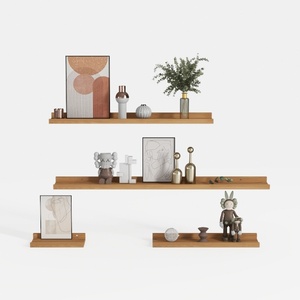
Minimalist Solid Wood Wall Mounted Floating Shelves Set 3D Model

Minimalist Solid Oak Wall Mounted Floating Shelf 3D Model
Discover the magic of home design with Homestyler! This user-friendly platform offers an intuitive online design tool, stunning 3D renderings, and a treasure trove of DIY video tutorials. Transform your space with ease and unleash your creativity, whether you're a novice or an expert!
Design jetzt kostenlos
































