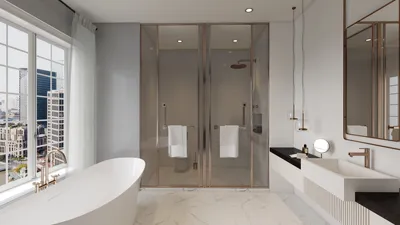


As we confront contemporary challenges such as clutter buildup, interrupted routines, and time-inefficient spaces, the future continuously influences our choices. Reports from AIA indicate a consistent demand for adaptable layouts, and Zillow highlights a growing preference among buyers for multi-functional rooms since 2020. The message is unmistakable: floor plan design has evolved from a static model to a dynamic system. Within this transition, I perceive the home as an operating system, where a unified spatial reasoning toolkit serves as the dashboard for everyday living, making innovations like Homestyler invaluable.
Pivot Spine One-Bed Flex
Design Concept: A central spine—encompassing the kitchen and utility wall—functions akin to a server rack; various rooms connect as modules. As the boundaries between work and personal life blur, this framework seamlessly incorporates updates without the need for extensive revisions.
Flow: Entry involves a drop zone, leading to the kitchen hub, then progressing to the living area and balcony; the bedroom is thoughtfully positioned to minimize traffic disruptions behind the spine.
Sightlines: Upon entering, a straight line directs attention toward natural light; side views unveil layered zones reminiscent of UI panels, where public areas precede private spaces behind a gentle threshold.
Storage Solutions: A full-height pantry and corridor cabinets provide accessible cache near the most utilized areas; additional storage spaces are cleverly placed above doors.
Furniture Arrangement: A sofa measuring between 84 to 90 inches, a 30-inch dining extension, along with a 48-inch desk integrated into the spine—optimized for usability and responsiveness.
Conclusion: In the next five years, this structural layout will remain adaptable: it can easily accommodate a crib, a fold-down workspace, or a wellness area without a complete overhaul.
save pin
Studio as Gradient Field
Design Concept: Rather than conventional boxes, I envision gradients of space, transitioning from sleeping to socializing to working. The future emphasizes transitions marked by light and sound, moving away from rigid walls.
Flow: The entry node leads to a wardrobe buffer, proceeding to a kitchen peninsula (designated as the compile point), then to a lounge area, finally culminating in a sleeping nook, with a curtain serving as a runtime toggle.
Sightlines: Low-profile furniture preserves an unobstructed view; the bed is cleverly concealed behind a half-height storage headboard, revealing essential elements as required.
Storage Solutions: Platform bed drawers paired with ceiling-mounted cabinets create a tiered storage solution, with frequently accessed items within easy reach.
Furniture Arrangement: Circulation lanes of 36 inches, a 40-inch overhang on the peninsula for multi-purpose dining, and a work rail of 24 inches to anchor devices.
Conclusion: This space evolves effortlessly, adapting to host friends at 7 PM and shift to deep relaxation by 11 PM, all without the need for a reconfiguration.
save pin
Two-Bed Split Core
Design Concept: Bedrooms are strategically positioned on either side of a shared core, allowing privacy and togetherness to coexist harmoniously—ideal for diverse households.
Flow: Entry leads into a utility vestibule, flowing into an open living core, complemented by split corridors leading to the bedrooms; guests never intrude on personal spaces.
Sightlines: Cross-ventilated views are aligned like layered heads-up displays: the kitchen toward the window, the desk toward the greenery, and bedrooms detached from the main layout.
Storage Solutions: Two linen towers paired with bench cubbies enable hot and cold storage management, while seasonal archives are strategically stacked above the corridor.
Furniture Arrangement: A 60-inch dining setup ensuring equal access, a 9-foot sofa wall, a queen bed with 24 inches of space on each side, and desks nestled in niches at 54 inches.
Conclusion: Over a period of five years, this design allows flexibility for roommates and new parents, effectively adapting the nodes while the core remains a dependable structure.
save pin
Final Insights
The design of floor plans serves as a crucial step in actualizing future patterns while accounting for current challenges. Variants such as one-bed flex, studio gradients, and split cores are less about style and more about functionality, each tailored to the needs of modern living. Creative, adaptable designs like the flexible studio layout and the innovative two-bedroom plan consistently demonstrate that smaller, more thoughtful spaces outclass larger, less user-centric options. In my view, the homes of tomorrow will not necessarily be vast; they will simply be more purposeful, and tools like Homestyler will help orchestrate this vision.
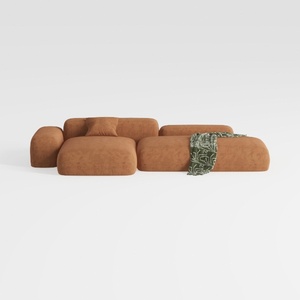
Minimalist Brown Fabric Modular Sectional Sofa 3D Model

Monarch Specialties 7657 Computer Desk, Home Offic

Modway EEI-6312-WHI-NAT Kinetic 49" Wall-Mount Off
Homestyler is your go-to online home design platform! With an easy-to-use design tool, stunning 3D renderings, a vast array of design projects, and informative video tutorials, it's perfect for anyone looking to transform their space. Unleash your creativity and design your dream home effortlessly!
Zaprojektuj teraz za darmo
































