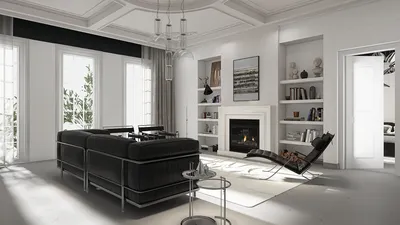


Recently, there has been a significant transformation in living room aesthetics—fireplaces have evolved from being merely winter features to becoming year-round centerpieces. As a designer, particularly in compact spaces, I've discovered that a fireplace can ignite creative design ideas. In this article, I’ll present 10 innovative living room layouts inspired by fireplaces, derived from my projects and expert insights, allowing you to seamlessly integrate warmth, functionality, and style, possibly using tools like Homestyler.
1. Symmetrical Seating Around the Hearth
My Perspective: The arrangement of matching sofas or armchairs around the fireplace fosters a sense of balance and comfort. In a renovation I undertook downtown, this configuration promoted intimate conversations and created an even ambiance.
Benefits: A symmetrical layout establishes the fireplace as a true focal point and enhances social interactions. This design is especially suitable for traditional and transitional styles.
Drawbacks: It may appear excessively formal if you lean towards a more casual, eclectic atmosphere. Additionally, large pieces of coordinated furniture might dominate small spaces.
Advice: Introduce a variety of textures and throw pillows to soften the overall appearance.
2. Floating Furniture with a Fireplace Focus
My Perspective: When I positioned a sofa away from the walls, directing it towards the fireplace, it revolutionized the room's flow—even in limited spaces. This approach provided an airy, intentional ambiance.
Benefits: This layout defines spaces without the need for barriers. It’s ideal for creating a snug area near the fireplace while maintaining an open backdrop.
Challenges: Careful consideration of rug sizes and flow is crucial; otherwise, the arrangement may feel disjointed.
Floating arrangements that define cozy living areas can significantly enhance the layout of small living rooms, especially when supported by tools like Homestyler.
3. L-Shaped Seating Positioned Toward the Fireplace
My Perspective: An L-shaped setup allows individuals to face both the fireplace and one another. In a family dwelling I renovated, this arrangement became the ultimate "movie night" setting.
Benefits: Effectively utilizes corner space while ensuring a clear focus on the fireplace. It’s perfect for open-plan designs.
Drawbacks: There’s limited flexibility when moving furniture; one side might feel excluded during discussions.
Note: Opt for a sectional that suits the dimensions of your room.
4. Off-Center Fireplace with Angled Furniture Arrangement
My Perspective: Working with an off-center fireplace can be tricky, but angling the sofa slightly towards it preserves balance. I applied this concept in a loft with awkward wall lines.
Benefits: This approach adds visual appeal and deviates from rigid arrangements. Angled setups can invigorate a room's energy, as noted by Architectural Digest.
Challenges: It may complicate TV placement if not carefully coordinated with the fireplace layout.
5. Minimalist Design with Built-In Storage
My Perspective: I once crafted a minimalist fireplace wall with concealed cabinetry. This design conceals clutter while allowing the sleek fireplace to take center stage.
Benefits: Perfect for compact rooms where both heating and storage are essential. The clean lines draw attention to the fireplace design.
Drawbacks: Custom cabinetry may entail higher upfront costs compared to freestanding alternatives.
Minimalist fireplace solutions featuring hidden storage can significantly reduce visual clutter and enhance the room's style.
6. Dual Focal Points: Fireplace and TV
My Perspective: This is frequently a question from clients—"Can I incorporate both?" The answer is affirmative, provided that proportions and mounting heights are considered.
Benefits: Merging these two prominent features onto a single wall is space-efficient, especially suitable for smaller living rooms.
Drawbacks: Viewing quality might diminish if the TV is installed too high; a tilting mount may be necessary.
7. Cozy Reading Nook by the Fireplace
My Perspective: Integrating a chaise lounge or armchairs adjacent to the fireplace creates a cozy retreat. I have often included bookshelves in alcoves to establish a bibliophile's paradise.
Benefits: Excellent for leisurely evenings, optimizes underused corners, and infuses character.
Drawbacks: Dedicated reading areas may restrict seating capacity for larger gatherings unless space permits.
8. Contemporary Open Plan with a See-Through Fireplace
My Perspective: This design is a showstopper. A double-sided fireplace connects the living and dining areas, as I employed in a recent modern condo renovation.
Benefits: It enriches the flow of natural light and forges a bond between distinct spaces. This feature can elevate resale value, according to the National Association of Realtors.
Drawbacks: Installation can be more complex and costly compared to standard fireplaces.
Open-plan designs incorporating see-through fireplaces are ideal for modern renovations, a concept easily explored in Homestyler.
9. Rustic Style Featuring Natural Materials
My Perspective: I cherish utilizing stone and reclaimed wood to surround a fireplace. This instantly provides a grounded, welcoming atmosphere.
Benefits: Adds depth, warmth, and authenticity to the space. Stone also offers impressive heat retention.
Drawbacks: Such materials can be heavy and may necessitate reinforcement in upper-floor areas.
10. Corner Fireplace with Adaptable Seating
My Perspective: Corner fireplaces can free up wall space for windows or storage. Pairing it with light chairs ensures flexibility in the layout.
Benefits: Ideal for narrow or unusually shaped rooms. It allows for enjoyment of both the fire and an outdoor view.
Drawbacks: Corner fireplaces might feel secondary unless styled with purpose.
Conclusion
In summary, a small living room with a fireplace is not a limitation; rather, it presents an opportunity to innovate with design. As highlighted by Houzz, thoughtful furniture arrangements can transform a modest room into an open and inviting space. Which of these fireplace-inspired living room layouts will you experiment with first?
Frequently Asked Questions
1. What is the best living room layout featuring a fireplace for compact areas?
Consider utilizing floating furniture or an L-shape that directs attention towards the fireplace while not obstructing walkways.
2. Is it feasible to mount a TV above the fireplace?
Certainly, but be aware of the viewing height. HGTV advises positioning it at eye level from the seated position, potentially requiring adjustments to the mantel design.
3. Is a corner fireplace advisable?
Absolutely—especially if the goal is to maximize wall space for expansive windows or storage solutions.
4. How should I arrange furniture around a non-centered fireplace?
Employ angled furniture placements to achieve a balanced look, and ensure that side elements are visually cohesive to anchor the space.
5. What fireplace style is currently trending?
Minimalist linear fireplaces are very fashionable, as noted by Architectural Digest, often combined with built-in storage.
6. How do I make a fireplace the centerpiece of the room?
Focus main seating towards the fireplace, incorporate accent lighting, and intentionally style the mantel or surrounding area.
7. Are see-through fireplaces energy-efficient?
They can be, but it's essential to verify specifications from the manufacturer. Modern double-sided fireplaces often utilize advanced insulation technology.
8. Where can I view examples of modern fireplace layouts?
You can visualize various modern fireplace layouts in 3D, such as those found in Homestyler, to explore different configurations before making a commitment.
Homestyler is your go-to online home design platform! With its user-friendly design tool, stunning 3D renderings, and a plethora of DIY video tutorials, you can effortlessly craft your dream space. Dive into creative design projects and transform your ideas into reality today!
立即免费设计
































