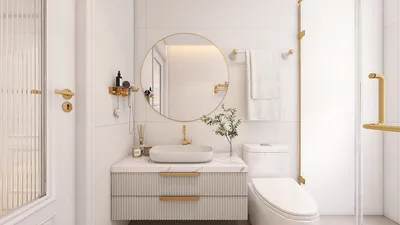


I once had a client who envisioned a shower door that would allow in "as much light as a greenhouse" while simultaneously keeping out nosy neighbors — indeed, they used the term greenhouse. This quirky request inspired me to venture into a series of experiments, demonstrating how small spaces can ignite creative solutions. If you're seeking practical elegance, here are five DIY shower door concepts I've personally explored, complete with genuine insights, trade-offs, and a couple of mishaps that I'll avoid in the future. Don't forget to explore tools like Homestyler for additional design support.
For those starting with a compact alcove seeking intelligent alternatives, consider investing in compact shower upgrades as a foundation. These enhancements allow you to select designs that appear customized without stretching your budget.
1. Frameless Glass Panels
Frameless glass is a favorite of mine for its clean, airy appearance in bathrooms; it creates an illusion of spaciousness while letting light flow freely. However, the investment can be steep, and precise measurements are necessary — yet, for those inclined towards DIY projects, utilizing tempered glass panels fitted with minimal clamps may prove feasible if you employ a support bar and opt for pre-cut sizes from a local glass shop.
save pin
2. Frosted Glass with Vinyl Film
Frosted film stands out as one of my preferred budget-friendly solutions: simply apply it to clear glass to achieve privacy without the need to replace the pane. It’s affordable, reversible, and allows for home-applied patterns; the only tricky part is avoiding air bubbles during installation, which can be remedied with a squeegee and a consistent heat source.
save pin
3. Sliding Barn-Style Door
Opting for sliding doors makes a bold statement while conserving space — I implemented one in a client’s bathroom, transforming the flow of the area. These doors require a sturdy track and consideration for splashes (I incorporated a low threshold and an angled splash guard), and given that the hardware can be quite heavy, be sure to pre-drill and reinforce the header during installation.
For tight spatial designs that require meticulous planning, I often sketch my ideas in a planner using Homestyler to visualize clearances and door paths. This foresight into space-efficient sliding options can significantly alleviate installation challenges.
save pin
4. Bi-fold or Pivot Folding Doors
Bi-fold or pivot doors offer an excellent solution when you seek a full opening yet lack space for traditional swinging doors. They fold away neatly and exude a more robust feel compared to curtains; however, their seals can be tricky, hence I suggest utilizing magnetic strips or brush seals to prevent water from escaping onto the bathroom floor.
save pin
5. Repurposed Window or French Doors
Repurposing a vintage window or French doors instantly adds character — I once transformed an old French patio door into a stunning shower partition, making it the room's centerpiece. While it requires a solid frame due to its weight, the unique charm and cost-effectiveness (if you find salvaged materials) justify the additional framing work needed.
If you're passionate about reclaimed materials, consider a straightforward approach: sand down, seal, and glaze for moisture resistance, then incorporate a waterproof bottom rail.
save pin
FAQ
1. What’s the easiest DIY shower door option?
I consider applying frosted vinyl film over an existing clear glass panel to be the simplest: low-cost, reversible, and privacy-friendly, requiring minimal tools.
2. Do I need a permit to replace a shower door?
Generally, most locations do not require a permit for swapping out a shower door unless plumbing or structural components are altered, but it's always advisable to check local regulations to ensure compliance.
3. Are frameless glass doors safe for DIY?
While tempered glass is secure, it can be heavy; if you're confident in measuring and installing hardware, a DIY project may be feasible. If in doubt, it's best to hire professionals for glass installation and sealing.
4. How do I prevent water leaks with a new door?
Ensure proper thresholds along with silicone bead seals, and use magnetic or brush seals at the edges. Test the installation by letting water run and checking for any leaks before completing the trim work.
5. What materials resist mold and moisture best?
Materials like glass and marine-grade hardware are excellent for moisture resistance; for frames, I recommend stainless steel or powder-coated aluminum, avoiding untreated wood as much as possible.
6. How much should I budget?
Budgeting can vary widely: frosted film may be under $50, basic framed doors could cost a few hundred, and custom frameless glass projects can reach the thousand dollar mark. I always suggest accounting for an additional 10-15% for unforeseen expenses.
7. Can I reuse an old door for a shower?
Absolutely, with careful consideration: strip any paint, seal all exposed wood, and ensure that the door can be mounted to a water-resistant frame. It's a lovely sustainable choice if you're prepared to handle the weight and sealing needs.
8. Where can I find authoritative guidelines on shower layouts?
The National Kitchen & Bath Association (NKBA) offers comprehensive design recommendations regarding clearances and functionality. For specifics on shower ergonomics and planning, visit NKBA’s guidelines at https://nkba.org.
save pin
Looking to redesign your space? Homestyler is your go-to online home design platform! With its user-friendly design tool, stunning 3D renderings, and a plethora of design projects and DIY video tutorials, you can effortlessly create your dream home. Start designing today!
Concevez maintenant gratuitement
































