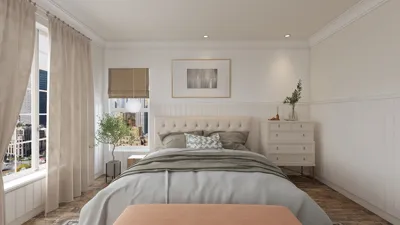


I once had a client who wanted a retractable screen that was completely "invisible" to ensure her cat wouldn't notice it. In the end, the cat figured out how to jump through the frame, which taught me the importance of integrating a discreet pet pass. Such unique challenges in small spaces are precisely why I believe they can spark remarkable ideas. Whether it’s a narrow doorway, tricky trim, or a discerning pet, these obstacles can drive us toward creative yet straightforward solutions. In this article, I will share five DIY inspirations for retractable screen doors that I have personally executed, along with a useful room design case that aided my visualization of complex layouts using Homestyler.
1. Slim magnetic pocket screen for narrow doors
When it comes to slim door frames, a magnetic pocket screen is my preferred choice. It mounts easily with minimal hardware, hides within a sleek cloth pocket, and snaps shut with magnets, making it both affordable and nearly invisible. This option is perfect for instances where a bulky roller mechanism is unnecessary, although continuous magnetic pressure can wear down the fabric over time.
save pin
2. Under-trim roller to keep sightlines clean
I particularly enjoy concealing the roller beneath a shallow trim, allowing the screen to roll out below eye level—ideal for preserving the view. This method adds a touch of elegance: guests hardly recognize the system until the screen is deployed. However, routing the roller track without harming the trim can be tricky; it’s essential to measure carefully and be prepared for minor trim modifications.
save pin
3. Wide opening? Try bi-fold retractables
For expansive patio doors where a single-roll screen tends to sag, I often suggest a bi-fold retractable system that folds neatly to one side. This design is sturdier across a wider span, ensuring the mesh remains taut. Although it requires precise installation and is generally more expensive, the investment pays off for a clean, secure screen solution for large openings. I often generate mock-ups using kitchen layout simulations in Homestyler to determine the best fold path.
save pin
4. Pet-friendly weighted hem and low-visibility flap
Clients who own pets frequently request screens that won't become chew toys or confuse their animals. I include a weighted hem for secure closure and a discrete pet flap reinforced with transparent vinyl. This practical design enables pets to navigate through, while maintaining an unobstructed view for humans. However, it’s essential to consider the potential wear and plan for replaceable hems and flaps to extend the lifespan of the screen.
save pin
5. Decorative mesh and integrated frame for style
If aesthetics are a priority, opt for a decorative mesh (such as fine bronze or patterned fibers) while integrating the track seamlessly into the interior molding. This approach requires a bit more effort and patience, but the end result is a screen that appears intentional rather than an afterthought. Before making any cuts, I like to visualize how the entire wall will look with a quick 3D mockup using Homestyler, which helps prevent awkward design choices.
save pin
FAQ
Q1: How hard is it to install a retractable screen door myself?
A: For basic magnetic or roll-up models, installation is quite feasible with a drill, level, and some patience. More complex bi-fold systems might require professional assistance to ensure perfect alignment.
Q2: What tools do I need for a DIY retractable screen?
A: Essential tools include a tape measure, drill, screwdriver set, level, and masking tape for temporary positioning. A jigsaw or router may be necessary for trim routing.
Q3: How much should I budget?
A: Anticipate costs of $30–$150 for simple magnetic or roll-up kits, and $200–$600+ for more durable, wide-opening, or pet-friendly systems. Don't forget to include labor costs if you're hiring someone to help.
Q4: Are retractable screens pet-safe?
A: Many are designed with pets in mind—look for reinforced hems and consider incorporating pet flaps. Still, keep in mind that active chewers may test any screen, so prepare for replaceable parts.
Q5: How do I maintain the screen?
A: Regularly clean the mesh with a soft brush and mild soap, lubricate the tracks annually with a dry silicone spray, and replace worn hems before they tear. Storing it properly during winter can help prolong its life.
Q6: Can retractable screens be installed on sliding glass doors?
A: Absolutely. Sliding doors often pair nicely with side-mounted retractables or bi-fold systems that mimic the door’s operation.
Q7: Are there safety concerns for kids and pets?
A: Yes—ensure tracks and edges are secured to prevent little fingers or paws from getting pinched. The U.S. Consumer Product Safety Commission (CPSC) provides general safety tips that apply to screening installations (source: https://www.cpsc.gov).
Q8: Where can I find design inspiration and cases?
A: Check out case galleries and 3D mockups to see how your screen works within the room; real project galleries have saved me from many design headaches throughout the years.
save pin
Discover your home's potential with Homestyler! This user-friendly online design platform offers an intuitive design tool, stunning 3D renderings, and a wealth of inspiring design projects and DIY video tutorials. Transform your space effortlessly and unleash your creativity today!
Design Now for FREE
































