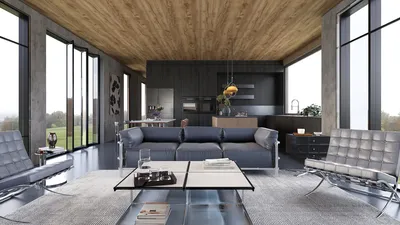


As lifestyle pressures increase—such as hybrid work models, wellness on-the-go, and quick micro-rituals—they clash with the prevalent issues found in today's budget-friendly business hotels: limited workflows, inconsistent storage options, and inadequate acoustic privacy. Trends identified in surveys from the AIA and NAHB signal a burgeoning demand for flexible, multifunctional rooms and amenity spaces that can adapt to various needs. I envision 3-star business hotel layouts as dynamic interfaces that seamlessly blend work and relaxation, indicating a future that is already upon us—this is where design tools like Homestyler come into play for creating efficient spaces.
In the mid-tier hotel market, expansion isn't feasible in terms of square footage; instead, growth is achieved through intent. Data from platforms like Zillow and Houzz support this notion: guests favor clarity in layout and versatility in furnishings. Thus, I perceive hallways as pathways, rooms as individual nodes, and lobbies as collaborative hubs—each design acts as a protocol for uninterrupted experiences.
Hybrid Workroom King | 28–32 m² node
Design Logic: This single-king room functions as a dual-purpose space, combining a sleeping area with a day office. The zoning effectively separates the bed, a bench desk area, and a wellness strip, catering to the rhythms of work-related travel.
Flow: The layout moves from entry to a luggage alcove, through to the desk area, then to the bed platform, and finally to the bath; this design minimizes friction, creating an efficient loop.
Sightlines: The view from door to window provides depth: the desk is in the foreground, the bed in the mid-ground, and the cityscape frames the scene—a focus point before rest.
Storage: A tall vertical cabinet near the door, a range of under-bed drawers, and a slim pantry for devices avoid clutter by maintaining an organized hierarchy.
Furniture Fit: Desk dimensions are 72–76 cm deep, while there is a bed clearance of 160–180 cm and a compact lounge chair that swings with an 80 cm arc; everything is optimized for human use.
Verdict: This floor plan maintains a high signal and low noise level for 3-star business travelers; five years down the road, its adaptability will still be relevant.
save pin
Double Twin Flex | 30–34 m² for teamwork
Design Logic: Here, two beds operate as parallel channels, while a sliding console merges into a shared workspace, reflecting the nature of collaborative trips.
Flow: The layout navigates through an entry buffer, splits into two beds, centers on the console, and follows to a window bench and bath; branching paths help to avoid collisions.
Sightlines: Upon entry, the symmetry of the beds is striking; the console acts as a hub, and the window presents a horizon for a mental breather.
Storage: Features include dual lockers, overhead ledges, and an under-console cable trough; these elements provide an organized space for devices and personal items.
Furniture Fit: Aisle space of 90 cm at the foot of the bed and 100–110 cm between beds when the console is adjusted ensures both movement and concentration are protected.
Verdict: Teams frequenting mid-market hotels in the future will value this clear layout; it allows for shared work without introducing chaos.
save pin
Lobby + Micro-Boardroom Spine | Adaptive communal areas
Design Logic: The lobby serves as a processing hub with connected micro-rooms; short stays require on-demand privacy and efficient sync spaces.
Flow: The journey goes from the street to the reception area, continuing to a cafe bar, then to acoustic pods, leading ultimately to a boardroom for 6–8 people; this layout is akin to a task workflow.
Sightlines: The reception area provides a clear overview, pods retreat from view, while the glass boardroom allows for controlled transparency—providing signals without overwhelming glare.
Storage: Features include shared AV storage, niches for linen and service, and fold-away kits for events; this organization maximizes functionality.
Furniture Fit: Cafe table dimensions measure 70 cm; clear exit spaces are 120 cm wide, with board tables extending from 240 to 300 cm; each is calibrated for laptops, carry-ons, and transit needs.
Verdict: As the nature of business travel evolves, this layout is positioned to future-proof the 3-star hotel model—characterized by its efficiency, flexibility, and clarity.
save pin
Final Thoughts
3-star business hotel designs prioritize efficiency over luxury, focusing on streamlined frameworks that cater to human routines. By utilizing flexible room configurations, adaptive common areas, and disciplined storage solutions, mid-market hotels can create a seamless experience. From my perspective, the most innovative hospitality designs of the near future will be compact yet deliberate, demonstrating how structured flow lines can transform the way travelers both work and unwind, particularly through tools like Homestyler that facilitate these creative processes.



Discover the ease of home design with Homestyler! This user-friendly platform features an intuitive online design tool, stunning 3D renderings, and insightful DIY video tutorials. Whether you're a novice or a pro, Homestyler empowers you to create your dream space effortlessly!
Progetta ora GRATIS
































