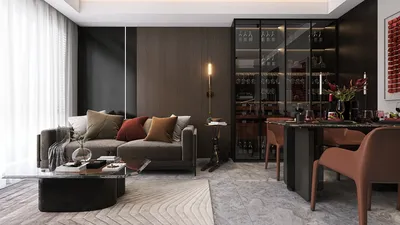


I once encountered a client who was adamant that their compact three-bedroom residence needed to accommodate a piano, a home office, and a treadmill, all while leaving room for visitors. We shared a laugh over my initial outrageous sketch, but then I discovered a combination of sliding doors and multifunctional furniture that actually worked. Small living spaces encourage ingenuity, and I’m eager to share five compact three-bedroom ideas that can make small homes feel spacious and comfortable with the help of tools like Homestyler.
1. Open-concept layout with designated areas
I frequently suggest creating an open layout for the main living, dining, and kitchen spaces, while distinguishing functions using rugs, lighting, and low shelving. This approach offers an uninterrupted sightline, making the area appear larger; however, it also presents challenges in managing noise and visual clutter. Opting for a breakfast bar instead of a full dining table can enhance traffic flow and allow for chair storage out of sight.
save pin
2. Separate bedroom arrangement for enhanced privacy
Position the master bedroom on one end and the two others on the opposite side, with the main living space in between. This design is ideal for families or housemates seeking privacy. While it may involve a slightly longer hallway, you’ll gain quieter sleeping quarters—a worthwhile trade-off for a better night's sleep. One client who worked night shifts found this layout significantly improved their relationship.
save pin
3. Versatile third bedroom—home office by day, guest room by night
Transform the smallest bedroom into a multifunctional area with a wall bed, a foldable desk, and smart storage solutions. The advantage is maximum utility; however, multi-use spaces can become cluttered without discipline. A good strategy is to maintain a dedicated linen cabinet along with a straightforward plug-in lighting system for quick transitions between uses.
save pin
4. Incorporating a courtyard or lightwell for added space
If feasible, create a small internal courtyard or lightwell to introduce natural light and facilitate cross-ventilation. This visually enlarges compact layouts and converts narrow corridors into inviting pathways. While the structural and permitting aspects can be challenging, even a slender glass atrium can elevate a space with low ceilings.
save pin
5. Rethinking the galley kitchen as a social hub
I've worked on many compact kitchens, transforming them into effective galley designs that serve as both food prep areas and social zones. By utilizing continuous countertops, integrated appliances, and open shelving, the kitchen can remain welcoming and functional. While this layout is excellent for cooking, it does require careful planning to avoid congestion.
For rapid 2D and 3D sketches of these ideas, I frequently turn to digital tools like Homestyler, which accelerate the creation process and enable clients to visualize the scale effectively. This resource proved invaluable when I needed to demonstrate how a wall bed could effortlessly fold away into the room.
save pin
Tips 1:
When on a budget, focus on built-in storage and flexible furniture instead of splurging on high-end finishes. Small homes derive greater benefits from innovative storage solutions than from luxurious tiles. Always measure carefully—you wouldn't want to accidentally remove a wall only to discover a supporting beam.
If you're looking for a simple floor plan prototype, consider utilizing a free floor planning tool to experiment with several bedroom configurations before proceeding with any renovations. Once clients visualize the layout, they transition from worrying about problems to embracing possibilities.
Lighting and color choices matter too: stick to lighter palettes, utilize layered lighting, and moderately incorporate mirrors or glossy textures to reflect light. A well-illuminated small home tends to appear larger while feeling more welcoming.
For homes with a focus on the kitchen, combining a compact design with an island or extended counter can form the social centerpiece that attracts everyone. I documented a remarkable remodel of a small three-bedroom house where repositioning the kitchen facilitated a smooth flow from the entrance to the living area, and the family frequently remarks on how much more functional the home feels.
As a project nears completion, I like to produce a final 3D render to identify design flaws and communicate finishes clearly. A well-executed render can prevent days of confusion during construction and help keep various teams aligned.
save pin
FAQ
Q: What is the minimum square footage for a comfortable small three-bedroom home?
A: Generally, a minimum size of approximately 750–900 square feet is advisable for tight planning; efficient kitchens, compact bathrooms, and multi-purpose rooms are essential for comfort.
Q: How can I make a tiny third bedroom feel larger?
A: Utilize built-in storage, opt for light paint shades, and consider a fold-down bed or Murphy bed. Removing bulky furniture can instantly create a sense of spaciousness.
Q: Are open-plan designs always advantageous for small homes?
A: Not necessarily—while open layouts can create an illusion of space, they may compromise privacy and increase noise levels. It largely depends on individual household needs and lifestyle.
Q: What sacrifices might I encounter when choosing built-ins over freestanding furniture?
A: Built-ins are space-saving and provide a tailored appearance, but they are less adaptable and can complicate future moves or alterations. Budgeting for quality craftsmanship is advisable to avoid premature deterioration.
Q: How can I ensure adequate natural light in a compact three-bedroom design?
A: Focus on optimal window placement, think about a lightwell or internal courtyard, and employ reflective surfaces wisely. Access to natural light is recognized to boost well-being and minimize energy consumption, according to the American Institute of Architects (AIA.org).
Q: Is it feasible to fit a full-sized kitchen alongside an island in a compact three-bedroom design?
A: It can be achieved—using either a galley or L-shaped layout alongside a narrow island or peninsula. Just ensure to account for necessary clearances for smooth traffic.
Q: Are there unique zoning or permit issues to be aware of in small home renovations?
A: Compliance with local building codes and sometimes zoning regulations is essential, particularly for additions or structural modifications. It's always wise to consult your local permitting authority early in the process.
Q: Should I hire a designer for a small three-bedroom project or attempt it myself?
A: Engaging a designer can save time and help avoid costly errors, especially concerning structural changes. For aesthetic updates, DIY may suffice, but consider professional advice for layout or mechanical adjustments.
save pin
Looking to transform your space? Homestyler is your go-to online home design platform! With its user-friendly design tool, stunning 3D renderings, a wealth of design projects, and informative video tutorials, you can effortlessly create and visualize your dream home. Start designing today!
Zaprojektuj teraz za darmo
































