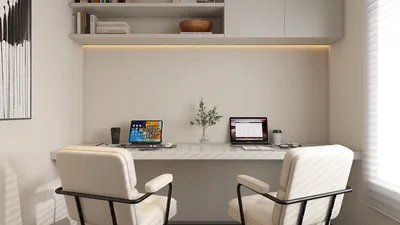


One of the most memorable challenges I faced came from a client who envisioned a "zen forest" within their 30-square-meter workspace, complete with artificial birdsong. Initially, I thought this was just a whimsical idea, but it turned into one of my most imaginative assignments. This experience taught me that constraints, particularly in commercial space design, often compel us to innovate and think creatively. Today, I am excited to share ten refined ideas for commercial offices that I’ve developed through years of experience and experimentation, all while keeping tools like Homestyler in mind for visualizing these concepts.
1. Dynamic Work Areas
Instead of confining employees to static desks, create flexible zones with movable furniture. This approach facilitates quick rearrangements for various daily needs — whether it’s a team brainstorming session or time for solitary deep work. In compact offices, flexibility can significantly enhance productivity.
2. Infuse Nature into the Space
Incorporating plants, organic textures, and natural light can drastically lower stress levels. I’ve witnessed transformations in offices by strategically positioning desks to take advantage of window views. The challenge lies in maintenance — scheduling routine plant care is essential to avoid a "plastic jungle" look.
3. Transparent Partition Walls
These partitions maintain an open atmosphere while providing privacy for discussions. I appreciate how glass walls permit light to flow throughout, making even smaller offices appear more spacious. Using frosted elements can grant confidentiality without compromising brightness.
4. Sound-Proof Pods
If your team frequently requires quick calls, consider installing acoustic phone booths or pods. They might come at a higher cost, but they elegantly address noise concerns. In one project, we positioned two pods near the kitchen area — ideal for taking calls while enjoying coffee.
5. Design that Reflects Your Brand
Incorporating brand colors and subtle logos within your office design can greatly enhance your corporate identity. I once applied a brand’s gradient palette to meeting room acoustic panels — both stylish and functional. It’s crucial to do this tastefully to avoid overwhelming the space.
6. Intelligent Storage Solutions
Utilizing vertical shelving and under-desk storage keeps clutter at bay while preserving floor space. I often implement concealed storage behind accent walls, combined with a tailored layout plan to make organization effortless for the team.
7. Innovative Lighting Arrangements
Using layered lighting strategies — including overhead, task, and ambient light — can instantly change the ambiance of an office. One client reported a 15% productivity increase after swapping harsh fluorescent lights for warmer, dimmable LEDs. Don’t overlook accent lighting in common areas to enhance the atmosphere.
8. Casual Collaboration Spaces
Not every meeting needs to take place in a formal boardroom. Creating relaxed lounge areas with couches and whiteboards can foster spontaneous brainstorming. I’ve even designed corners with mismatched furnishings to spark creativity.
9. High-Tech Meeting Rooms
Equip conference rooms with integrated displays, wireless collaboration tools, and organized cable management. While the initial investment can be steep, the time saved from troubleshooting technology makes it worthwhile. For teams with remote workers, it’s essential.
10. Welcoming Reception Area
Your reception area creates the first impression for clients and candidates. Consider adding a statement wall, an art installation, or a digital display showcasing your company’s achievements. Using realistic renders in platforms like Homestyler can help in gaining client approval before any renovations.
FAQs
1. What are some cost-effective ideas for commercial office spaces?
Start with enhancing lighting, adding modular furniture, and selecting strategic paint colors. These changes can significantly alter the environment without substantial investment.
2. How can I optimize a small office layout?
Focus on vertical storage, glass dividers, and multifunctional furniture. The aim is to make the best use of every inch available.
3. Is it wise to invest in ergonomic furniture?
Absolutely. The Occupational Safety and Health Administration (OSHA) indicates that ergonomic design can minimize workplace injuries and improve productivity.
4. How can I incorporate branding without overwhelming the office?
Opt for subtle color accents and minimal logos rather than overwhelming large graphics throughout the space.
5. What are effective ways to minimize office noise?
Consider using acoustic panels, area rugs, and quiet pods. Additionally, thoughtful furniture arrangement can help in effectively blocking sound pathways.
6. Are living walls worth the upkeep?
Yes, provided you have the resources for regular maintenance. Alternatively, combine real plants with high-quality artificial options for a balanced approach.
7. Is an open space office always better?
Not necessarily. A combination of open environments with private rooms or pods often accommodates diverse work styles effectively.
8. Can I redesign my office without significant construction?
Definitely. Rearranging furniture, updating lighting, and refreshing decor can yield impressive results with minimal disruption.
Discover your home's potential with Homestyler! This user-friendly online design platform features a powerful design tool, stunning 3D renderings, diverse design projects, and engaging video tutorials. Whether you're a beginner or a seasoned designer, bring your vision to life effortlessly!
تصميم الآن مجانا
































